


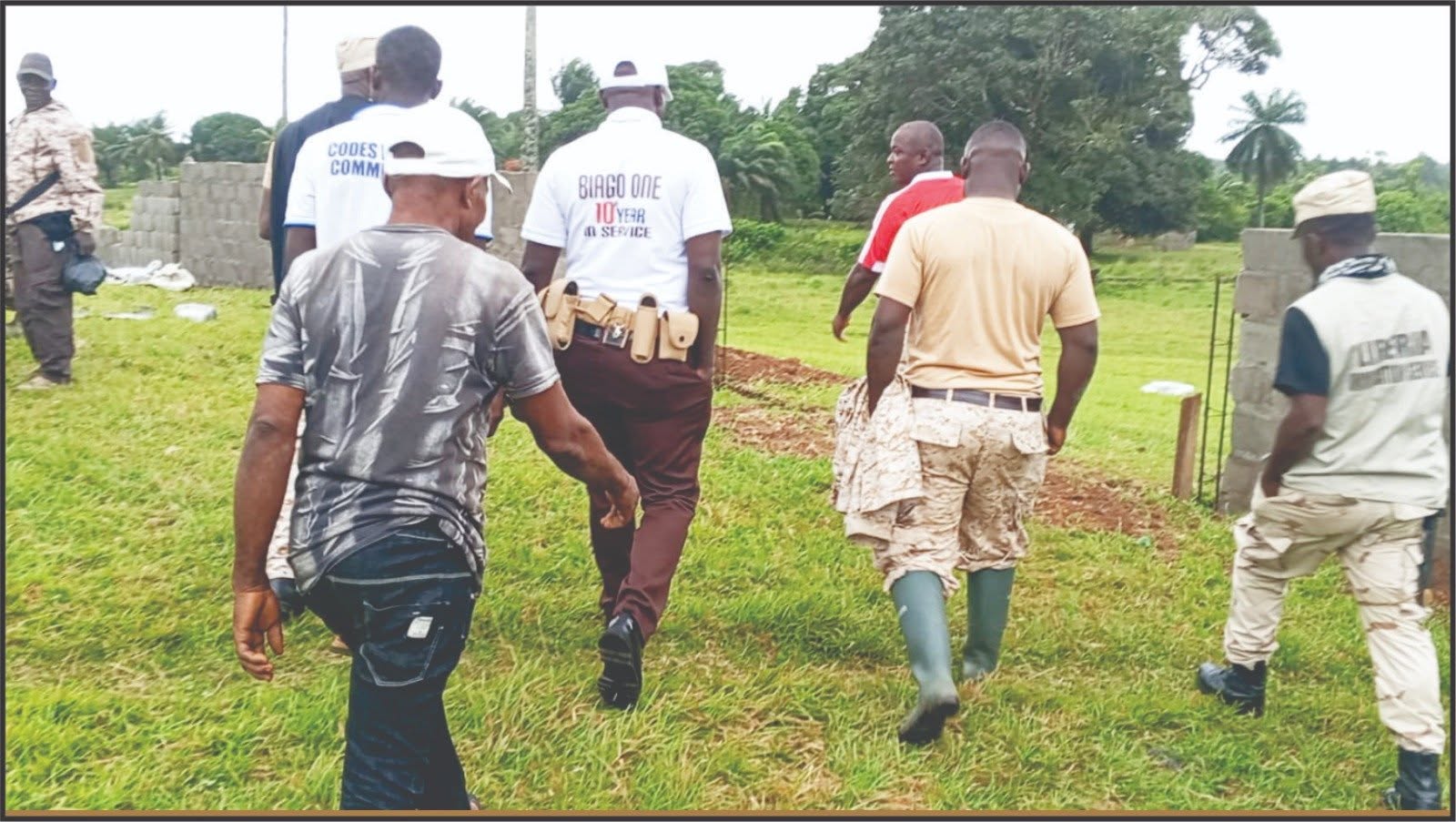
A growing dispute over land use, migration, and community consultation is unfolding in rural Grand Kru County, where residents of Gbetao in Picnicess District say they are becoming increasingly uneasy about the rising presence of Burkinabé nationals and reports of ongoing land-clearing activities in the area.
What began as concerns among a few community members has now evolved into a broader debate over who controls local land, how decisions are being made, and whether residents are being adequately informed about activities taking place within their communities.
Speaking on June 13, 2026, Togba Barseh, the Clan Chief of Klakpo Clan, said many residents feel left out of discussions regarding the growing activities of Burkinabé nationals in Gbetao.
According to Chief Barseh, while some members of the community appear to have knowledge of the migrants’ presence and activities, a significant number of residents and even local leaders claim they remain unclear about the scope of operations being carried out on community land.
The concerns center largely on allegations that portions of land are being cleared without broad community awareness or consultation. Residents fear that if the situation is not addressed transparently, it could eventually trigger disagreements over land ownership, boundaries, and future land use rights.
“Our concern is not simply about who is here,” one community member reportedly stated during local discussions. “It is about ensuring that everyone understands what is happening on our land and that decisions affecting the community are made openly.”
The issue has prompted a series of meetings involving community representatives, Burkinabé nationals, and officers of the Liberia Immigration Service. However, participants say recent discussions have produced little progress, largely because several key stakeholders and government officials failed to attend.
The situation is particularly sensitive because it revives memories of a similar controversy in late 2025, when immigration authorities in Grand Kru deported 20 Burkinabé nationals who were reportedly found without valid immigration documentation.
At the time, local authorities defended the presence of the foreign nationals, explaining that they had been invited into the area to assist with farming and agricultural production. Community leaders argued that large portions of available farmland remained uncultivated due to labor shortages and limited local farming capacity.
For many residents, however, the current debate extends beyond agriculture. It raises broader questions about migration management, land governance, environmental protection, and community participation in decision-making.
Sources within Gbetao claim that approximately 20 Burkinabé nationals are currently residing in the area, while more than 15 additional individuals have reportedly arrived in recent weeks. The same sources allege that forest-clearing activities are taking place along sections of the Barclayville–Picnicess corridor, further intensifying local concerns.
Observers note that in counties such as Grand Kru, where land remains central to livelihoods, identity, and future economic opportunities, even small misunderstandings can quickly evolve into larger disputes if not handled carefully and transparently.
A meeting convened in Picnicess on June 13 was expected to provide clarity on the matter. Instead, participants say it concluded without a formal resolution after the absence of several government representatives limited meaningful discussions.
Officials of the Liberia Immigration Service have declined public comment, citing an ongoing investigation into the allegations and circumstances surrounding the reported activities.
As of press time, county authorities had not released an official statement addressing the concerns raised by residents.
For now, uncertainty continues to linger across Gbetao. Residents say they are not seeking confrontation but answers—answers about who is entering their communities, how land is being utilized, and whether local voices will be included in decisions that could shape the future of the area for years to come.
With investigations ongoing and tensions gradually building, community leaders are calling for greater transparency, stronger engagement with residents, and swift intervention from relevant authorities before concerns over land and migration evolve into a deeper local conflict.


