


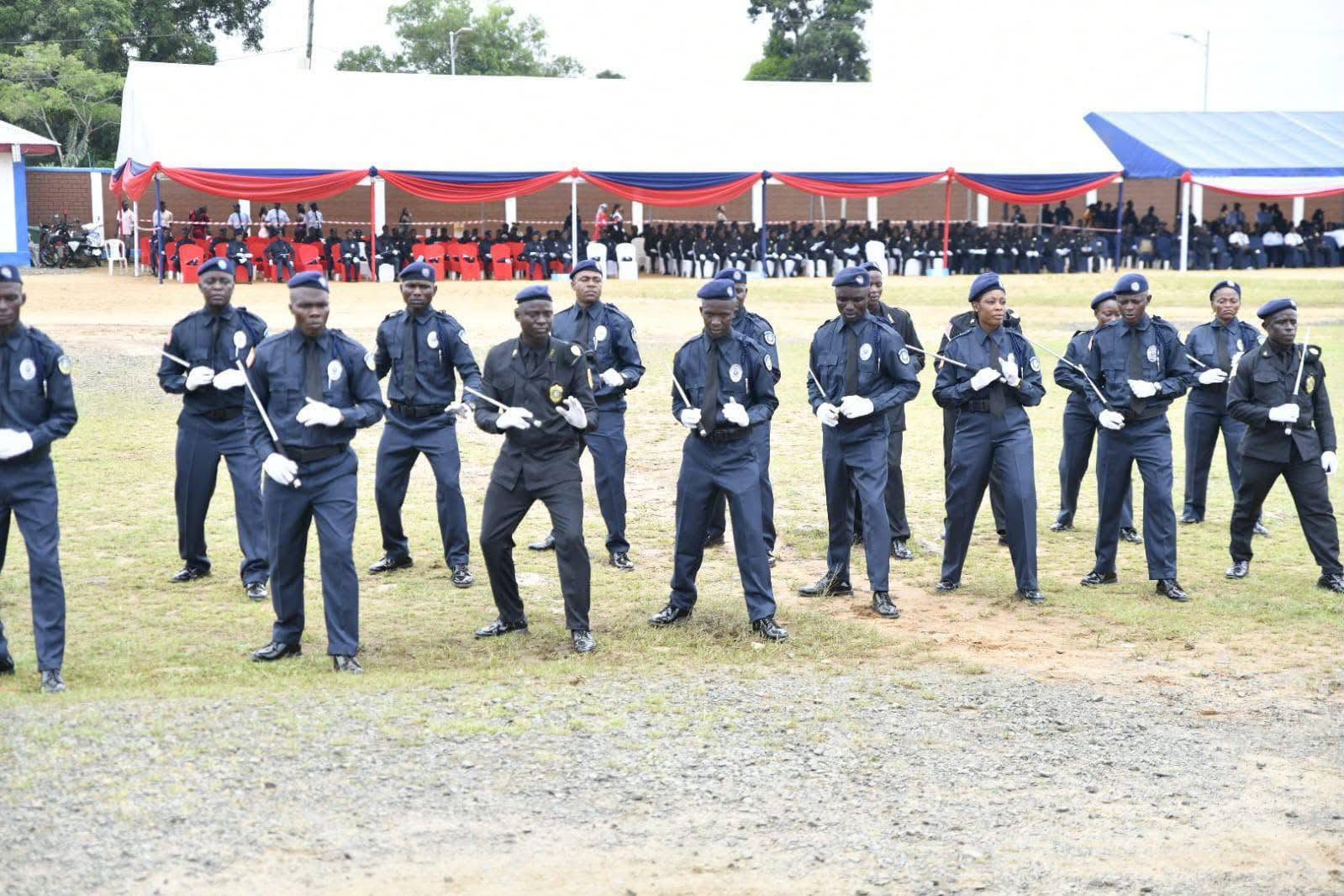
PAYNESVILLE, Liberia — Liberia’s efforts to strengthen public safety and modernize its security institutions received a significant boost on Friday as 193 newly trained officers graduated from the Liberia National Police (LNP) Academy and Training School, marking a major step in the government’s ongoing drive to enhance national security and law enforcement capacity.
The graduation ceremony, held in Paynesville, brought together senior government officials, members of the diplomatic corps, lawmakers, security chiefs, and international partners, all of whom underscored the importance of investing in professional, accountable, and well-equipped security institutions capable of addressing Liberia’s evolving security challenges.
At the center of the event was a renewed commitment from the Government of Liberia to provide stronger support for the nation’s security sector.
Speaking on behalf of the government, Finance and Development Planning Minister Augustine Kpehe Ngafuan assured officers and security leaders that the administration remains fully aware of the sacrifices being made by law enforcement personnel and is committed to strengthening their operational capabilities.
“I will personally serve as an ambassador for the security sector,” Minister Ngafuan declared during the ceremony. “The government has observed that resources provided to our security institutions are being utilized appropriately, and we will continue to support them as they carry out their vital national responsibilities.”
The graduating class consisted of 75 recruits from the Liberia National Police and 118 recruits from the Liberia Drug Enforcement Agency (LDEA), all of whom successfully completed intensive training designed to prepare them for the demands of modern law enforcement and public security operations.
The graduation comes at a time when Liberia continues to confront a range of emerging security challenges, including organized crime, narcotics trafficking, cybercrime, and other threats that require highly trained and professional personnel.
Addressing the graduates, Liberia National Police Inspector General Gregory O.W. Coleman described the occasion as a significant milestone for both the recruits and the country’s broader security architecture.
Coleman reminded the officers that the successful completion of their training marked the beginning of a solemn responsibility to protect lives, enforce the law, preserve public order, and serve the Liberian people with professionalism and integrity.
“Professional policing begins with professional training,” Coleman stated. “Your uniforms are not symbols of power; they are symbols of service and responsibility. Wear them with pride, exercise authority with humility, and always uphold the law.”
The Police Chief emphasized that public trust remains one of the most valuable assets of any law enforcement institution and can only be sustained through ethical conduct, transparency, and accountability.
He urged the graduates to remain committed to protecting vulnerable citizens, respecting human rights, defending Liberia’s Constitution, and carrying out their duties without fear, favor, prejudice, or political influence.
Coleman also reflected on the transformation of the Liberia National Police Academy over the past year, describing the institution as an emerging center of excellence dedicated to producing highly trained law enforcement professionals capable of meeting international standards.
For her part, Deputy Inspector General for Training and Manpower Development, Honorable Sadatu L.M. Reeves, commended the graduates for successfully completing a rigorous and demanding training program.
According to Reeves, the journey undertaken by the recruits required determination, discipline, perseverance, and resilience, qualities she said would be essential throughout their careers.
“The journey you have completed was designed to prepare you mentally, physically, and professionally for the enormous responsibilities that await you,” Reeves told the graduating officers.
“The nation expects you to serve with integrity, discipline, courage, and respect for the rule of law.”
She encouraged the new officers to embrace continuous learning and professional development while serving as positive representatives of Liberia’s security institutions across the country.
The ceremony also highlighted the continued support of international partners for Liberia’s security reform agenda.
United States Charge d’Affaires Joseph Zadrozny praised Liberia’s efforts to strengthen its law enforcement and counternarcotics institutions, describing the graduation as an important step toward improving national security and public safety.
Zadrozny reaffirmed the commitment of the United States Government to supporting Liberia’s efforts to build professional, accountable, and community-focused security institutions.
“The United States remains proud to partner with Liberia in building professional, accountable, and community-centered security institutions,” he said.
“The training and development of law enforcement officers are critical to promoting stability, justice, and public confidence.”
He encouraged the graduates to maintain the highest standards of professionalism and remain dedicated to serving the communities they have sworn to protect.
Liberia’s Minister of Justice and Attorney General, Cllr. N. Oswald Tweh, Sr., also addressed the graduates, emphasizing the critical role law enforcement officers play in protecting constitutional democracy and preserving the rule of law.
Tweh reminded the officers that they serve as frontline guardians of justice and therefore must demonstrate impartiality, professionalism, integrity, and respect for due process in every aspect of their work.
“The authority vested in you by the State must always be exercised within the bounds of the law,” the Attorney General said.
“Your actions must reflect fairness, professionalism, and respect for the rights and dignity of every Liberian.”
He further stressed the importance of cooperation among security institutions in confronting crime, narcotics trafficking, and other threats facing the nation.
Also speaking at the event was Senator Momo Cyrus, Chairman of the Senate Standing Committee on Defense, National Security, and Veterans Affairs, who cautioned the graduates against misconduct and abuse of authority.
The senator reminded the officers that public confidence in Liberia’s security institutions depends largely on the conduct and professionalism displayed by those entrusted with enforcing the law.
“The confidence citizens place in our security institutions must never be taken for granted,” Senator Cyrus warned.
“Your conduct will determine how the public perceives the institutions you represent.”
He urged the officers to serve as examples of discipline, accountability, and dedication while carrying out their responsibilities.
Meanwhile, Inspector General Coleman used the occasion to call for continued investment in Liberia’s security sector, appealing to both the Government of Liberia and international development partners to increase support for infrastructure, technology, equipment, personnel development, and specialized training programs.
According to Coleman, modern security threats require modern solutions, and law enforcement agencies must be equipped with the necessary resources to effectively combat increasingly sophisticated criminal activities.
“An investment in law enforcement is an investment in peace, public confidence, economic growth, and national development,” Coleman emphasized.
As the ceremony concluded, certificates were formally presented to the graduates, officially welcoming them into the ranks of the Liberia National Police and the Liberia Drug Enforcement Agency.
The newly commissioned officers are expected to be deployed across Liberia in the coming weeks, where they will support law enforcement operations, strengthen community policing initiatives, combat narcotics trafficking, maintain public order, and contribute to national efforts aimed at improving security and protecting citizens.
For many observers, the graduation represents more than the addition of new personnel. It signals a broader effort to strengthen Liberia’s security institutions at a time when public safety, accountability, and professional law enforcement remain essential to the country’s democratic stability and long-term development.
As Liberia continues to confront evolving security challenges, the success of these newly trained officers—and the government’s commitment to supporting them—may prove critical in shaping the future effectiveness of the nation’s law enforcement and public safety institutions.


