


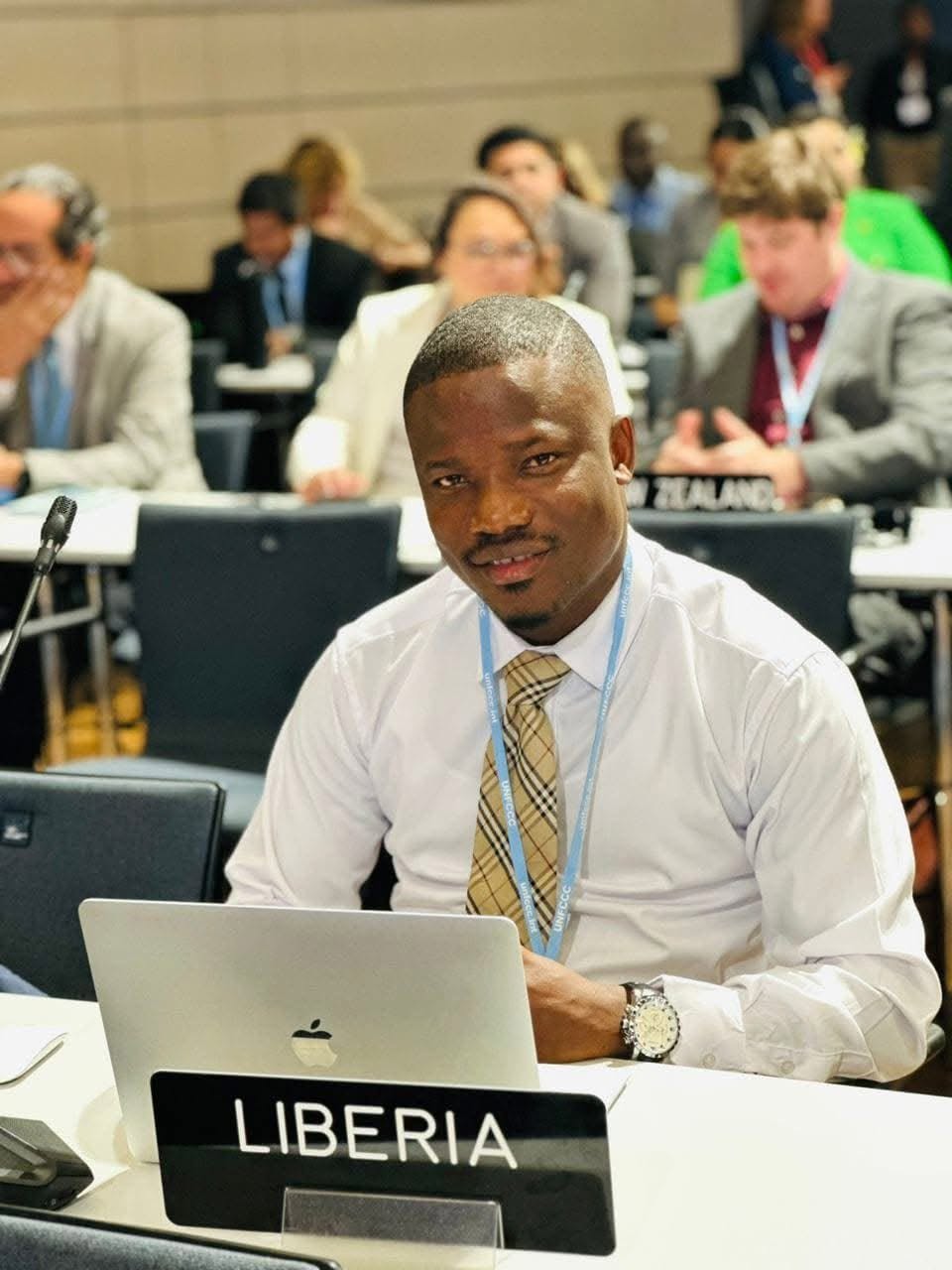
BONN, Germany — Liberia’s growing influence within international climate diplomacy has received another major boost following the appointment of Liberian climate advocate Teddy P. Taylor to a strategic leadership position within Africa’s climate negotiating framework, a development that is drawing attention to the country’s expanding role in global environmental governance.
Taylor has been named Action for Climate Empowerment (ACE) Coordinator for the African Group of Negotiators (AGN), placing him at the forefront of continental efforts to strengthen climate education, public awareness, citizen participation, and stakeholder engagement across Africa.
The appointment was announced on June 12, 2026, during the ongoing Sixty-Fourth Sessions of the Subsidiary Bodies (SB64) of the United Nations climate negotiations in Bonn, Germany. The decision was made by the Chair of the African Group of Negotiators and is widely viewed as recognition of Taylor’s years of commitment to climate advocacy and environmental engagement.
The new role comes at a time when African nations are seeking stronger representation in global climate discussions while pushing for increased climate financing, greater adaptation support, and more equitable solutions to the challenges posed by climate change.
Liberia’s Rising Profile in Climate Diplomacy
Taylor’s appointment reflects a broader trend of increased Liberian participation in international environmental and climate policy discussions.
Over recent years, Liberian delegates have become more visible in global climate negotiations, consistently contributing to discussions on environmental protection, climate resilience, sustainable development, and support for vulnerable nations most affected by climate change.
Observers say the appointment demonstrates growing confidence in Liberia’s technical expertise and policy contributions within international climate institutions.
As ACE Coordinator, Taylor will serve as a bridge between African countries, helping coordinate continental positions on issues related to climate education, public awareness, training, access to information, public participation, and international cooperation.
These areas form a critical pillar of the global climate agenda, recognizing that effective climate action depends not only on government policies but also on informed and engaged citizens.
A Career Dedicated to Climate Engagement
Taylor currently serves as Liberia’s National Action for Climate Empowerment (ACE) Focal Point under the United Nations Framework Convention on Climate Change (UNFCCC).
He also serves as the Focal Point for the Freshwater Challenge Initiative and as Assistant Director for External Relations within the Department of Multilateral Environmental Agreements at Liberia’s Environmental Protection Agency (EPA).
Throughout his career, he has been actively involved in initiatives aimed at increasing climate awareness, promoting stakeholder engagement, strengthening environmental education, and encouraging greater participation by youth and local communities in climate-related decision-making processes.
His work has focused on ensuring that climate policies are understood and embraced by the people most affected by environmental changes, particularly vulnerable communities facing increasing climate risks.
Advancing Climate Education Across Africa
In his new continental role, Taylor will collaborate with climate negotiators and representatives from across Africa to support the implementation of the Glasgow Work Programme on Action for Climate Empowerment, a framework designed to strengthen public engagement in climate action worldwide.
The program emphasizes six key areas: climate education, public awareness, training, public participation, access to information, and international cooperation.
These components are increasingly recognized as essential tools in helping societies respond effectively to climate challenges while building resilience and encouraging sustainable development.
Climate experts argue that successful climate policies require broad public understanding and participation, making ACE initiatives a crucial part of achieving long-term environmental goals.
Taylor’s appointment is expected to contribute significantly to these efforts by helping African countries strengthen cooperation, share best practices, and improve public involvement in climate initiatives.
Opportunities for Liberia and the Continent
Beyond the personal achievement, the appointment is being viewed as an opportunity for Liberia to deepen its engagement with regional and international partners on environmental issues.
The role is expected to facilitate greater collaboration between Liberia and other African nations in areas such as climate education, youth empowerment, capacity building, environmental awareness, and community engagement.
It also positions Liberia to play a more active role in shaping conversations around climate adaptation, resilience-building, and public participation within the broader African climate agenda.
As climate change continues to impact communities across the continent through rising temperatures, changing weather patterns, coastal erosion, and environmental degradation, African countries are increasingly emphasizing the importance of ensuring that citizens remain central to climate solutions.
Strengthening Africa’s Climate Voice
Taylor’s appointment comes during a critical period for Africa’s climate agenda. Governments across the continent continue to advocate for climate justice, greater international support, and stronger commitments from developed nations to address the disproportionate impacts of climate change on vulnerable populations.
With preparations already underway for future rounds of international climate negotiations, the new ACE Coordinator will play an important role in ensuring that education, public awareness, and citizen engagement remain key priorities within Africa’s collective climate strategy.
For Liberia, the development serves as another indication that its environmental professionals are gaining recognition beyond national borders and contributing to policy discussions that influence climate action across the continent and around the world.
As global climate negotiations continue to evolve, Taylor’s new leadership role represents both a personal milestone and a broader reflection of Liberia’s emerging voice in shaping Africa’s environmental future.


