


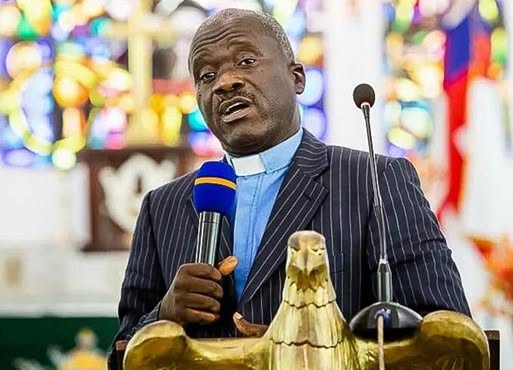
MONROVIA, LIBERIA — As public debate intensifies over a controversial prophecy issued by Nigerian cleric Pastor Elijah Ayodele concerning Liberia and President Joseph Nyuma Boakai, one of Liberia’s most influential religious leaders has raised fundamental questions about the government’s handling of the matter.
Rather than focusing on the prophecy itself, Bishop Kortu K. Brown has shifted attention to what he describes as a troubling national distraction, questioning why government officials would devote significant energy to responding to a prediction they reportedly do not believe while the country continues to grapple with pressing social and economic challenges.
The respected evangelical leader’s intervention has added a new dimension to an already heated discussion, transforming it from a debate about prophecy into a broader conversation about democratic maturity, religious tolerance, freedom of expression, governance priorities, and the role of faith in public life.
A Call for Perspective Amid Controversy
In a strongly worded public statement, Bishop Brown expressed surprise at the intensity of the government’s reaction to remarks made by the Nigerian cleric. According to Brown, if government officials genuinely regard Pastor Ayodele as lacking credibility, then elevating his comments into a matter of national and diplomatic concern appears contradictory.
The former President of the Liberia Council of Churches said he was particularly surprised by the level of attention being given to the issue, especially in a nation that often emphasizes its Christian foundations.
“Given Liberia’s claims of being established on Christian principles, I am shocked by the level of response from government functionaries regarding a reported Nigerian primate’s prophecy concerning the Liberian Government,” Bishop Brown stated. He continued:
“I did not expect government officials to give such credence to a prophecy they do not believe in, especially when they consider the individual making it to be a ‘fake prophet.’”
His comments have resonated with many Liberians who believe the controversy has received disproportionate attention compared to the nation’s more urgent concerns.
Firm Rejection of Unconstitutional Political Change
While questioning the government’s response, Bishop Brown made it clear that he does not support any interpretation of the prophecy that could encourage political instability or unconstitutional attempts to change Liberia’s government.
The veteran church leader stressed that Liberia’s democratic gains were achieved through immense sacrifice and must be protected at all costs. Drawing on the country’s painful history of conflict and political upheaval, Brown emphasized the importance of preserving democracy, constitutional governance, human rights, freedom of expression, and the rule of law. “No Liberian, not even me, wants to see anything bad happen to Liberia,” he declared.
“Any suggestion of a change of government outside the democratic process is not only unwelcome but must be outrightly rejected because Liberia has paid the price with blood, tears, and sweat for the preservation of democracy, the rule of law, free speech, human rights, and other democratic values.”
He added that Liberia’s future depends on maintaining stability and continuing its democratic journey. “There can be no turning back. Liberia must continue to move forward.”
Questions Raised Over Diplomatic Engagement
Perhaps the strongest criticism in Bishop Brown’s statement centered on reports that the controversy had evolved beyond public debate and entered the realm of diplomatic engagement.
The bishop questioned whether the issue warranted official governmental attention at such a high level, arguing that mature democracies should be capable of tolerating opinions and assessments they disagree with.
He suggested that national leaders should remain focused on governance and development rather than becoming preoccupied with the views of foreign religious figures. “Nonetheless, the country must remain open to all shades of opinion, whether good or bad,” Brown said.
“For a country like ours, with the level of sophistication we claim to have in government, to be distracted from the affairs of state by a foreign pastor’s spiritual assessment of the country, and to reportedly engage another government over such remarks, surprises me.”
His remarks come amid widespread discussion regarding reports that Liberian officials formally expressed concerns about Pastor Ayodele’s statements.
For Brown, the issue raises larger questions about how governments should respond to criticism, controversial predictions, and unpopular viewpoints.
A Biblical Perspective on Prophecy
Seeking to move the discussion beyond politics and public outrage, Bishop Brown offered a theological explanation of prophecy from a biblical standpoint. According to him, Christian doctrine traditionally recognizes two forms of prophecy: forth-telling and foretelling.
He explained that forth-telling involves speaking to present circumstances, often providing guidance, correction, encouragement, or comfort. Foretelling, on the other hand, involves predictions concerning future events. “Prophecy is biblically considered in two dimensions: forth-telling and foretelling,” Brown explained.
“The former deals with declarations concerning present realities, while the latter concerns predictions of future events.”
He noted that throughout biblical history, prophetic messages often addressed current social, moral, and spiritual conditions rather than simply forecasting future occurrences.
Unlike future predictions, he said, forth-telling seeks to communicate God’s will into present situations in order to inspire change, reflection, or correction.
Brown argued that understanding this distinction is important in preventing public discussions about prophecy from becoming unnecessarily sensationalized.
Scripture Already Provides a Test
The bishop further noted that Christianity already provides guidance on how believers should evaluate prophetic claims. Referencing Deuteronomy 18:21-22, he explained that Scripture identifies fulfillment as the ultimate test of whether a prophecy genuinely comes from God.
Quoting the passage, Brown stated:
“You may say to yourselves, ‘How can we know when a message has not been spoken by the Lord?’ If what a prophet proclaims in the name of the Lord does not take place or come true, that is a message the Lord has not spoken. That prophet has spoken presumptuously, so do not be alarmed.”
According to Brown, the biblical instruction is straightforward. Believers are not expected to panic or become consumed by every prophetic declaration. Instead, they are encouraged to exercise patience and discernment, allowing time to determine whether such predictions eventually come to pass.
“If It Is Not True, Why Worry?”
One of the most pointed observations in Brown’s statement centered on what he views as an apparent contradiction in the public reaction to the prophecy. “If we believe God’s word and also believe that the prophecy is not true, then why worry?” he asked.
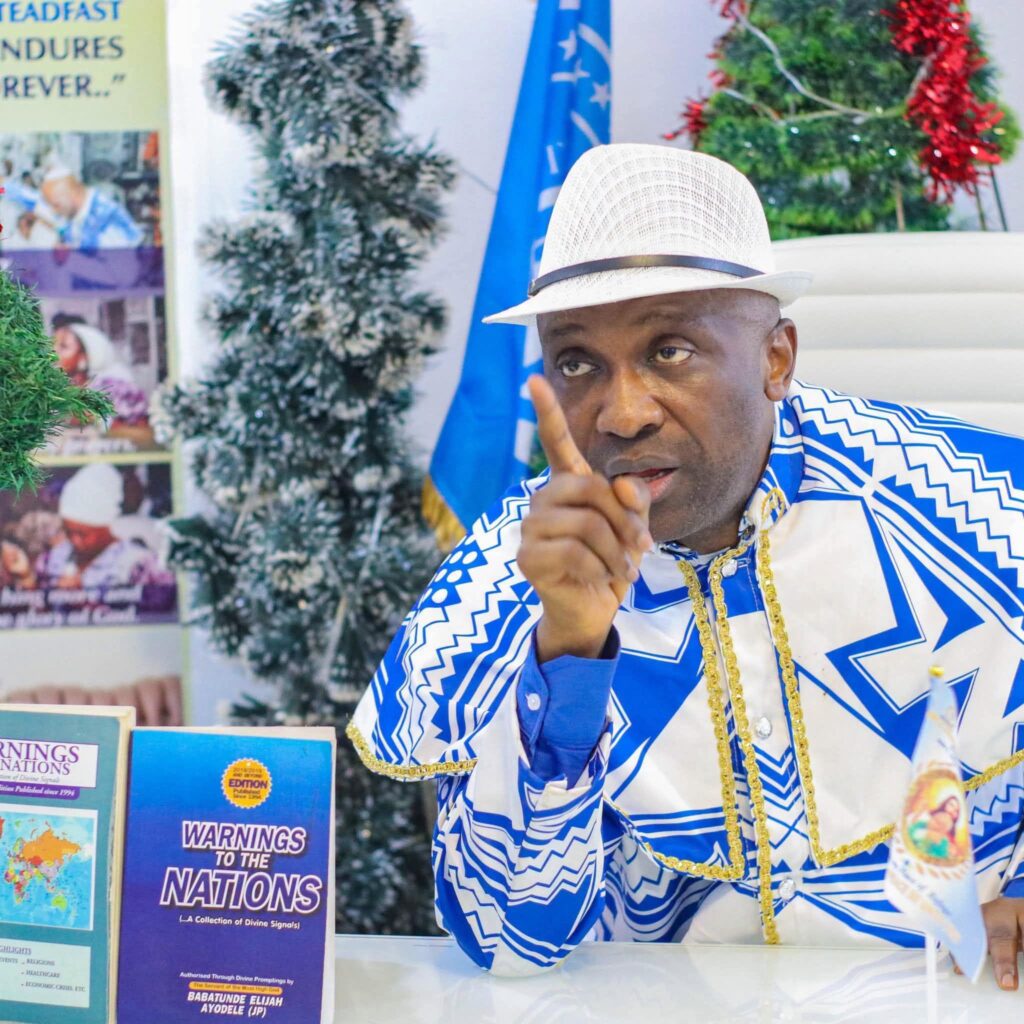
The bishop questioned the necessity of extensive public condemnation and challenged the wisdom of elevating the remarks of a private individual into a matter attracting national attention.
“What is the reason for all the curses and condemnations?” he continued. “Why go to the extent of complaining about a private citizen to his government over remarks made publicly?”
The questions reflect concerns shared by some observers who believe the controversy has overshadowed more pressing national issues.
Redirecting Attention to Liberia’s Challenges
Beyond the debate over prophecy, Bishop Brown used the occasion to call for greater focus on Liberia’s developmental priorities.
He argued that the nation continues to face numerous challenges requiring urgent attention, including economic hardship, unemployment, infrastructure deficits, healthcare concerns, educational needs, and governance reforms.
According to him, national discourse should concentrate on identifying solutions to these challenges rather than becoming consumed by disputes over controversial predictions.
“I believe Liberia has very serious challenges before us, and we must focus on finding solutions to our many problems,” he stated.
The bishop suggested that government officials, policymakers, and citizens alike would better serve the country by concentrating on issues that directly affect the daily lives of ordinary Liberians.
Tolerance as a Democratic Value
Brown also emphasized the importance of tolerance within democratic societies. He argued that democratic systems are strengthened when citizens and leaders alike are willing to hear opposing viewpoints, even when those views are unpopular or uncomfortable.
“We must also be tolerant of the assertions of other people, however distasteful they may be,” he said.
For the bishop, tolerance does not require agreement. Rather, it reflects confidence in democratic values and the ability of society to engage differing opinions without fear or hostility. He suggested that healthy democracies are capable of confronting criticism through dialogue and reason rather than excessive reaction.
Reframing the National Conversation
As controversy surrounding Pastor Ayodele’s prophecy continues to dominate public discussion, Bishop Brown’s intervention has redirected attention toward broader issues of governance, freedom of expression, religious interpretation, and democratic resilience.
Instead of debating whether the prophecy will come to pass, the bishop has encouraged Liberians to reflect on how governments, institutions, and citizens respond to criticism, prediction, and disagreement.
His message combines a firm defense of constitutional democracy, a call for religious and civic tolerance, an appeal for mature public discourse, and a reminder that national development challenges remain far more consequential than any individual prophecy.
In doing so, Bishop Brown has transformed the conversation from a dispute about one pastor’s prediction into a larger reflection on Liberia’s democratic values, governance priorities, and capacity to remain focused on the issues that matter most to its people.
As the debate continues, his comments are likely to remain a significant contribution to an ongoing national discussion about faith, politics, leadership, and the future direction of Liberia’s democracy.


