


As Liberia continues to confront challenges related to public service delivery, administrative efficiency, and institutional performance, a new study tour to Rwanda is drawing attention to a larger question facing policymakers: how can successful governance models from elsewhere in Africa be adapted to accelerate national development at home?
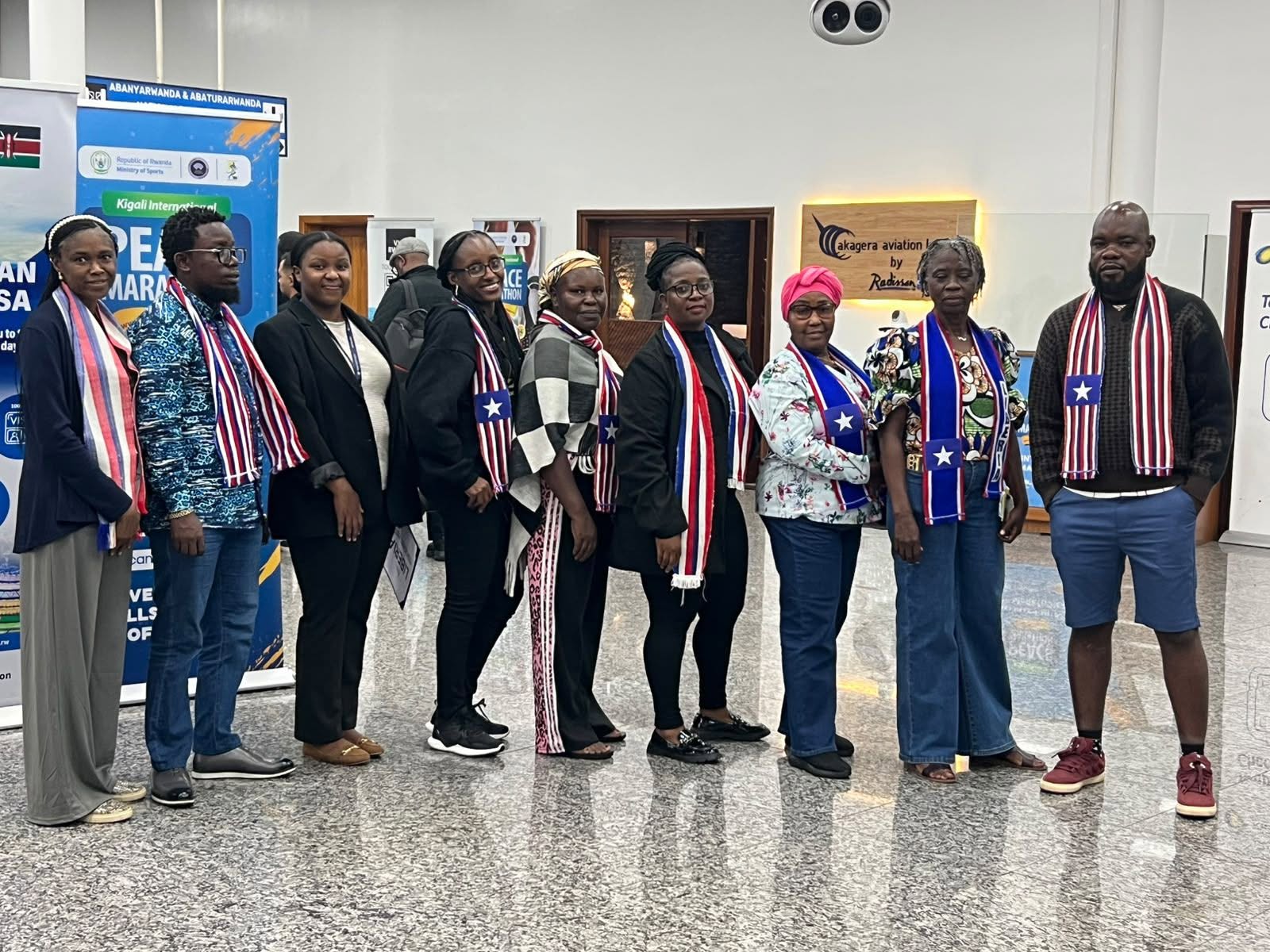
A nine-member Liberian delegation composed of officials from key government ministries and public institutions has arrived in Kigali for a week-long study mission designed to examine Rwanda’s governance systems, public administration practices, and development strategies.
The delegation includes representatives from the Ministry of State for Presidential Affairs through the Office of the Cabinet, the Civil Service Agency, the Ministry of Local Government, and other government institutions. The program is being organized through cooperation between Liberia and Rwanda, with support from development partners seeking to strengthen governance capacity across the continent.
Beyond a routine diplomatic exchange, the visit reflects Liberia’s growing interest in learning from countries that have achieved significant progress in public sector reform and institutional modernization over the last two decades.
Rwanda has often been cited as one of Africa’s leading examples of state-led transformation, particularly in areas such as government efficiency, digital governance, service delivery, accountability mechanisms, and long-term development planning. While the two countries differ significantly in history, geography, and political structure, Liberian officials believe valuable lessons can still be drawn from Rwanda’s experience.
During the study tour, participants are expected to engage in intensive training sessions examining Rwanda’s governance architecture, public service systems, and policy implementation frameworks. Discussions will focus not only on achievements but also on the challenges and institutional adjustments that accompanied Rwanda’s transformation journey.
One of the central areas of interest is Rwanda’s E-Cabinet System, a digital governance platform that has streamlined government decision-making, improved inter-agency coordination, and enhanced administrative efficiency. For Liberia, where bureaucratic delays and institutional fragmentation remain persistent concerns, such innovations could provide useful insights into modernizing public administration.
The delegation will also explore Rwanda’s broader socioeconomic development strategy, including policies that have contributed to improvements in infrastructure, public service delivery, local government performance, and citizen engagement.
Beyond formal training sessions, participants will conduct field visits to government agencies, districts, and historical sites across Rwanda. These engagements are intended to provide practical exposure to how governance policies are implemented at both national and local levels.
Analysts note that study tours alone do not guarantee reform. The real test lies in whether lessons learned abroad can be translated into actionable policies and adapted to Liberia’s unique social, political, and economic realities.
For Liberia, the significance of the visit extends beyond knowledge-sharing. It signals an increasing recognition that institutional development requires continuous learning, innovation, and a willingness to adopt proven practices from successful governance models elsewhere on the continent.
As the delegation concludes its mission in Rwanda, attention will likely shift from what was learned to how those lessons can be transformed into measurable improvements in governance, public accountability, and service delivery back home.
Ultimately, the study tour represents more than an exchange of ideas; it reflects Liberia’s broader effort to strengthen state institutions and build a more responsive and effective public sector capable of meeting the expectations of its citizens.


