


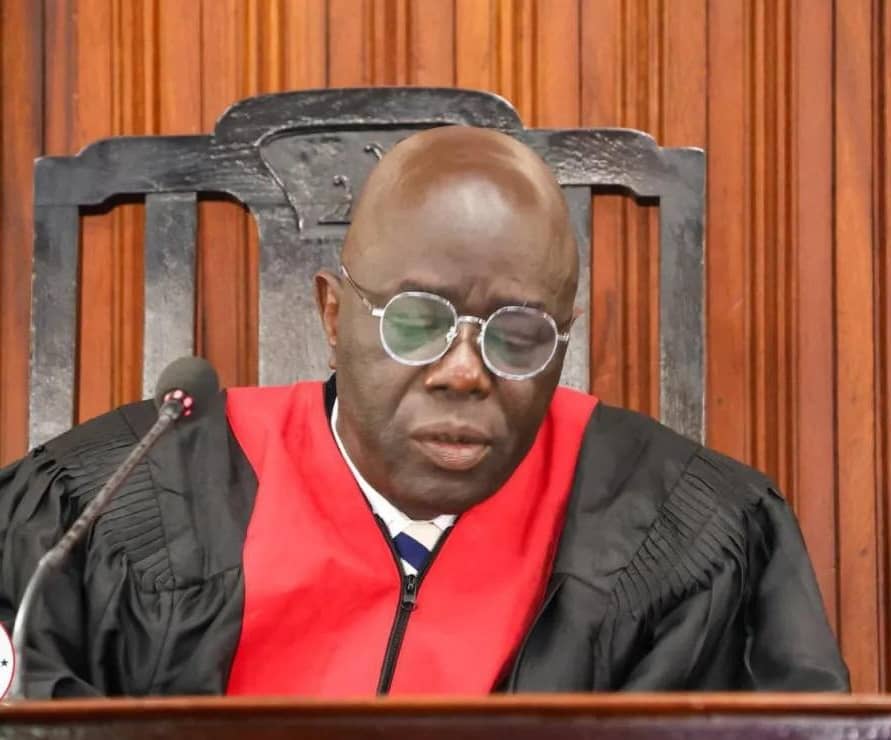
Monrovia — In a decisive move that reframes the fight against corruption within Liberia’s judiciary, Chief Justice Yamie Quiqui Gbeisay has ordered the dismissal of three staff members implicated in a forgery scheme that directly undermined judicial authority and public trust.
The action, announced on March 17, 2026, during the opening of the Sixth Judicial Circuit, Civil Law Court at the Temple of Justice, signals a shift from routine administrative discipline to a more assertive institutional cleansing. Rather than presenting the dismissals as isolated personnel decisions, the Chief Justice positioned them within a broader accountability framework aimed at confronting systemic malpractice.
According to the findings of an internal investigative committee, the dismissed staff members forged the signature of a judge as part of a scheme to solicit and obtain money. The gravity of the misconduct, which strikes at the core of judicial authenticity and due process, left little room for discretionary leniency. Acting on the committee’s recommendations, the Chief Justice approved their immediate removal.
From a legal-institutional standpoint, the incident raises deeper concerns about internal controls within the judiciary. Forgery involving judicial authority is not merely an ethical breach; it represents a direct assault on the legitimacy of court processes and the enforceability of legal outcomes. By acting swiftly, the Chief Justice appears intent on reasserting the principle that the judiciary must be insulated from internal subversion as much as from external interference.
Gbeisay emphasized that the decision was compelled by verified wrongdoing, underscoring that the judiciary cannot function credibly if its own personnel engage in acts that distort justice for personal gain. He warned that similar conduct would attract equally firm consequences, signaling a zero-tolerance posture toward corruption.
Importantly, the Chief Justice rejected any interpretation of his actions as politically motivated, stressing that his mandate is institutional rather than personal. By distancing the decision from political calculus, he sought to reinforce the independence of judicial discipline and its grounding in legal ethics rather than public perception.
Beyond the immediate dismissals, Gbeisay called for a structural and cultural recalibration within the judiciary. He identified the “commercialization” of judicial services—where court processes are informally monetized—as a corrosive practice that must be dismantled. Staff were reminded that their remuneration is fixed and that soliciting additional payments from litigants or the public constitutes a breach of duty.
He further highlighted the misuse of institutional resources, directing that logistical support, such as transportation for official assignments, must be applied strictly for its intended purposes. This reflects an effort to tighten administrative discipline alongside ethical enforcement.
The dismissals, therefore, should be understood not as an endpoint but as part of a broader institutional reform agenda. They expose vulnerabilities within the system while simultaneously signaling a renewed commitment to transparency, accountability, and the restoration of public confidence in Liberia’s judiciary.


