



MONROVIA, Liberia — How does a passport officially registered to one Liberian citizen allegedly end up in the possession of another person seeking renewal at the Ministry of Foreign Affairs?
That question is now at the center of a criminal investigation after the Liberia National Police formally charged a 51-year-old man with forgery following the discovery of what authorities describe as significant irregularities involving a Liberian passport presented for renewal.
The case, which has attracted attention within immigration and security circles, raises broader concerns about document integrity, identity verification procedures, and the potential vulnerabilities within passport processing systems.
According to official police records, Jerome O. Glory, a resident of the VOA Community along the Robertsfield Highway in Montserrado County, has been charged with forgery under Section 15.70 of Liberia’s Revised Penal Law.
The charges stem from an investigation initiated after Glory reportedly appeared at the Ministry of Foreign Affairs on June 15, 2026, seeking to renew a Liberian passport he claimed had originally been issued to him several years earlier.
However, what appeared to be a routine passport renewal process quickly evolved into a criminal investigation when officials conducting standard verification checks allegedly uncovered discrepancies in the document’s registration details.
Passport Verification Raises Red Flags
According to investigators, officials within the Passport Division discovered that the passport number presented by Glory—PP0125590—was not registered in his name.
Instead, ministry records allegedly showed that the passport had been officially issued to another Liberian citizen identified as Christine D. Farley.
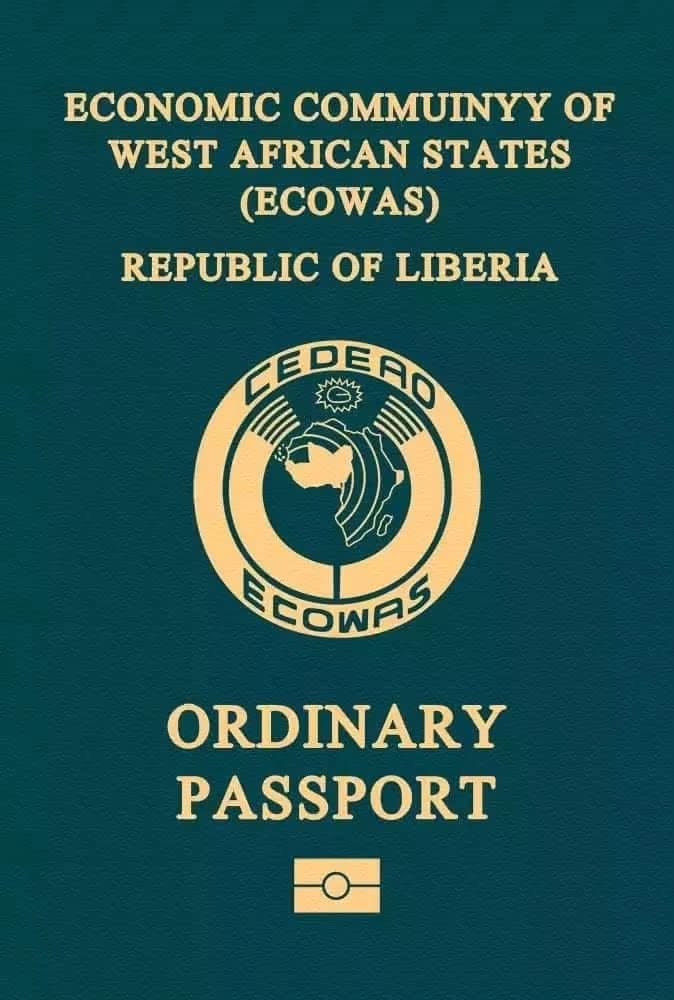
The discovery immediately triggered concerns among passport officials, who subsequently referred the matter to security personnel and the Liberia National Police for further investigation.
Authorities say additional database reviews confirmed that the passport number corresponded to records belonging to Farley and not to Glory.
The findings prompted the opening of a formal inquiry by the Police Anti-Theft Squad, which was tasked with determining how the document came into Glory’s possession and whether criminal violations had occurred.
Foreign Ministry Complaint Led to Investigation
According to the police charge sheet dated June 18, 2026, the investigation began following a complaint submitted by Paul K. Ngafuan, Director of Passport at the Ministry of Foreign Affairs.
The complaint reportedly arose after ministry officials detected inconsistencies during the routine examination of renewal documents.
Officials say the verification process is designed to ensure the authenticity of travel documents and protect the integrity of Liberia’s passport system, particularly as governments worldwide continue to strengthen security measures against identity fraud and document forgery.
As investigators examined the case, attention shifted to the circumstances under which the passport had allegedly been obtained and used.
Defendant Claims He Relied on Lawyer While Abroad
During questioning, Glory reportedly denied knowingly possessing or using a fraudulent passport. According to police records, he informed investigators that he is a Liberian citizen residing in South Korea and has maintained Liberian travel documents for many years.
Glory reportedly stated that he first obtained a Liberian passport in 2007 and later renewed it successfully in 2017. He further explained that he had used the passport for international travel without incident.
The defendant told investigators that while living overseas, he was unable to return to Liberia to personally process another renewal. As a result, he allegedly enlisted the assistance of a lawyer identified only as “Bah” to handle the renewal process on his behalf.
According to his account, he forwarded his expired passport and the necessary funds to the lawyer, who subsequently processed the application and later delivered the renewed passport to him.
Glory maintained that he was unaware of any irregularities involving the document and only learned of the alleged problem when he returned to the Ministry of Foreign Affairs earlier this month seeking another renewal.
He claimed ministry officials informed him during that visit that the passport he had been using was allegedly fraudulent.
Investigation Focuses on Documentary Evidence
As part of the investigation, police examined the passport in question alongside records maintained by the Ministry of Foreign Affairs.
Authorities concluded that passport number PP0125590 had been officially assigned to Christine D. Farley in 2021 and not to Jerome O. Glory.
Investigators also sought information regarding the lawyer whom Glory claimed had processed the document while he was abroad.
However, according to the police report, Glory allegedly failed to produce the individual during the investigation or provide evidence sufficient to independently verify the claim.
Based on the available records, authorities determined that there was probable cause to proceed with criminal charges.
Police Forward Case for Prosecution
In their final report, investigators stated that documentary evidence obtained from the Ministry of Foreign Affairs, coupled with the passport allegedly found in Glory’s possession, provided sufficient grounds to charge him with forgery.
The Liberia National Police subsequently forwarded the matter to court for prosecution.
The case is expected to proceed through Liberia’s judicial system, where prosecutors will seek to establish whether the defendant knowingly possessed or utilized a passport that did not belong to him.
Under Liberian law, forgery is considered a serious criminal offense and may carry substantial penalties upon conviction.
Broader Questions Emerge
Beyond the criminal allegations against the defendant, the case has also sparked broader questions about passport processing procedures and safeguards designed to prevent fraudulent documentation.
Observers note that if the allegations are proven, investigators may eventually seek to determine whether additional individuals were involved in the issuance or handling of the disputed document.
The circumstances surrounding the case have renewed public interest in document security, accountability, and the integrity of Liberia’s passport management system.
For now, however, the focus remains on the legal proceedings ahead.
As the matter moves before the courts, Jerome O. Glory remains presumed innocent unless and until proven guilty by a court of competent jurisdiction.
The trial is expected to provide further clarity regarding how a passport officially registered to one citizen allegedly ended up in the possession of another—and whether the case points to a broader issue requiring additional scrutiny.


