


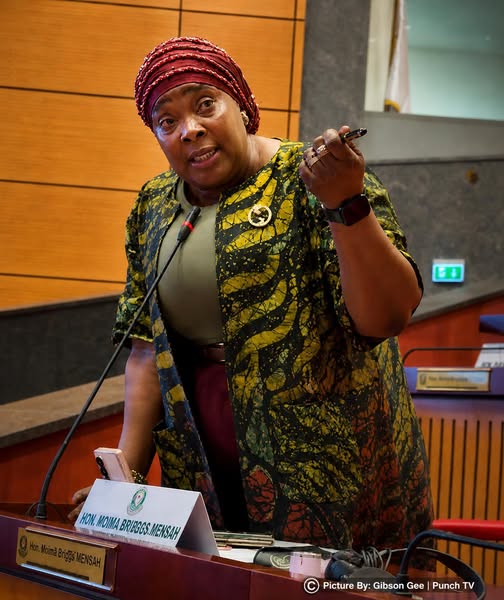
A dramatic walkout by Bong County District #6 Representative Moima Briggs-Mensah has intensified the national debate over transparency and accountability in the handling of Liberia’s recent US$19.2 million drug seizure.
The incident occurred during an executive session at the Capitol Building, where lawmakers were reportedly discussing matters related to the high-profile narcotics case. However, Briggs-Mensah chose to leave the closed-door meeting, arguing that an issue of such national importance should not be shielded from public scrutiny.
Speaking to journalists after her departure, the lawmaker maintained that the Liberian people have a right to know the details surrounding one of the country’s largest drug-related investigations in recent years.
“The US$19.2 million drug bust is not something that should be discussed in executive session. The people of Liberia need to know what is unfolding regarding these drugs,” she reportedly stated.
From an analytical perspective, the walkout highlights a growing tension between the government’s desire to manage sensitive investigations and increasing public demands for transparency. While executive sessions are often used by lawmakers to discuss matters involving national security, intelligence, or sensitive legal issues, critics argue that excessive secrecy can undermine public confidence, particularly in cases involving allegations of organized crime and large-scale drug trafficking.
The reported seizure has already generated significant public interest, with many citizens demanding information about the individuals behind the shipment, the circumstances surrounding its entry into the country, and the actions being taken by law enforcement agencies.
Sources familiar with the legislative proceedings indicated that lawmakers were discussing developments related to the ongoing investigation and the government’s response to the narcotics case. However, the decision to conduct those discussions behind closed doors has become a source of controversy in itself.
Briggs-Mensah has emerged as one of the most vocal advocates for greater disclosure, consistently calling for public accountability and more detailed information from the institutions responsible for investigating the case. Her decision to walk out of the session appears to reflect a broader concern that public trust may erode if critical information remains inaccessible.
Analysts note that the controversy extends beyond the drug seizure itself. It raises larger governance questions about the balance between confidentiality and transparency in democratic institutions. While some information may legitimately require protection during active investigations, there is also growing pressure on public officials to demonstrate openness when dealing with issues that carry significant national implications.
The lawmaker’s protest has therefore transformed a procedural legislative meeting into a broader debate about democratic accountability. For many observers, the key issue is no longer only the seizure of narcotics, but whether state institutions are providing sufficient information to assure the public that the investigation is being conducted fairly, independently, and without political interference.
As investigations continue, public attention remains focused on both the Legislature and law enforcement authorities. The handling of the case may ultimately become a critical test of institutional credibility and the government’s commitment to transparency in the fight against drug trafficking.
The central question emerging from the controversy is whether secrecy serves the public interest in this case—or whether greater openness is necessary to maintain confidence in Liberia’s anti-drug efforts and democratic institutions.


