


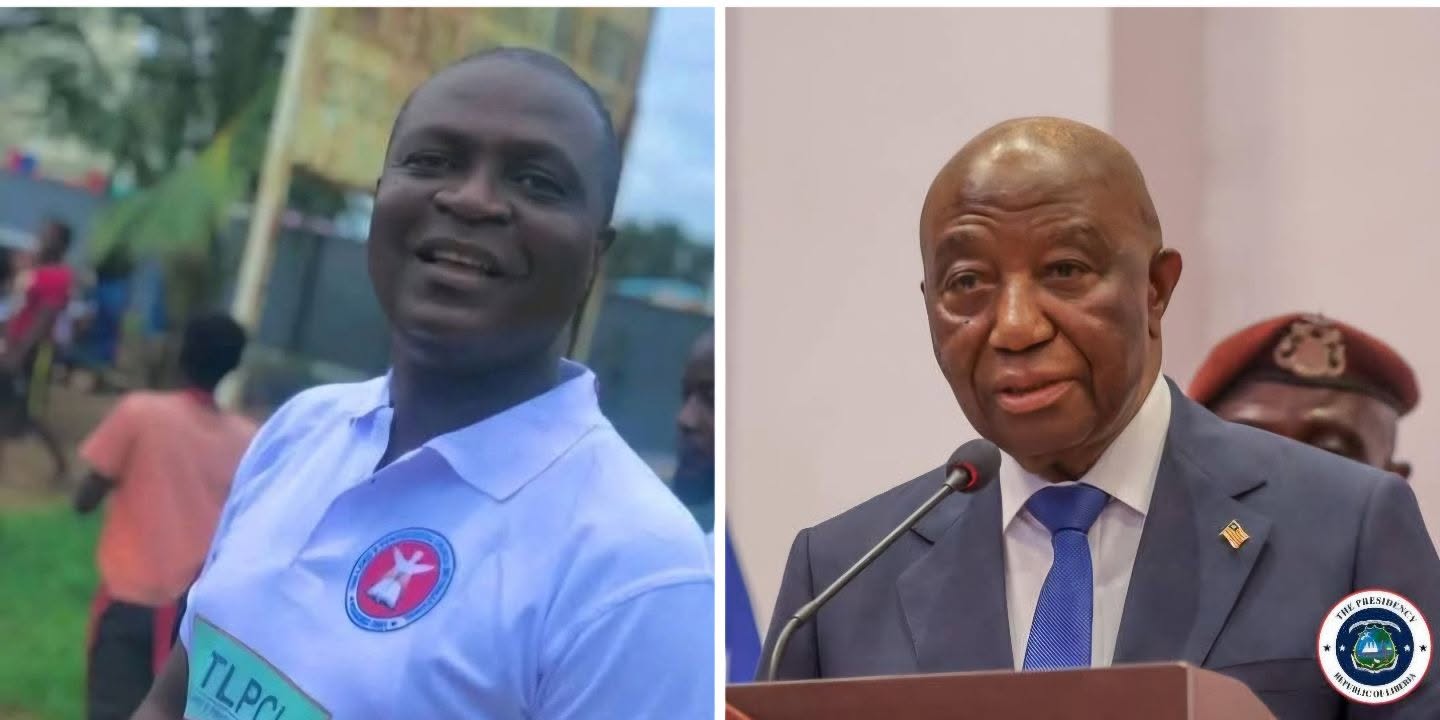
MONROVIA, Liberia – As public demand for transparency and accountability continues to grow, President Joseph Nyuma Boakai, Sr. has nominated Arthur W. B. Fumbah as Executive Vice Chairperson of the Liberia Anti-Corruption Commission (LACC), placing him at the center of one of Liberia’s most important governance institutions.
The nomination, announced by the Executive Mansion on Wednesday, represents a significant development in the Boakai administration’s ongoing efforts to strengthen anti-corruption measures, reinforce public sector accountability, and enhance confidence in government institutions.
If confirmed by the Liberian Senate, Fumbah will assume a key leadership role within the institution responsible for investigating corruption allegations, promoting ethical standards in public service, and supporting the recovery of public assets lost through fraud and abuse.
The appointment comes at a time when anti-corruption institutions are facing increased public scrutiny and growing expectations to deliver meaningful results in the fight against corruption.
Competitive Recruitment Process Leads to Nomination
According to the Executive Mansion, the nomination follows an extensive recruitment and vetting process conducted under Sections 6.10 and 6.11 of the Amended and Restated Liberia Anti-Corruption Commission Act of 2022.
The law requires a transparent and competitive process for selecting senior leadership at the Commission, reflecting reforms intended to strengthen the institution’s independence and credibility.
To fulfill this mandate, an Ad Hoc Recruitment Committee was established and tasked with identifying, assessing, and recommending qualified candidates for the position of Executive Vice Chairperson.
The committee carried out a comprehensive review process, evaluating candidates based on professional qualifications, experience, integrity, and their capacity to contribute to the Commission’s mandate.
Following the completion of its work, the committee submitted two finalists to President Boakai for final consideration.
After reviewing the recommendations, the President selected Arthur W. B. Fumbah, citing his qualifications, professional experience, and demonstrated commitment to public service and institutional accountability.
Diverse Committee Oversaw Vetting Process
The recruitment committee brought together representatives from several key institutions involved in governance, accountability, auditing, media, and civil society.
The panel was chaired by the President’s Legal Advisor, Cllr. Bushuben M. Keita, and included:
- P. Garswa Jackson of the General Auditing Commission (GAC);
- Matthew B. Kollie, Jr. of the Governance Commission (GC);
- Charles S. Kpardeh, Sr. of the Liberia Institute of Certified Public Accountants (LICPA);
- Julius Kanubah of the Press Union of Liberia (PUL); and
- Anderson Miamen of the Center for Transparency and Accountability in Liberia (CENTAL).
Government officials say the diverse composition of the committee was intended to ensure credibility, fairness, and public confidence in the selection process.
The Executive Mansion commended the committee for conducting what it described as a transparent, professional, and merit-based recruitment exercise.
President Boakai also acknowledged all applicants who participated in the process, noting that their willingness to seek public service positions demonstrated a commitment to national development and good governance.
A Key Institution in Liberia’s Governance System
The Liberia Anti-Corruption Commission remains one of the country’s most important accountability institutions.
Created in 2008 and strengthened through a series of legislative reforms, the Commission serves as the primary body responsible for investigating corruption-related offenses, promoting integrity standards, and supporting national anti-corruption initiatives.
Over the years, the institution has played a central role in Liberia’s efforts to improve governance, strengthen financial oversight, and promote accountability in the management of public resources.
The importance of the Commission has increased significantly as governments and development partners continue to emphasize transparency and responsible public administration as critical components of national development.
Governance experts frequently point to strong anti-corruption institutions as essential drivers of economic growth, investor confidence, and effective public service delivery.
Countries that successfully reduce corruption often experience improved institutional performance, greater public trust, and stronger economic outcomes.
For Liberia, strengthening the LACC has been viewed as a crucial element of broader governance reforms aimed at enhancing accountability and ensuring that public resources are managed responsibly.
Significance of the 2022 LACC Reform Law
Observers note that the nomination process itself reflects reforms introduced through the Amended and Restated Liberia Anti-Corruption Commission Act of 2022.
The legislation was widely praised for enhancing the Commission’s operational framework and establishing a more transparent process for selecting senior leadership.
The reforms were designed to improve institutional independence while ensuring that appointments are based on merit, professional competence, and integrity.
Supporters of the law argue that stronger leadership selection procedures can help reinforce public confidence in the Commission’s ability to perform its duties without undue influence.
The nomination of Fumbah is among the most significant leadership appointments conducted under the revised legal framework.
Boakai’s Governance Agenda Under Scrutiny
Since taking office, President Boakai has repeatedly emphasized good governance, transparency, accountability, and integrity as core pillars of his administration’s ARREST Agenda for Inclusive Development.
The administration has consistently argued that strengthening institutions remains essential to improving service delivery, attracting investment, and building public confidence in government.
Political analysts believe the selection of a new Executive Vice Chairperson for the LACC represents an important test of the administration’s commitment to those principles.
Many observers view the appointment as a signal of how the government intends to approach anti-corruption efforts in the coming years.
The position carries significant responsibility, particularly as public expectations continue to rise regarding investigations into allegations of corruption and misuse of public resources.
Senate Confirmation Becomes the Next Major Test
While the nomination marks a significant step, the process is not yet complete.
In accordance with constitutional and statutory requirements, President Boakai has formally transmitted Fumbah’s nomination to the Liberian Senate for confirmation.
Lawmakers are expected to review his qualifications, professional background, and suitability for the position before making a final determination.
The confirmation process will provide senators with an opportunity to assess his vision for the institution and his approach to strengthening anti-corruption efforts.
Should the Senate approve the nomination, Arthur W. B. Fumbah will assume one of the most influential positions within Liberia’s accountability framework.
His responsibilities will include helping to oversee investigations, guide policy implementation, support institutional reforms, and advance efforts aimed at combating corruption across the public sector.
A Pivotal Moment for Accountability
The nomination arrives at a critical time as Liberia continues to pursue reforms intended to strengthen democratic institutions, improve governance standards, and increase investor confidence.
Many Liberians continue to view corruption as one of the most significant obstacles to national development, making the effectiveness of institutions such as the LACC particularly important.
For governance advocates, the appointment is about more than filling a vacancy. It represents an opportunity to reinforce the country’s commitment to transparency, accountability, and the rule of law.
As attention now shifts to the Senate confirmation process, many observers will be watching closely to see whether Arthur W. B. Fumbah secures legislative approval and how his leadership could shape the future direction of Liberia’s anti-corruption agenda.
The outcome may ultimately influence not only the trajectory of the Liberia Anti-Corruption Commission but also broader public confidence in the country’s ongoing efforts to strengthen accountability and protect public resources.


