


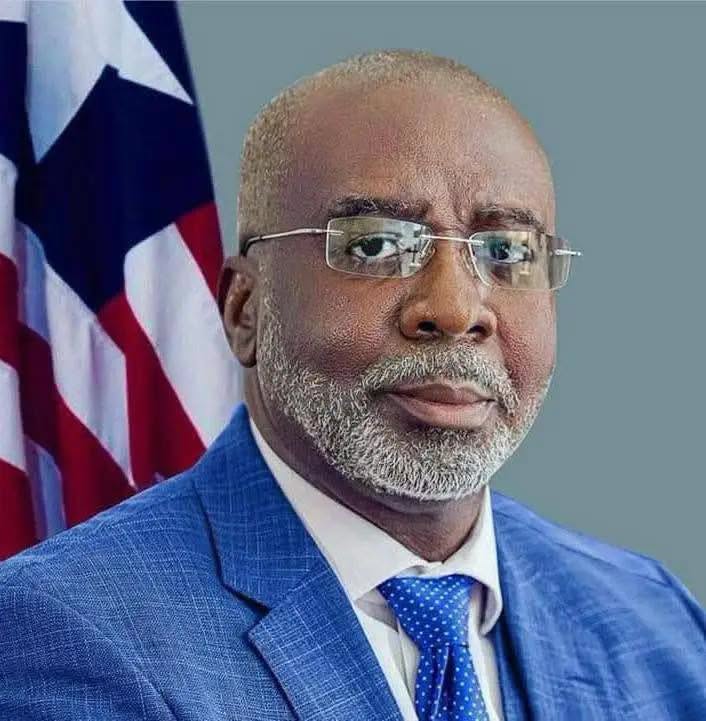
MONROVIA, Liberia — As Liberia’s high-profile Capitol Building arson case remains suspended under an active Supreme Court stay order, Criminal Court “A” at the Temple of Justice has approved temporary medical travel requests for two prominent opposition figures at the center of the proceedings—former House Speaker Cllr. J. Fonati Koffa and Montserrado County District #15 Representative Abu Bana Kamara.
The court’s decision allows both lawmakers to temporarily leave the country for medical reasons while legal proceedings connected to the politically sensitive Capitol arson case remain on hold pending a constitutional review by Liberia’s highest court.
According to official court records, Criminal Court “A” granted separate applications submitted by the defense teams of both lawmakers seeking relief from existing travel restrictions imposed as part of the conditions of their release.
The court approved the requests after reviewing medical justifications presented by their attorneys, authorizing the lawmakers to travel abroad for specialized medical examinations and treatment.
Representative Abu Bana Kamara was granted permission to travel after concerns were raised regarding his health condition. According to information presented before the court, Kamara reportedly experienced significant health complications during his earlier detention, including severe spikes in blood pressure that allegedly required urgent medical attention.
Court officials noted that the request was based on recommendations that the lawmaker undergo further medical evaluation and treatment outside Liberia.
Similarly, former Speaker Cllr. J. Fonati Koffa received court authorization to travel to the United States for medical examinations and related healthcare services.
Official court orders signed by Clerk of Court Hector M. Dolo indicate that Koffa is authorized to remain outside Liberia from June 15, 2026, through July 18, 2026. The court further instructed that both lawmakers must return to Liberia immediately upon the expiration of their approved leave periods and remain available for all future legal proceedings connected to the case.
The medical travel approvals come against the backdrop of one of Liberia’s most politically charged criminal cases in recent years.
The case stems from the devastating fire that engulfed the Joint Chambers of the Capitol Building on December 18, 2024, causing extensive destruction to one of the country’s most important government facilities.
The blaze occurred during a period of heightened political tensions within the House of Representatives, as members of a self-described “Majority Bloc” sought to remove Cllr. Koffa from the position of Speaker.
The incident immediately sparked public controversy and triggered a lengthy criminal investigation by the Liberia National Police.
Following months of forensic examinations, witness interviews, and evidence gathering, state investigators concluded that the fire was not accidental.
Prosecutors subsequently alleged that the incident was part of a deliberate and politically motivated scheme intended to destabilize the Legislature and influence ongoing leadership disputes within the House of Representatives.
Authorities estimated that the destruction caused by the fire exceeded US$1.8 million in damages, making it one of the most significant attacks on a major government institution in Liberia’s recent history.
In June 2025, law enforcement authorities arrested several opposition lawmakers linked to the case, including former Speaker Koffa, Representative Abu Kamara, Representative Dixon Seboe, and Representative Jacob Debee.
The arrests generated widespread public attention and intensified political debate across the country, with supporters and critics offering sharply different interpretations of the allegations.
Following their arrests, the lawmakers were detained at the Monrovia Central Prison, commonly known as South Beach, before later securing their release through a joint criminal appearance bond valued at US$440,000.
Several months later, in November 2025, a Montserrado County Grand Jury formally indicted the defendants on multiple criminal charges arising from the Capitol fire.
The indictment included serious offenses such as arson, criminal mischief, theft of property, and terroristic threats.
During subsequent court appearances, all of the accused lawmakers entered pleas of not guilty and rejected allegations that they played any role in orchestrating or facilitating the destruction of the Capitol Building.
Despite the progression of the case through the lower courts, the substantive trial has not moved forward due to intervention by the Supreme Court of Liberia.
Defense attorneys successfully petitioned the high court after raising concerns about several legal and constitutional issues connected to the prosecution.
Among the issues presented for review were questions relating to legislative immunity, due process protections, evidentiary standards, and the admissibility of digital evidence introduced by state prosecutors during preliminary proceedings.
The defense also challenged aspects of the rulings issued during earlier magistrate court hearings, arguing that important constitutional questions required clarification before the case could proceed to full trial.
In response, a Chamber Justice of the Supreme Court issued a stay order directing Criminal Court “A” to suspend all substantive proceedings in the matter until the full bench of the Supreme Court has the opportunity to review and determine the legal issues raised by the defense.
As a result, while administrative matters such as travel requests and bond conditions continue to be addressed by Criminal Court “A,” the actual trial remains effectively frozen pending the Supreme Court’s decision.
Legal observers note that the high court’s eventual ruling could have significant implications not only for the Capitol arson case but also for broader questions involving legislative privileges, criminal accountability of elected officials, and the standards governing the use of digital evidence in Liberia’s judicial system.
The latest medical travel approvals therefore add another chapter to a case that continues to attract national attention due to its political significance, the high-profile status of the defendants, and the constitutional issues currently before the Supreme Court.
For now, Koffa and Kamara are expected to proceed with their medical consultations abroad while awaiting the outcome of the Supreme Court review that will determine when—and under what legal framework—the Capitol Building arson trial can resume.
With the stay order still in force and key constitutional questions unresolved, the future direction of one of Liberia’s most closely watched criminal cases remains uncertain, leaving many observers asking when the substantive proceedings will finally move forward and what precedent the Supreme Court’s decision may ultimately establish for the country’s justice system.


