


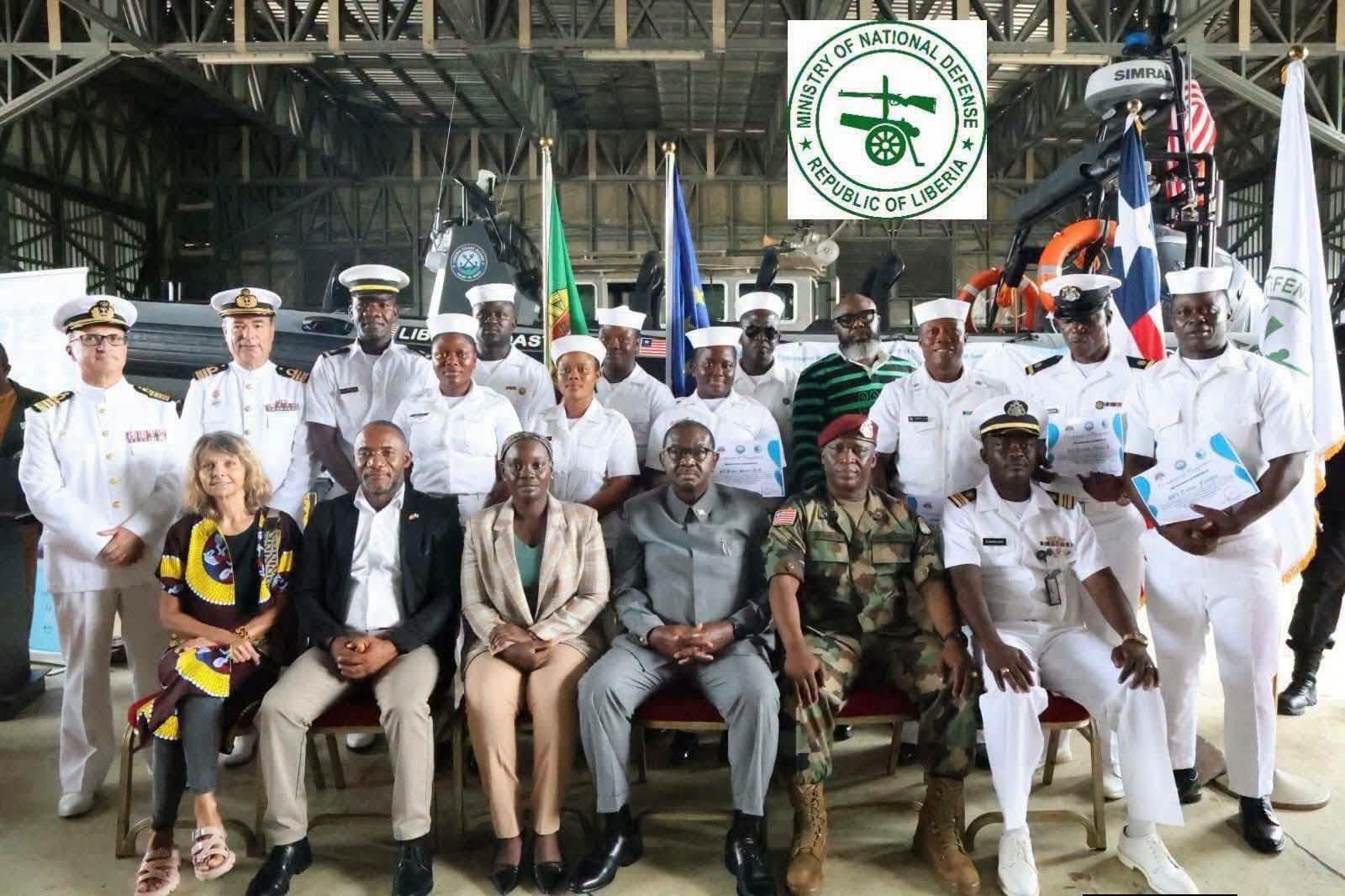
MONROVIA, LIBERIA — Liberia has taken another step toward strengthening its maritime security architecture following the donation of two patrol boats by the European Union, a move that highlights the increasing importance of protecting the country’s territorial waters amid evolving security and economic challenges in the Gulf of Guinea.
The vessels, officially handed over to the Government of Liberia through the EU-funded SWAIMS Project, are expected to significantly enhance the operational capabilities of the Liberia Coast Guard, enabling faster response to security incidents and improved surveillance along the country’s coastline.
The two Rigid-Hulled Inflatable Boats (RHIBs) were presented during a ceremony held at the Coast Guard Headquarters on Bushrod Island, where government officials and international partners emphasized the growing need for stronger maritime enforcement mechanisms across West Africa.
While the donation may appear modest in scale, security experts say it carries broader strategic significance. Liberia possesses vast territorial waters and valuable marine resources, yet maritime enforcement agencies have historically faced challenges related to equipment, logistics, and operational capacity.
The new patrol boats are expected to strengthen Liberia’s ability to combat illegal fishing, maritime trafficking, smuggling operations, piracy, and other transnational crimes that continue to threaten economic stability and regional security.
Illegal fishing alone has long been a major concern for Liberia, depriving local fishermen of livelihoods and costing the country millions of dollars in lost revenue annually. Enhanced patrol capabilities could improve monitoring efforts and help authorities better protect the nation’s marine resources.
Speaking during the handover ceremony, Geraldine Janet George expressed appreciation to the European Union and its partners for their continued investment in Liberia’s security sector. She noted that international cooperation remains critical to strengthening national defense capabilities and safeguarding Liberia’s maritime domain.
For its part, the European Union reaffirmed its commitment to supporting maritime governance and security throughout the region. Anna Brzozowska emphasized the bloc’s ongoing partnership with Liberia in building stronger institutions capable of addressing modern maritime threats.
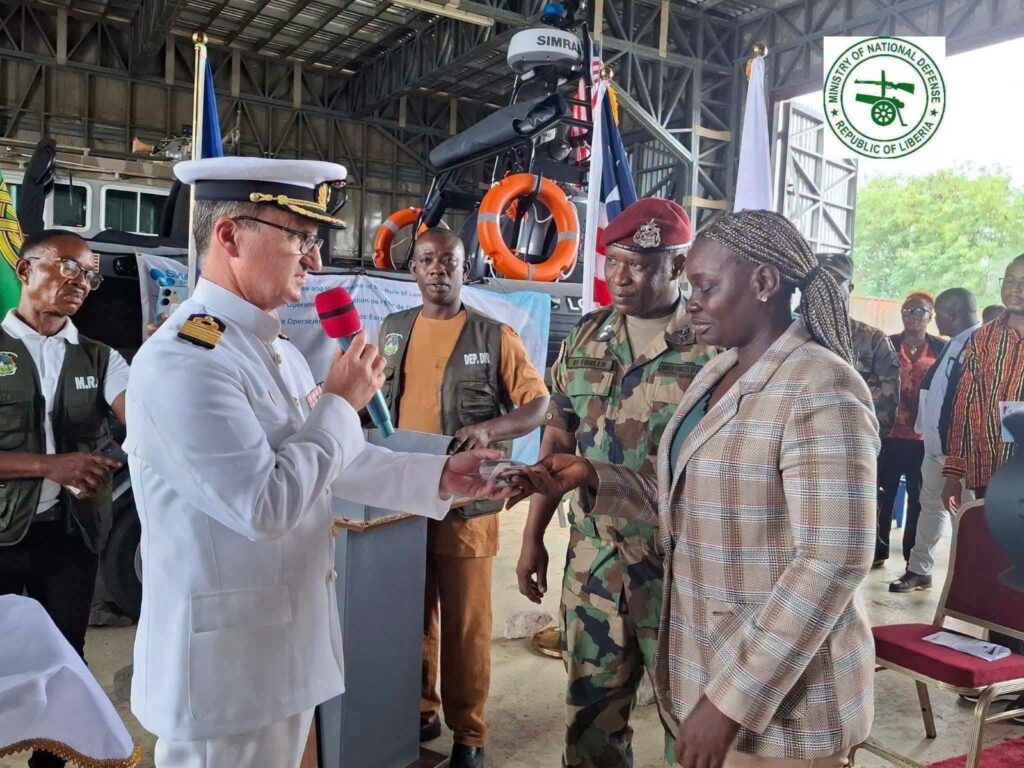
Representing President Joseph Nyuma Boakai, Acting President and Justice Minister N. Oswald Tweh described the donation as a significant contribution to national security and regional stability.
Beyond the boats themselves, the initiative also included specialized training for Coast Guard personnel under the SWAIMS Project, reflecting a broader approach that combines equipment support with human capacity development. Security analysts often argue that sustainable maritime security depends not only on acquiring assets but also on ensuring that personnel possess the skills necessary to effectively operate and maintain them.
The donation comes at a time when countries across the Gulf of Guinea are increasing efforts to strengthen maritime cooperation in response to growing concerns about organized crime, illegal resource exploitation, and cross-border security threats.
For Liberia, the arrival of the patrol boats represents more than a transfer of equipment. It signals a continued effort to modernize maritime enforcement capabilities, protect national resources, and reinforce the country’s role in regional security initiatives.
As maritime threats become increasingly sophisticated, the effectiveness of Liberia’s security strategy will depend on sustained investments in technology, training, and international partnerships. The latest support from the European Union is therefore being viewed not only as a security enhancement, but as part of a broader effort to position Liberia as a more capable guardian of its territorial waters and a stronger partner in regional maritime stability.


