


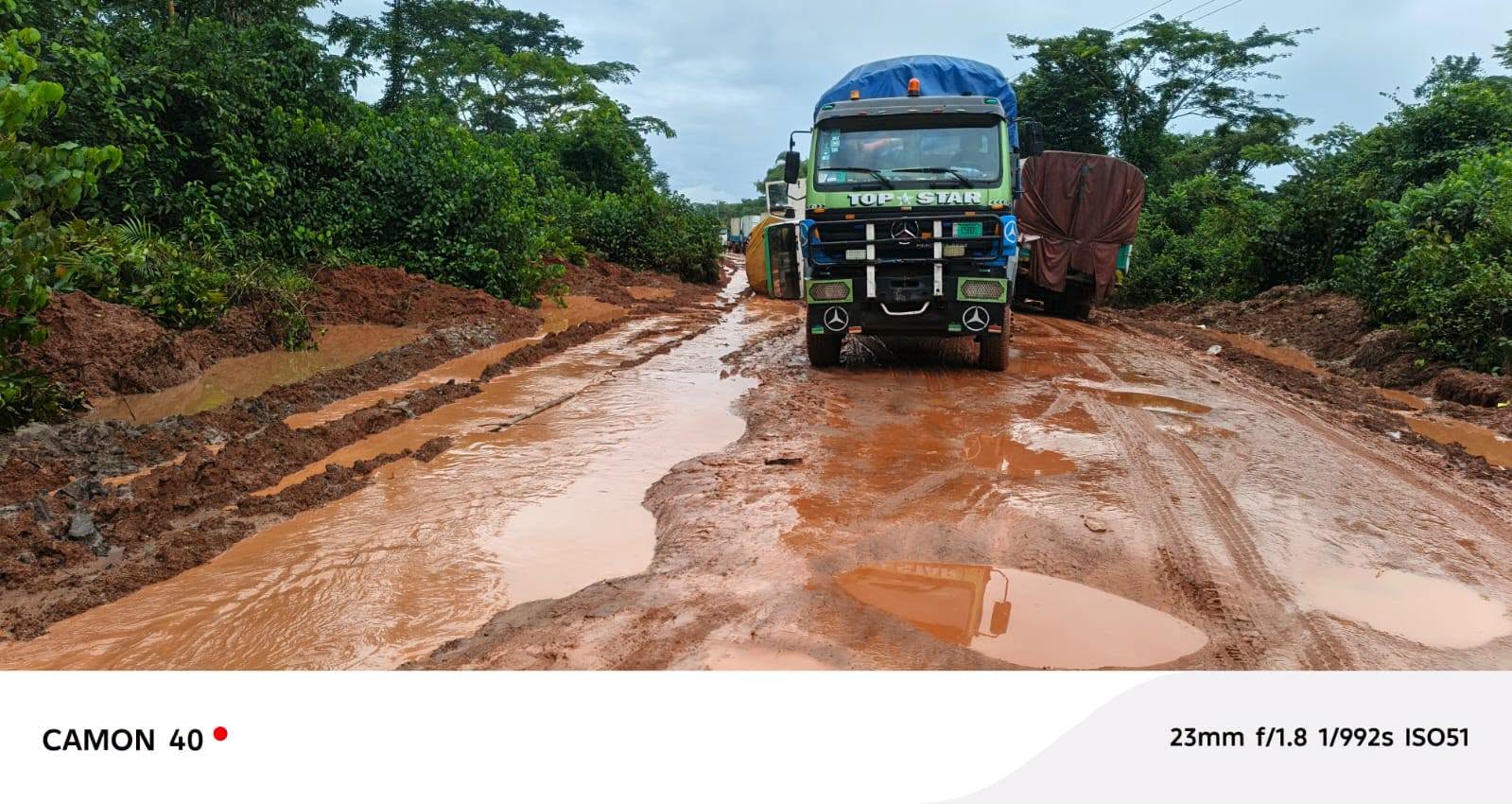
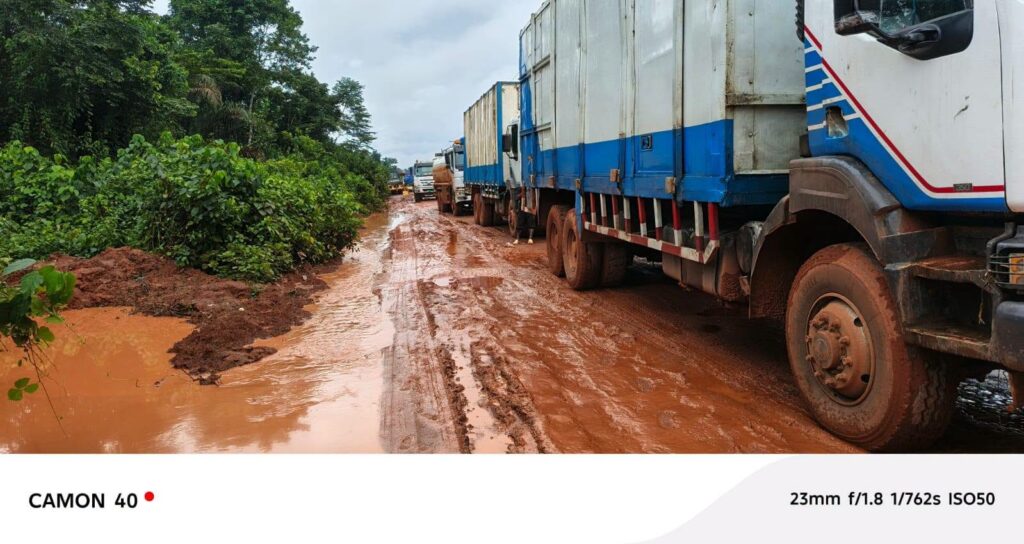
TOE TOWN, Grand Gedeh County – The deteriorating condition of the Toe Town–Tappita highway is once again exposing the fragile state of Liberia’s road infrastructure, as dozens of commercial and private vehicles remain stranded for more than a week, disrupting transportation, trade, and access to essential services across the southeastern region.
The crisis has renewed concerns over the government’s ability to maintain critical road corridors that serve as economic lifelines for thousands of residents. With the rainy season intensifying, motorists say what should be a routine journey has become an uncertain and costly ordeal.
According to investigation found that deep mud, collapsed sections of the highway, and impassable terrain have effectively brought traffic to a standstill, leaving trucks, passenger vehicles, and fuel tankers trapped along the route with little hope of immediate relief.
For drivers, the situation extends far beyond inconvenience. Every additional day spent stranded translates into mounting financial losses, delayed deliveries, damaged vehicles, and growing uncertainty.
DKNN Grand Gedeh County Correspondent
Tanker driver Keita Barry, one of the motorists caught on the highway, described the experience as increasingly unbearable.
“The condition of this road is getting worse every day. Even though it is not as terrible as it was between 2018 and 2023, it remains a serious challenge for motorists and transport operators,” Barry told journalists.
His remarks illustrate a troubling reality: while some improvements may have occurred in previous years, they have not been sufficient to guarantee reliable year-round access to southeastern Liberia.
Barry explained that prolonged delays have significantly increased transportation costs, interrupted fuel deliveries to surrounding communities, and forced many drivers to survive without adequate food, shelter, or basic sanitation while waiting for the road to become passable.
The implications extend beyond stranded motorists. The Toe Town–Tappita highway serves as a critical transportation corridor linking communities in Grand Gedeh and neighboring counties. When the road becomes impassable, local businesses struggle to move goods, farmers find it difficult to transport agricultural produce to markets, and residents face growing challenges in accessing healthcare, education, and other essential services.
Community members warn that continued neglect of the highway risks deepening the economic isolation of southeastern Liberia, where poor infrastructure has long been identified as a major obstacle to development.
The latest crisis has also reignited broader questions about Liberia’s infrastructure priorities. While successive governments have pledged to improve road connectivity nationwide, many rural highways continue to deteriorate during the rainy season, leaving entire communities vulnerable to prolonged isolation.
Residents and transport operators are now calling on the Ministry of Public Works and the Government of Liberia to move beyond temporary interventions and implement durable rehabilitation measures capable of withstanding seasonal weather conditions.
For many who depend on the Toe Town–Tappita corridor, the issue is no longer simply about road maintenance—it is about economic survival, public safety, and equal access to national development.
Until meaningful rehabilitation begins, motorists fear that every rainy season will continue to turn one of southeastern Liberia’s most important highways into a symbol of the country’s persistent infrastructure challenges.


