


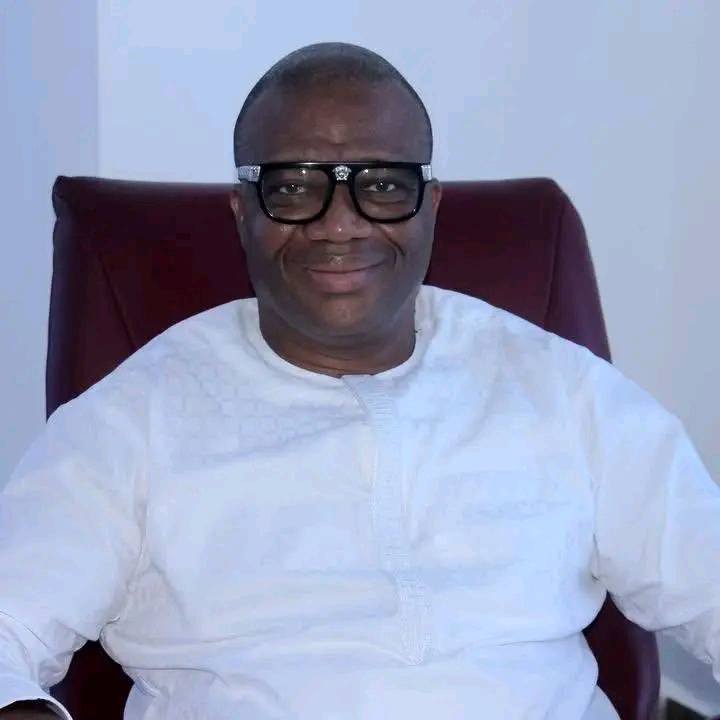
MONROVIA, Liberia – The absence of the ruling Unity Party from the Congress for Democratic Change’s (CDC) 22nd anniversary celebration has sparked fresh debate about political tolerance and democratic maturity in Liberia, with Movement for Progressive Change (MPC) Political Leader Simeon Freeman arguing that the occasion represented a missed opportunity to demonstrate national unity beyond partisan politics.
Speaking after attending the CDC’s anniversary program in Zwedru, Grand Gedeh County, Freeman framed the event as more than a celebration of one political party. Instead, he described it as a national democratic milestone that should have encouraged participation across political divides, including from the governing party.
According to Freeman, Liberia’s democracy is strengthened when political competitors recognize one another’s contributions to the country’s democratic evolution, regardless of ideological differences or electoral rivalry.
“The Unity Party missed an opportunity to send a powerful message that democracy is bigger than political competition,” Freeman asserted, arguing that attendance by the ruling party would have reflected respect for Liberia’s multiparty system rather than political concession.
The CDC commemorated 22 years since its establishment, bringing together thousands of supporters alongside several opposition political leaders from across the country. The gathering highlighted the party’s political journey—from opposition to governing party and back to the opposition—making it one of Liberia’s longest-standing and most influential political institutions.
Freeman praised the CDC for reaching what he described as an important democratic milestone, noting that the party has endured both electoral victories and defeats while remaining an active participant in Liberia’s political process.
One of the most discussed aspects of the celebration was the absence of former President George Weah, the CDC’s founder and political standard-bearer. While some observers questioned whether the event could maintain its significance without its most recognizable figure, Freeman dismissed that narrative.
“The event was well attended, even in his absence, and it was a resounding success,” Freeman said.
His remarks suggest that the CDC’s organizational structure and support base extend beyond the personal influence of its founding leader, an observation that may shape future discussions about the party’s political resilience ahead of the 2029 elections.
Beyond the celebration itself, Freeman used the occasion to advance a broader argument about Liberia’s democratic culture. He maintained that healthy democracies require political parties to compete vigorously during elections while preserving mutual respect outside the campaign environment.
According to him, gestures of political courtesy—such as attending significant events hosted by rival parties—can help reduce polarization, strengthen national cohesion, and build public confidence in democratic institutions.
“If the Unity Party had attended, it would have shown that political rivals can still respect each other’s contributions to peace and democracy,” he stated.
Freeman further argued that political competition should not be viewed as hostility but as an essential mechanism for improving governance, accountability, and public policy.
He also criticized the Unity Party-led administration, contending that the government has devoted excessive attention to confronting political opponents rather than focusing on governance and addressing pressing national challenges, including economic hardship, unemployment, and investment.
According to Freeman, constructive criticism from opposition parties should be viewed as an opportunity to improve public administration rather than as a political attack.
He emphasized that sustained peace and political stability remain essential for attracting foreign investment, expanding employment opportunities, and stimulating economic growth, adding that both the government and the opposition share responsibility for preserving Liberia’s democratic stability.
Despite his criticism of the ruling establishment, Freeman concluded on a conciliatory note by congratulating the CDC for selecting Zwedru as the venue for its anniversary celebration and successfully organizing what he described as a vibrant national political gathering.
He said the event created an important platform for dialogue among political leaders from different parties, offering an opportunity to exchange ideas and explore common solutions to Liberia’s longstanding governance and economic challenges.
“The event created a great opportunity for collaboration of ideas and perspectives to improve the lives of Liberians,” Freeman concluded.
Freeman’s remarks reflect an emerging conversation within Liberia’s political landscape about whether democratic progress should be measured solely through electoral competition or also by the willingness of political rivals to engage one another respectfully. As the country gradually moves toward the 2029 elections, questions surrounding political tolerance, inter-party cooperation, and democratic maturity are likely to remain central themes in Liberia’s evolving political discourse.


