


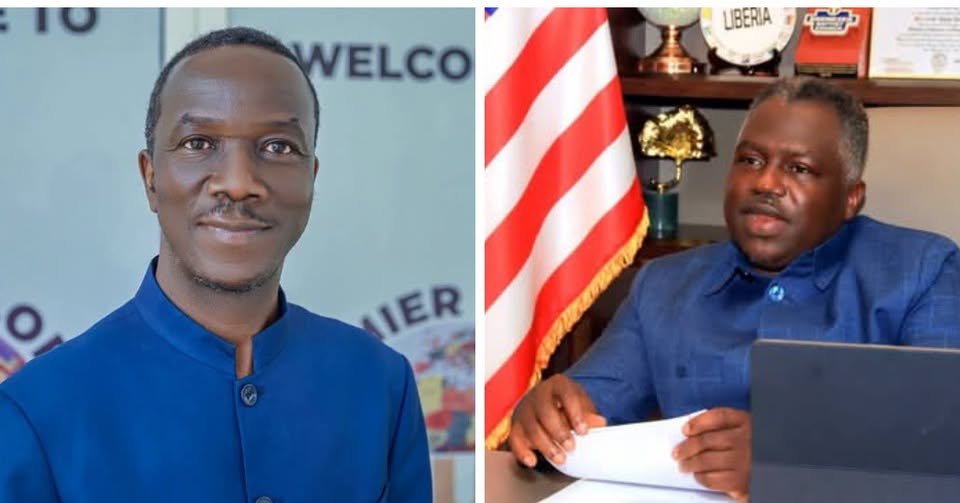
Fresh allegations from former Mines and Energy Minister Wilmot Paye are raising questions about political interference, accountability, and the intersection of government authority with academic institutions in Liberia.
Speaking publicly about his removal from office, Paye asserted that his dismissal was not merely administrative, but stemmed from his refusal to participate in what he described as an attempt to suppress an academic misconduct case linked to a senior government figure.
According to Paye, the controversy centers on allegations involving former Commerce Inspector General Dorr Cooper and an academic fraud matter at the University of Liberia. He claimed that during the unfolding situation, Vice President Jeremiah Kpan Koung Sr. reached out to him with a request that placed him in an ethical dilemma.
Paye alleged that he was asked to use his wife—who serves as a lecturer at the University of Liberia—to influence or manage the situation in a way that would shield Cooper from public scrutiny. He stated that he rejected the request, arguing that such an action would undermine both institutional integrity and personal ethics.
Instead, Paye said he advised that the appropriate course of action would be for Cooper to step down from his government role while the matter was addressed. He maintains that his refusal to cooperate with the alleged request contributed directly to his subsequent dismissal.
The claims, made during a radio appearance, have introduced a new dimension to discussions about governance and accountability, particularly regarding how allegations of misconduct are handled within both public institutions and the academic sector.
While there has been no official response from the Vice President or other parties named in the allegations, the assertions are likely to intensify public debate over transparency and the limits of political influence.
Paye, who previously led the Ministry of Mines and Energy, was known for emphasizing reforms in resource governance and revenue transparency during his tenure. Since his removal, he has remained outside of government, but his latest remarks signal a re-entry into public discourse on issues of integrity and leadership.
The unfolding claims place a spotlight on broader concerns about whether institutional processes in Liberia are sufficiently insulated from political pressure, particularly in cases involving high-profile individuals.


