


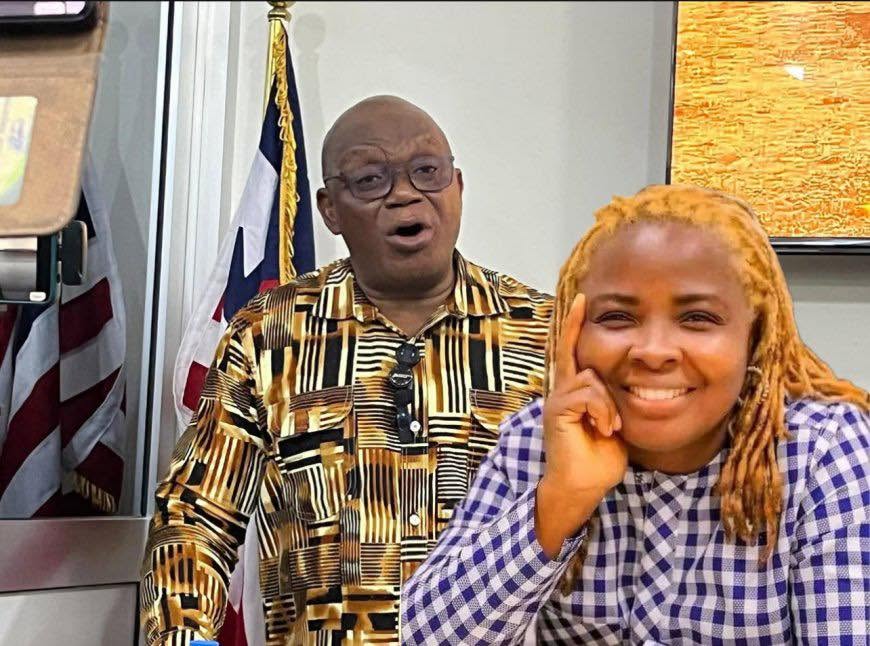
MONROVIA, Liberia — New questions are emerging over the enforcement of judicial procedures after former Chief of Protocol to ex-President George Weah, Finda Bondo, voluntarily returned to Liberia and surrendered to Criminal Court “C” despite an active arrest warrant reportedly issued ahead of her arrival.
Bondo, who is among several former government officials facing serious criminal allegations, appeared before the court on Tuesday, June 9, shortly after entering the country. However, despite the existence of a court-issued writ of arrest, she was not taken into custody upon arrival, a development that has triggered scrutiny from authorities and intensified public interest in the case.
According to judicial sources, the former protocol chief surrendered herself through her legal representatives and immediately moved to satisfy bail requirements established under Liberian law.
Court records show that Bondo’s lawyers filed a property bond valued at US$435,560, which was subsequently reviewed and approved by Criminal Court “C” Resident Judge Ousman Feika. The approval of the bond allowed her to remain at liberty while awaiting trial, rather than being detained at the Monrovia Central Prison.
The case stems from an indictment handed down by the Montserrado County Grand Jury, which charged Bondo and several co-defendants with a series of alleged financial and administrative crimes.
The charges include money laundering, theft of property, misuse of public money, misuse of public records, criminal conspiracy, and forgery. Prosecutors allege that the accused individuals participated in activities that violated Liberia’s criminal and financial laws, although the defendants remain presumed innocent unless proven guilty in a court of law.
Judicial documents indicate that prior to Bondo’s arrival in Liberia, Criminal Court “C” had issued a writ of arrest and transmitted it to the Liberia Immigration Service (LIS) at Roberts International Airport. The purpose of the writ was to ensure that authorities were prepared to execute the court’s order upon her entry into the country.
However, despite the reported transmission of the arrest order, Bondo entered Liberia without being detained.
The circumstances surrounding that development have now become a subject of concern among investigators and anti-corruption authorities.
Sources familiar with the matter disclosed that the Assets Recovery and Property Retrieval Task Force is seeking clarification regarding why the court-issued writ was apparently not enforced.
The task force is reportedly examining whether all relevant agencies were properly informed, whether established procedures were followed, and whether any administrative or procedural failures contributed to the situation.
The review is expected to determine if there were lapses in communication or execution among the institutions responsible for implementing judicial directives.
Legal observers note that while defendants are entitled to seek bail under Liberia’s judicial system, questions surrounding the execution of arrest warrants are separate matters that can affect public confidence in the administration of justice.
The incident has therefore shifted attention beyond the criminal allegations themselves and toward the effectiveness of coordination between judicial authorities, immigration officials, and law enforcement agencies.
The prosecution of Bondo and her co-defendants forms part of a broader effort by authorities to investigate allegations involving the misuse of public resources and other financial crimes linked to former public officials.
The case has attracted significant national attention because of the senior positions previously held by some of the accused individuals during the administration of former President George Weah.
Anti-corruption advocates and governance observers have repeatedly emphasized the importance of ensuring that such cases are handled transparently, professionally, and in accordance with due process.
They argue that public trust in Liberia’s justice system depends not only on the prosecution of alleged wrongdoing but also on the consistent application of legal procedures regardless of an individual’s political status or public profile.
For now, Bondo remains free under the terms of the approved bond while prosecutors continue preparing their case before Criminal Court “C”.
Meanwhile, attention is increasingly focused on the findings of the Assets Recovery and Property Retrieval Task Force regarding the unexecuted arrest warrant and whether any further action will be taken against individuals or institutions responsible for enforcing court orders.
As the proceedings move forward, the case is expected to remain one of Liberia’s most closely watched legal battles, with implications extending beyond the fate of the defendants to broader questions about accountability, institutional effectiveness, and the rule of law.
The matter remains under active judicial consideration, and prosecutors are expected to proceed with the case based on the charges outlined in the indictment as the court prepares for the next phase of the proceedings.


