


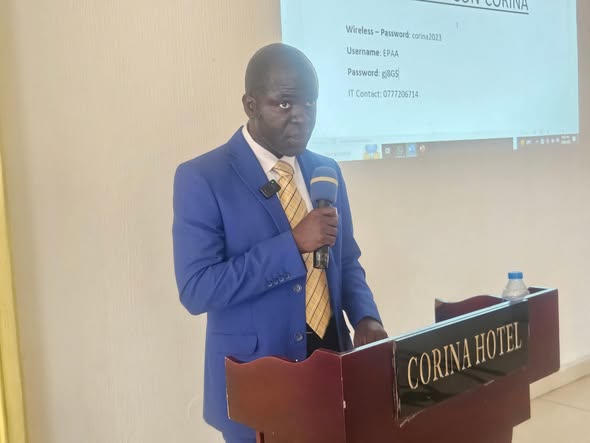
SANNIQUELLIE, Nimba County — Liberia’s observance of World Environment Day 2026 became a powerful call to action as Environmental Protection Agency (EPA) Executive Director Dr. Emmanuel K. Urey Yarkpawolo urged citizens, institutions, businesses, and communities across the country to take greater responsibility in confronting climate change and protecting the nation’s natural environment.
Speaking during the national celebration held in Sanniquellie, Nimba County, Dr. Yarkpawolo emphasized that environmental protection can no longer be viewed solely as a government responsibility. Instead, he said, meaningful climate action requires the collective participation of all sectors of society.
The event, observed under the global theme “Climate Action” and the national slogan “Clean Air, Good Health,” brought together government officials, environmental advocates, community leaders, students, development partners, and residents to reflect on Liberia’s environmental progress and the challenges that still lie ahead.
Addressing attendees, Dr. Yarkpawolo stressed that the impacts of climate change are already being felt across Liberia and around the world, making it essential for every citizen to contribute to solutions that promote environmental sustainability and public well-being.
“Climate action requires all of us,” he declared. “Government alone cannot address these challenges. Businesses, schools, communities, religious institutions, development partners, civil society organizations, the media, and especially young people all have critical roles to play in protecting our environment and securing a sustainable future.”
The EPA Executive Director highlighted several environmental initiatives undertaken by the Government of Liberia under the leadership of President Joseph Nyuma Boakai, Sr., describing them as important steps toward strengthening environmental governance and climate resilience.
Among the key achievements cited were the decentralization of EPA operations to all fifteen counties, allowing environmental monitoring and regulatory activities to reach communities across the country more effectively. He also pointed to expanded environmental enforcement efforts aimed at ensuring compliance with environmental laws and regulations.
Dr. Yarkpawolo further highlighted ongoing investments in climate-resilient agriculture designed to help farmers adapt to changing weather patterns, as well as coastal defense projects intended to protect vulnerable communities from erosion and rising sea levels.
“The Government has advanced coastal defense, climate-resilient agriculture, support to fisheries and vulnerable communities, early warning systems, renewable energy, and net metering initiatives,” he noted.
He added that significant progress has also been made in promoting renewable energy development, improving air quality monitoring systems, and strengthening measures to control pollution throughout the country.
While acknowledging these achievements, Dr. Yarkpawolo stressed that much more remains to be done and called on Liberians to adopt environmentally responsible behaviors in their daily lives.
He urged citizens to stop the practice of open burning, which contributes to air pollution and public health problems, while encouraging communities to maintain cleaner surroundings and report environmental violations to relevant authorities.
“Every Liberian has a role to play,” he said. “Keeping our communities clean, complying with environmental regulations, and protecting our natural resources are responsibilities that belong to all of us.”
The EPA Executive Director also challenged the private sector to become more proactive in supporting environmental sustainability. He called on businesses to invest in cleaner technologies, improve waste management systems, and adopt practices that minimize environmental harm while supporting economic growth.
According to him, sustainable business practices are not only beneficial for the environment but also contribute to long-term economic stability and competitiveness.
A significant portion of Dr. Yarkpawolo’s remarks focused on the role of young people in shaping Liberia’s environmental future. He described Liberia’s youth as indispensable partners in the country’s climate and sustainability efforts.
“This country needs your innovation and leadership,” he told students and young participants attending the event. “You are not only the leaders of tomorrow—you are partners in the solutions we need today.”
He encouraged young Liberians to embrace environmental stewardship, develop innovative ideas, and participate actively in initiatives aimed at addressing climate and environmental challenges.
Beyond youth engagement, Dr. Yarkpawolo called on schools, churches, mosques, civil society organizations, and media institutions to strengthen environmental awareness campaigns and help transform environmental knowledge into practical action.
He emphasized that education and public awareness remain among the most effective tools for changing behaviors and building a culture of environmental responsibility.
As Liberia continues to pursue sustainable development and climate resilience, Dr. Yarkpawolo urged citizens to remain committed to protecting the environment for future generations.
“The environment is our inheritance, but it is also our responsibility,” he said. “We received it from those who came before us, and we must pass it on in a better condition to those who will come after us.”
His remarks served as a reminder that environmental protection extends beyond policy discussions and international commitments. It requires practical actions at every level of society, from individual households to national institutions.
The World Environment Day celebration concluded with renewed calls for stronger collaboration among stakeholders and greater public participation in climate action initiatives.
For many participants, the event underscored a growing recognition that environmental sustainability, clean air, public health, and economic development are closely interconnected. As climate-related challenges continue to affect communities worldwide, Liberia’s environmental leadership is increasingly emphasizing collective responsibility as the foundation for building a cleaner, healthier, and more resilient future.
The 2026 observance of World Environment Day therefore served not only as a celebration of environmental progress but also as a national call to action—one that encourages every Liberian to become an active participant in safeguarding the country’s natural resources and advancing climate solutions for generations to come.


