


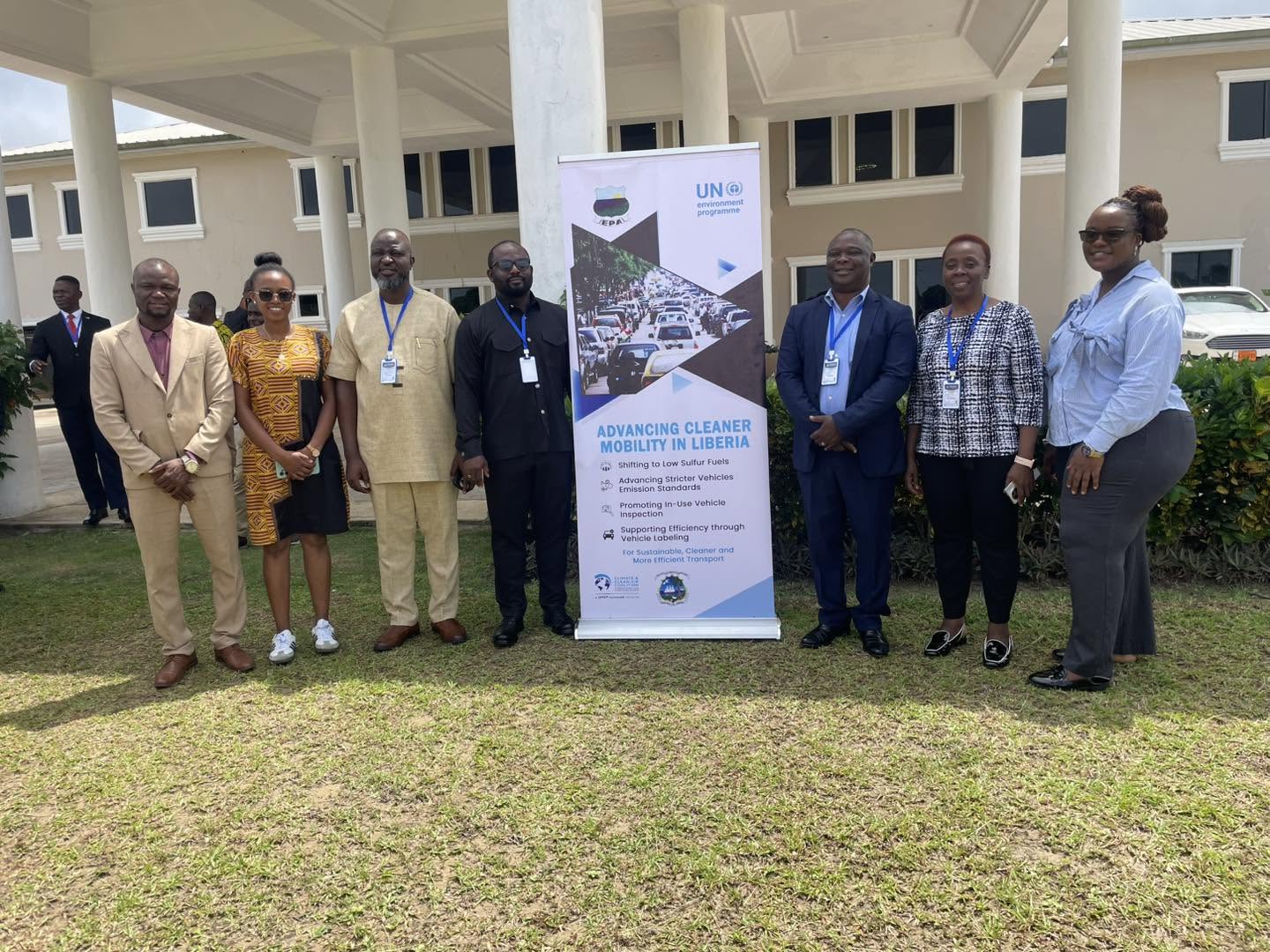
MARGIBI COUNTY, Liberia — As concerns grow over worsening air pollution, increasing numbers of aging vehicles, and the environmental impact of transportation, the Environmental Protection Agency (EPA) of Liberia is intensifying efforts to modernize the country’s transport sector through stricter fuel quality regulations and vehicle emission standards.
The renewed commitment was highlighted during the National Dissemination Workshop on Promoting Cleaner Fuels and Vehicle Strategies in Liberia, held at the Royal Ambassador Hotel in Margibi County. The initiative marks a significant step in Liberia’s broader drive to improve environmental sustainability, protect public health, and advance its climate commitments.
Speaking on behalf of the EPA, Deputy Executive Director for Administration Anthony S. Kollie stressed that the growing number of aging vehicles operating across Liberia continues to pose serious environmental and health challenges. According to him, the rapid expansion of the country’s vehicle fleet, coupled with the continued importation of high-emitting vehicles and low-quality fuels, is contributing to deteriorating air quality and undermining national efforts aimed at sustainable development.
Kollie warned that without decisive action, the environmental and public health consequences could become more severe, particularly in densely populated urban areas where vehicle emissions remain a major source of pollution.
The initiative is being supported by the Climate and Clean Air Coalition (CCAC) and implemented with technical assistance from the United Nations Environment Programme (UNEP). Through this partnership, a comprehensive assessment of Liberia’s fuel quality and vehicle efficiency landscape has been completed.
The assessment provides evidence-based findings on the current state of fuel and vehicle emissions in Liberia while outlining practical recommendations for improving standards, strengthening regulations, enhancing compliance monitoring systems, and promoting cleaner transportation alternatives.
According to workshop participants, the findings offer a roadmap for policymakers and regulators seeking to address the environmental impacts of the transportation sector while supporting economic growth and mobility.
EPA officials emphasized that the agency intends to work closely with a wide range of stakeholders to ensure the successful implementation of the proposed reforms. These stakeholders include government ministries and agencies, private-sector actors, transport unions, civil society organizations, and international development partners.
Kollie noted that collaboration will be essential in translating policy recommendations into measurable actions capable of delivering tangible environmental and public health benefits.
Among the key measures being considered are stronger regulatory frameworks governing fuel imports, enhanced monitoring systems to ensure compliance with established standards, and stricter enforcement mechanisms aimed at preventing the importation and use of substandard fuels and highly polluting vehicles.
The EPA also plans to intensify public education and awareness campaigns designed to inform citizens about the benefits of cleaner fuels and environmentally responsible transportation practices. Capacity-building initiatives for regulatory institutions and technical agencies are also expected to play a critical role in ensuring the effectiveness of the reforms.
Environmental experts at the workshop pointed out that transportation remains one of the major contributors to air pollution globally, with vehicle emissions linked to respiratory illnesses, cardiovascular diseases, and broader environmental degradation. They noted that adopting cleaner fuel standards and improving vehicle efficiency can significantly reduce harmful emissions while promoting healthier communities.
The reforms are also closely aligned with Liberia’s international climate commitments, particularly the country’s Nationally Determined Contributions (NDCs) under the Paris Agreement. By reducing transport-related emissions, Liberia aims to contribute to global efforts to combat climate change while strengthening national resilience against environmental threats.
Participants described the workshop as a critical milestone in Liberia’s journey toward building a cleaner, more efficient, and climate-resilient transportation system. They stressed that improving fuel quality and reducing vehicle emissions will not only benefit the environment but also support economic productivity, public health, and sustainable urban development.
As Liberia continues to pursue its climate and development objectives, the EPA maintains that modernizing the transport sector remains a key priority. Officials believe that stronger regulations, enhanced enforcement, stakeholder cooperation, and public awareness can help create a transportation system that balances mobility needs with environmental responsibility.
The agency reaffirmed its commitment to ensuring that cleaner fuels and vehicle emission reforms become a cornerstone of Liberia’s broader environmental agenda, helping the country reduce harmful emissions, improve air quality, and move closer to achieving its climate targets by 2035.
For many observers, the initiative signals a growing recognition that sustainable transportation is no longer simply an environmental issue, but a critical component of national development, public health protection, and long-term economic resilience.


