


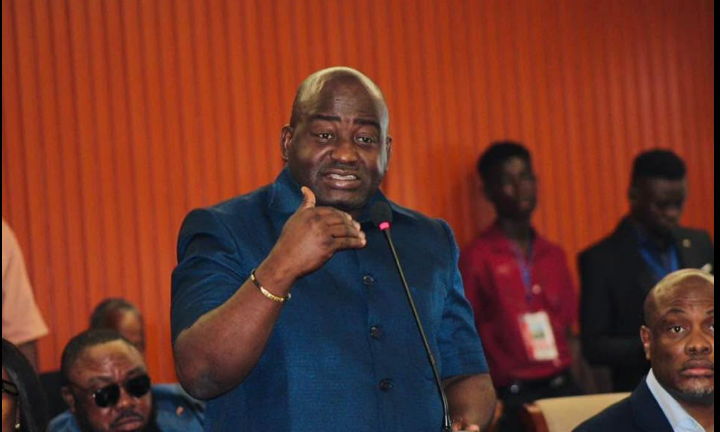
MONROVIA, LIBERIA — Nimba County District 7 Representative Musa Hassan Bility has drawn striking parallels between Liberia’s political evolution and George Orwell’s classic novel Animal Farm, arguing that the country’s greatest challenge is not the struggle to attain power, but the failure to transform how power is exercised.
In a reflective essay titled “Letter from Saclepea: Liberia’s ‘Animal Farm,'” Bility used Orwell’s political allegory to examine Liberia’s democratic journey, contending that successive governments have often repeated the mistakes of those they replaced instead of delivering the reforms they promised.
The lawmaker’s commentary comes at a time when Liberia continues to face public debate over governance, accountability, corruption, youth unemployment, public service delivery, and the management of the country’s abundant natural resources.
Beyond Revolutions: Has Liberia Truly Changed?
According to Bility, Liberia has experienced two defining political transformations—the country’s independence in 1847 and the 1980 military coup. While each promised justice, equality, and national renewal, he argued that both ultimately demonstrated how political transitions alone cannot guarantee meaningful change.
Quoting the central lesson of Orwell’s novel, Bility wrote: “Revolutions do not fail because of bad slogans. They fail because of bad human behavior.”
His argument suggests that replacing leaders without reforming institutions often results in the same patterns of governance under different political actors.
Orwell’s Characters as Mirrors of Liberia’s Politics
Throughout the essay, Bility assigns symbolic meaning to the principal characters in Animal Farm, using them to illustrate recurring features of Liberian politics.
He describes Old Major as representing visionary leaders who inspire hope but whose dreams often remain unrealized because vision alone cannot sustain national transformation.
He portrays Napoleon, the pig who eventually becomes an authoritarian ruler in Orwell’s novel, as symbolic of leaders who campaign on promises of reform but gradually consolidate power while resisting accountability.
According to Bility, Snowball represents innovation, competence, and independent thinking—qualities he believes are frequently marginalized whenever they challenge entrenched political interests.
Perhaps his sharpest criticism is reserved for Squealer, whom he characterizes as the embodiment of political propaganda.
“He represents the professional defenders of failure,” Bility wrote. “He is the man who can explain away corruption, justify incompetence, and transform disappointment into success through words alone.”
The Silent Majority
A major focus of Bility’s reflection is Benjamin, the skeptical donkey who recognizes injustice but chooses silence.
The lawmaker argues that Benjamin represents many Liberians who understand the country’s governance challenges but remain reluctant to speak out.
“Liberia is full of Benjamins,” Bility wrote.
He cited concerns including corruption, unequal distribution of natural resource wealth, weak public institutions, poor healthcare services, youth unemployment, and underdevelopment in resource-rich communities.
According to him, widespread public awareness without corresponding civic action allows systemic problems to persist.
Ordinary Citizens Bear the Greatest Burden
Bility also draws attention to Boxer, the hardworking horse whose unwavering loyalty ultimately goes unrewarded.
He argues that Boxer symbolizes ordinary Liberians—including farmers, teachers, nurses, miners, traders, and other workers—who continue to make sacrifices while waiting for improved living conditions.
“A nation that consumes the sacrifices of its people without improving their lives is a nation moving toward failure,” he wrote.
The observation reflects broader national conversations about whether economic growth and public resources are translating into tangible improvements for ordinary citizens.
A Warning Against Blind Political Loyalty
Another central theme of Bility’s essay is his criticism of blind partisanship.
He likens Orwell’s sheep—who repeatedly echo political slogans without questioning leadership—to citizens who prioritize party loyalty over critical thinking.
According to Bility, democracies are weakened when public debate gives way to unquestioning political allegiance.
Conversely, he identifies the hens in Orwell’s novel as symbols of resistance, arguing that citizens have both the right and responsibility to challenge injustice, even when success is uncertain.
Institutions, Not Individuals
The broader message of Bility’s essay extends beyond criticism of any particular administration.
He argues that Liberia’s long-term success will depend less on who occupies public office and more on whether institutions become stronger than individual political leaders.
“The destination,” he wrote, “is a society where power serves people, where resources benefit citizens, where institutions are stronger than individuals, and where patriotism is measured not by slogans but by results.”
Political observers note that Bility’s reflections tap into longstanding concerns about governance across successive administrations. While Liberia has maintained constitutional democracy for more than two decades following years of conflict, debates continue over institutional reform, transparency, public accountability, and equitable development.
By invoking Animal Farm, the lawmaker challenges Liberians to examine whether the country has genuinely transformed its governance culture or simply witnessed changes in political leadership without corresponding institutional change.
His concluding message echoes the central warning of Orwell’s novel: lasting national progress cannot be measured solely by elections, revolutions, or transfers of power, but by whether government consistently delivers justice, opportunity, accountability, and improved living standards for its citizens.
For Bility, the question confronting Liberia is no longer whether change has occurred—but whether that change has fundamentally altered the character of power itself.


