


Liberia’s first utility-scale solar project has emerged not just as an energy milestone, but as a rare example of political continuity in a system often defined by disruption between administrations.
The journey began on February 21, 2023, when former President George Manneh Weah presided over the signing of a US$96 million financing agreement at the C. Cecil Dennis Auditorium. His Finance Minister, Samuel D. Tweah Jr., formalized the deal with the World Bank’s International Development Association under the regional RESPITE program, setting the stage for the construction of a 60-megawatt solar facility at Mount Coffee.
At the time, skepticism surrounded the project. Critics questioned its feasibility, citing technical complexity and Liberia’s history of stalled initiatives. Yet, despite political transition in January 2024, the project defied expectations by continuing uninterrupted.
On October 12, 2024, President Joseph Nyuma Boakai traveled to Mount Coffee to officially launch construction. The moment signaled more than the start of physical work—it reflected a shift toward preserving national projects beyond political cycles.
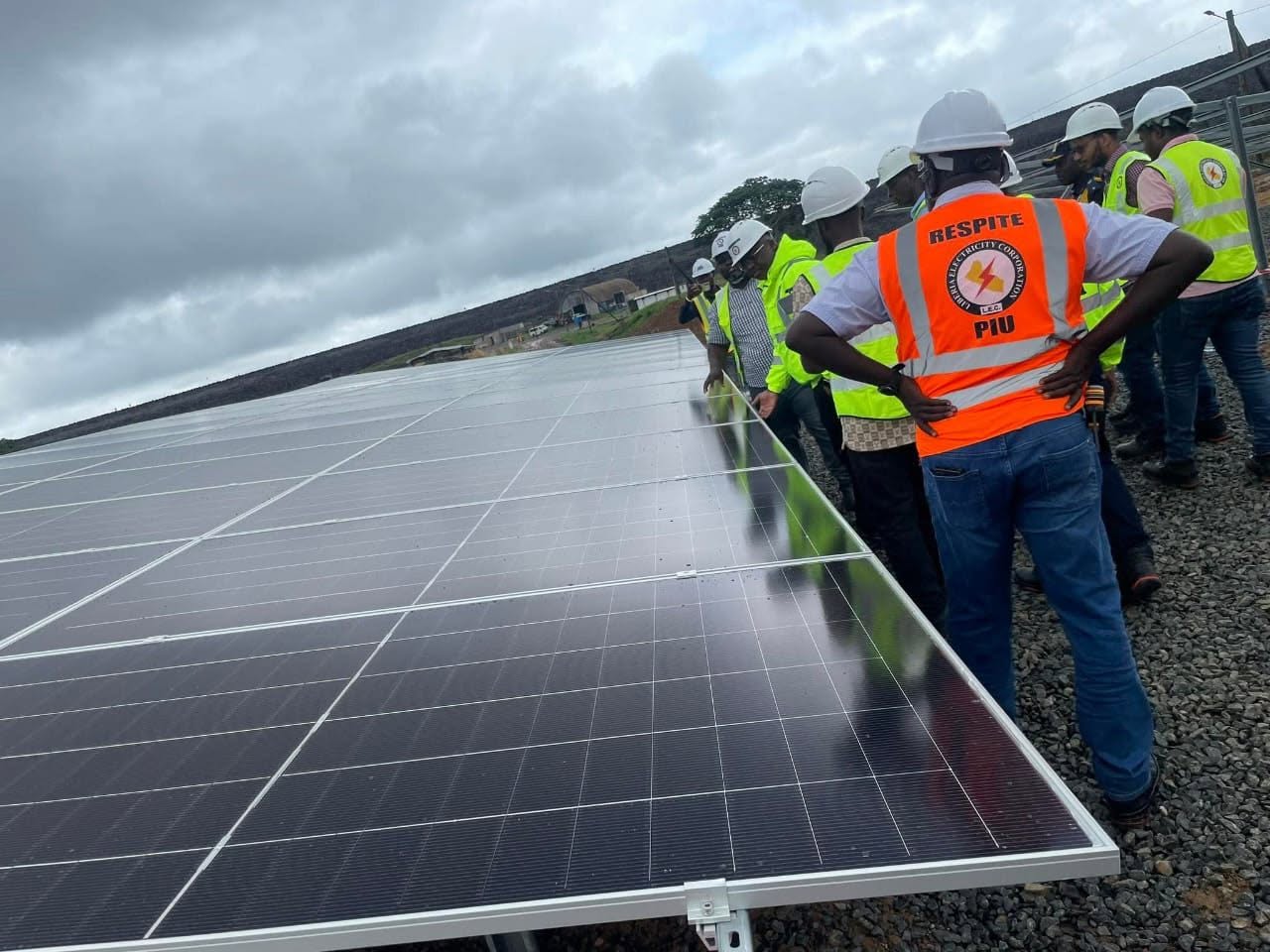
Work progressed rapidly. Engineers cleared the rugged terrain near the Mount Coffee Hydropower Plant, and over the next 18 months, teams led by Project Director Bill Hakin and Solar Manager Dominic Gono installed nearly 40,000 solar panels, 52 inverters, and the necessary infrastructure to connect the facility to Liberia’s national grid. International partners, including World Bank officials such as Managing Director Paschal Donohoe and Country Manager Georgia Wallen, monitored progress through multiple site visits.
By March 2026, the solar farm had already begun supplying electricity to the grid during testing—a quiet but significant breakthrough for a country long affected by seasonal power shortages.
On June 5, 2026, less than two years after construction began, President Boakai returned to Mount Coffee to formally dedicate the 20-megawatt facility. The completed installation now contributes renewable energy to the national grid, helping to reduce reliance on costly diesel generation and improve electricity stability for homes, businesses, and industries.
The project represents the first phase of a broader 60-megawatt plan, with future expansion already under consideration.
The significance of the Mount Coffee Solar Farm extends beyond energy production. It highlights an uncommon alignment between two administrations—one that initiated the project and another that carried it forward to completion. In a political environment where transitions often halt or reverse progress, this continuity stands out.
Today, the facility delivers tangible benefits: increased power supply, improved reliability, and a step toward sustainable energy. More importantly, it signals what is possible when national development projects are allowed to outlast political divisions.


