


—Tweah Says Zwedru Must Become the Beginning of Liberia’s Leadership Reset
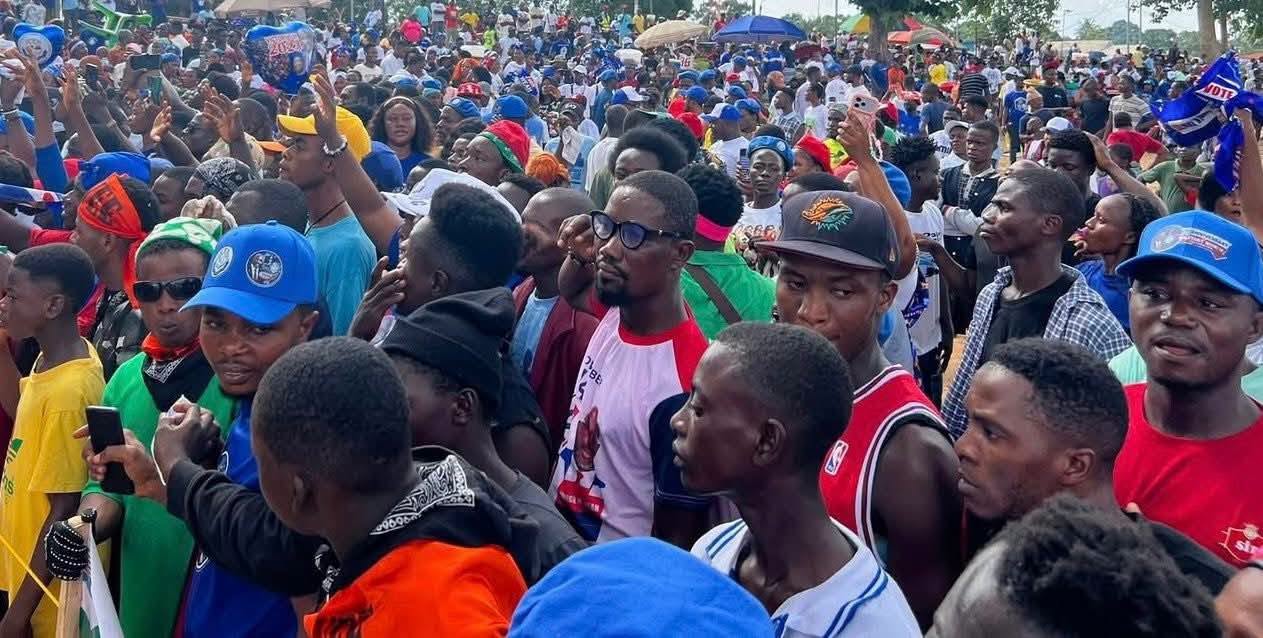
MONROVIA, Liberia — Former Finance and Development Planning Minister Samuel D. Tweah Jr. has argued that the significance of the recent opposition gathering in Zwedru extends far beyond political alliance-building, insisting that the event should serve as the starting point for a national conversation about the quality of leadership Liberia needs to overcome its longstanding governance and economic challenges.
In a commentary reflecting on the opposition’s engagement during the Congress for Democratic Change (CDC)’s anniversary celebration in Grand Gedeh County, Tweah contends that Liberia’s political future should not be determined merely by changing governments, but by transforming how the country is governed.
According to Tweah, the central message emerging from Zwedru is that opposition unity will have little meaning if it is driven solely by the ambition to replace the ruling Unity Party without presenting a fundamentally different vision for national development.
“The message from Zwedru is not just about opposition unity to end the Rescue Madness; it is about the quality of leadership that moves Liberia to the next level,” Tweah wrote.
His assessment places greater emphasis on governance reforms than electoral politics, arguing that Liberia’s persistent institutional weaknesses cannot be solved simply by transferring political power from one party to another.
A significant portion of Tweah’s analysis highlights remarks delivered by Alexander B. Cummings, Political Leader of the Alternative National Congress (ANC), who sharply criticized what he described as the current government’s failure to unite the country.
According to Tweah, Cummings argued that the Unity Party administration has deepened political and ethnic divisions instead of promoting national cohesion.
“Instead of building bridges across ethnic and political lines, the Unity Party government has deepened the cracks, allowing Liberia to regress into dangerous tribal cleavages and partisan extremism. We are being reduced to tribesmen and partisans, rather than citizens bound by a common destiny,” Cummings said, as quoted by Tweah.
Cummings further maintained: “This betrayal of leadership by the Unity Party government is unacceptable. True leadership demands setting new standards, meeting higher goals, and taking responsibility—not hiding behind the failures of past regimes.”
Tweah describes this portion of Cummings’ address as the most consequential, arguing that it shifts political debate away from personalities and toward the structural reforms required to transform Liberia.
He also points to the intervention of Musa Hassan Bility, Political Leader of the Citizens’ Movement for Change (CMC), who challenged the opposition to define the purpose of its unity.
Rather than pursuing political cooperation solely to gain power, Tweah notes that Bility questioned whether opposition parties were prepared to reject what he described as the same cycle of political persecution and partisan governance they criticize today.
The commentary also references Simeon Freeman, Political Leader of the Movement for Progressive Change (MPC), whom Tweah credits with consistently raising concerns about institutional decline and governance failures.
Taken together, Tweah argues, the positions advanced by Cummings, Bility, and Freeman reveal a growing consensus that Liberia’s political crisis is rooted less in personalities than in weak public institutions.
Perhaps Tweah’s strongest criticism is directed at what he calls the country’s misplaced political priorities.
He argues that public debate has become preoccupied with administrative achievements that should represent the minimum expectations of government rather than meaningful measures of national progress.
“The business of Government is not to pay salary on time or do mundane things. This function is trivial. Our politics has taken trivial aspects of our governance and made them important,” he wrote.
Instead, Tweah argues that governments should be judged by their ability to expand employment, stimulate private-sector investment, strengthen access to credit, and reduce poverty.
According to him, these are the benchmarks that determine whether a government is transforming citizens’ lives.
The former finance minister further raises broader institutional questions inspired by Cummings’ address.
Among them are whether Liberia can build public institutions insulated from political interference, why expanding national budgets have not significantly reduced poverty, whether anti-corruption efforts are producing measurable outcomes, and why access to finance has not become a central pillar of economic policy.
Rather than offering definitive answers, Tweah suggests that these questions themselves expose the deeper policy conversations largely absent from Liberia’s political landscape.
He argues that opposition leaders now face an important test: whether they can develop a common policy platform focused on institutional reform rather than limiting cooperation to electoral strategy.
According to Tweah, leaders such as Alexander Cummings, Musa Bility, Simeon Freeman, Benoni Urey, and Tiawan Saye Gongloe should work toward building consensus around governance reforms capable of addressing unemployment, investment, access to credit, and institutional accountability.
Looking ahead to the 2029 elections, Tweah observes that Liberia’s two dominant political parties will together account for nearly a quarter-century of post-war governance—approximately eighteen years under the Unity Party and six years under the CDC.
Against that backdrop, he argues that simply assigning blame to one administration or another will not satisfy a population increasingly demanding practical solutions to persistent economic hardships.
For Tweah, the challenge emerging from Zwedru is therefore much larger than opposition politics.
It is whether Liberia’s political class can move beyond what he characterizes as “political musical chairs” and begin competing over ideas, institutions, and long-term national transformation instead of merely competing for state power.
As Liberia inches closer to another election cycle, his commentary suggests that voters may ultimately judge political leaders less by their criticisms of one another and more by the credibility of the solutions they offer to the country’s enduring governance and development challenges.


