


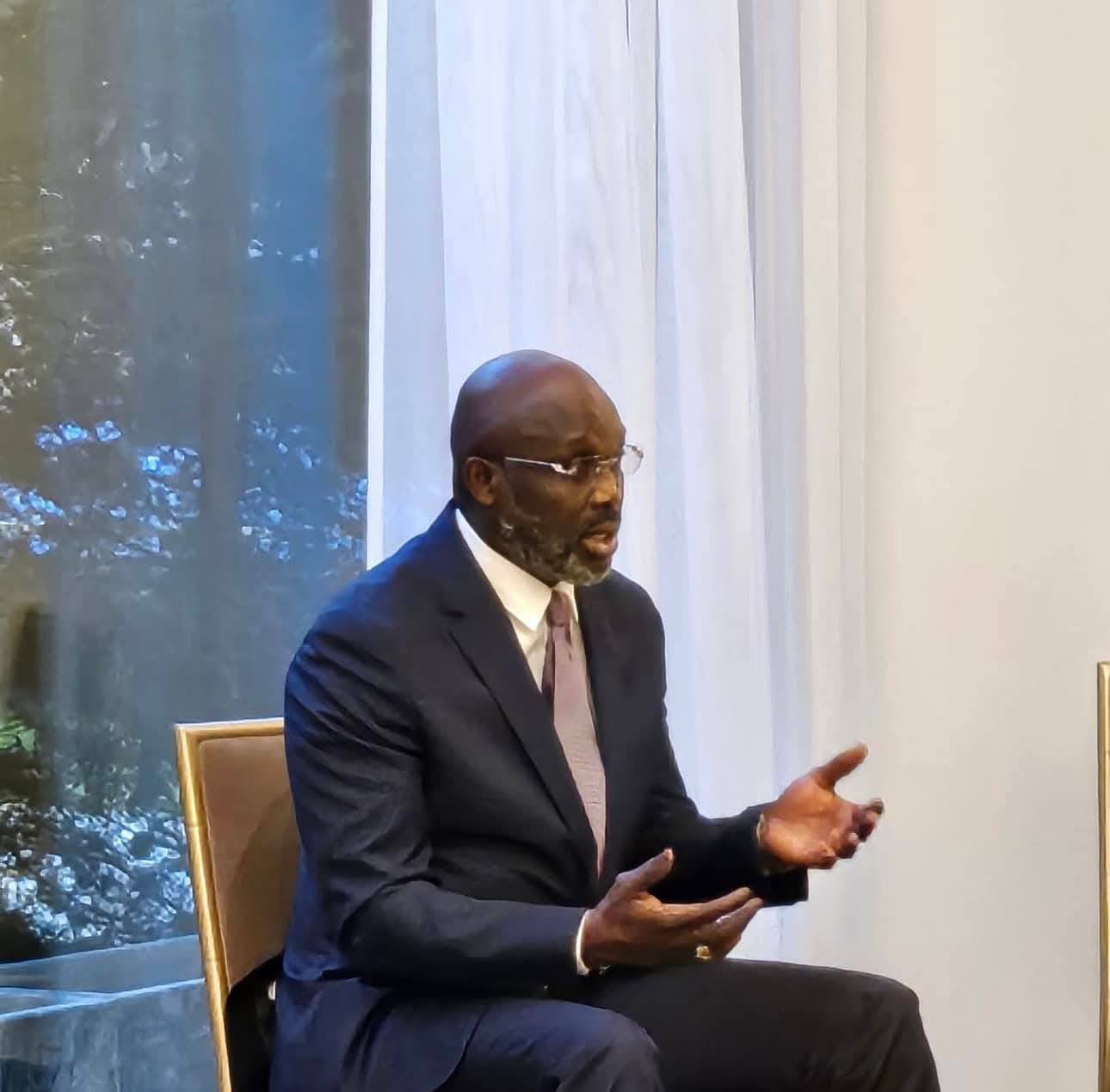
Supporters of former President George Manneh Weah are renewing efforts to defend his record in office, pointing to what they describe as concrete achievements—particularly the restoration of the Executive Mansion, the official seat of Liberia’s presidency.
They argue that Weah’s administration helped restore dignity and functionality to the presidency, emphasizing infrastructure projects that symbolized state authority and governance. Central to their claim is the reconstruction of the Executive Mansion, which had remained out of use for years following a devastating fire.
The Mansion was severely damaged on July 26, 2006, during Liberia’s 159th Independence Day celebrations, when a fire destroyed significant portions of the upper floors. Following the incident, former President Ellen Johnson Sirleaf governed from the Ministry of Foreign Affairs for the duration of her 12-year administration, as the Mansion remained unrepaired.
According to Weah’s supporters, a major shift occurred after he assumed office in 2018. His administration contracted a French construction firm to assess and rehabilitate the building. After reviewing the findings, Weah authorized full renovation works in 2019.
The project faced criticism at the time, particularly from opposition figures, including members of the Unity Party, who questioned the decision and its priorities.
Despite the criticism, renovations progressed, and by 2022, key sections of the building—including the basement and the first through fourth floors, along with surrounding facilities—had been completed. That same year, President Weah officially reopened the Executive Mansion during Liberia’s bicentennial celebrations.
In January 2024, at the end of his presidency, Weah formally handed over the renovated building to the incoming administration. President Joseph Boakai now operates from the same Executive Mansion that had been unusable for over a decade.
Supporters of the former president argue that this development reflects a tangible legacy, questioning narratives that dismiss his administration’s achievements. They maintain that the facts surrounding the Mansion’s reconstruction are publicly verifiable and invite critics to examine the record.
The discussion highlights a broader political debate in Liberia—how to measure leadership impact and whether visible infrastructure projects should weigh heavily in evaluating a president’s legacy.


