


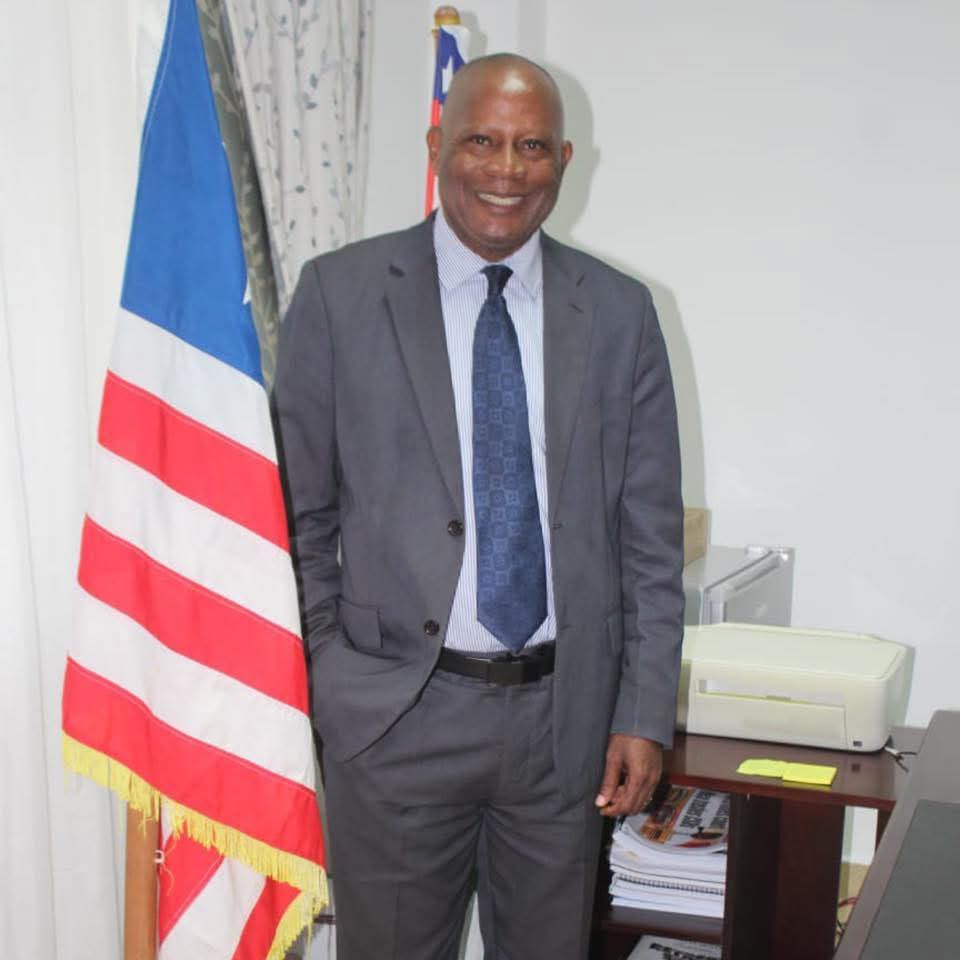
A new legal debate has emerged in Liberia following the acquittal of former Finance Minister Samuel D. Tweah and others in a high-profile economic sabotage case, with Sinoe County Senator Augustine Chea challenging what he describes as widespread misunderstanding of criminal law standards and jury responsibility.
In a detailed legal commentary, Senator Chea questioned the growing public narrative that the prosecution “proved its case” but still failed to secure full convictions, arguing that such conclusions reflect a misunderstanding of the constitutional threshold required in criminal trials.
According to him, criminal justice does not rest on public perception or the seriousness of allegations alone, but on whether every legal element of each offense is proven beyond a reasonable doubt before a jury.
The case involved charges such as economic sabotage, theft of property, money laundering, and criminal facilitation under various provisions of Liberia’s Penal Law and financial crime statutes. Senator Chea emphasized that each of these offenses carries distinct legal requirements that must be independently satisfied with credible evidence.
He explained that economic sabotage charges require proof of intentional misuse or diversion of public funds, while theft of property requires evidence of unauthorized control over government assets with intent to permanently deprive the state. Money laundering charges, he noted, require proof that the accused knowingly disguised illicit financial flows, and criminal facilitation requires evidence of intentional assistance in committing a crime.
Senator Chea argued that much of the public commentary surrounding the verdict focuses heavily on the movement of funds rather than the legal question of whether those funds were criminally diverted or misused.
He further noted that testimony presented during the trial acknowledged that funds were processed through official channels for national security-related election preparations during a tense political period in 2023. In his view, the central legal issue was not whether the money was disbursed, but whether it was unlawfully converted or misapplied afterward.
The senator also highlighted what he described as evidentiary gaps, suggesting that the prosecution could have strengthened its case by calling additional senior security officials who were directly involved in election security coordination, including former heads of key national security institutions.
He argued that without definitive proof disproving the defense’s claim that the funds were used for legitimate election-security operations, the jury may have had reasonable doubt—making acquittal legally permissible under criminal law standards.
Chea warned against what he called “post-verdict criminalization of acquittal,” where commentators interpret not-guilty verdicts as evidence of wrongdoing within the judicial process rather than as outcomes grounded in legal standards of proof.
He also cautioned that accusations of jury tampering should not be made lightly, especially when based on dissatisfaction with a verdict rather than a clear evidentiary analysis of trial records.
At the heart of his argument is a broader institutional concern: that public confidence in the judiciary depends not only on convictions but also on respect for acquittals, due process, and the constitutional presumption of innocence.
Senator Chea concluded that the integrity of Liberia’s justice system depends on insulating juries and courts from political pressure and ensuring that legal analysis, rather than public sentiment, guides interpretations of verdicts.


