


Rising concerns suggest that Liberia may face significant diplomatic and economic repercussions with the United States due to ongoing controversies surrounding the leadership and policy direction of the Liberia Intellectual Property Office (LIPO).
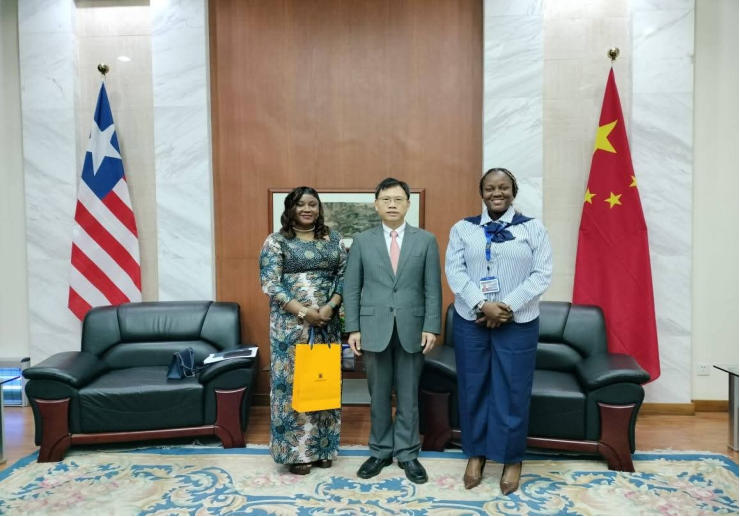
Critics argue that what they describe as ineffective leadership at LIPO has aligned the institution too closely with the People’s Republic of China—a nation often cited internationally as a major source of pirated intellectual property. They warn that this alignment jeopardizes Liberia’s creative economy and could strain relations with the United States, whose copyrighted content—films, music, software, and books—is reportedly pirated in China and openly sold in Liberian markets.
At the heart of the controversy is President Joseph Nyuma Boakai’s appointment of a political loyalist as LIPO’s Director General. Detractors claim that the appointment violates the Liberia Intellectual Property Act of 2016, which establishes LIPO and sets clear qualification requirements for its leadership. According to the Act, the Director General must be a licensed Attorney-at-Law with at least three years of legal practice—criteria critics argue were ignored.
Observers contend that this decision has dashed the hopes of young Liberians who rely on their talents—music, film, literature, software, and other creative works—for livelihood and economic survival. Without competent, legally grounded leadership at LIPO, Liberia’s fragile intellectual property system remains vulnerable to piracy and exploitation.
While U.S. officials have not publicly commented on the issue, critics cite annual Investment Climate Statements on Liberia, which consistently highlight weaknesses in intellectual property protection. One report notes that Liberia has “a weak legal structure and regulatory environment for enforcement of intellectual property rights,” with infringement being common, counterfeit goods openly sold, and prosecutions for violations rare. The report also points to a lack of systems to monitor or report seizures of counterfeit products.
Analysts warn that continued failure to strengthen intellectual property governance could undermine Liberia’s investment climate, particularly in sectors that rely heavily on enforceable IP rights, such as creative industries, digital platforms, and technology. They caution that silence from international partners should not be interpreted as approval, noting that such policy decisions can later influence aid, trade, and investment decisions.
Calls are mounting for President Boakai to revisit the LIPO Act of 2016 and ensure that leadership positions are filled by qualified Attorneys-at-Law rather than political appointees. Advocates argue that such action would demonstrate Liberia’s commitment to protecting intellectual property, supporting local creators, and maintaining credibility with international partners like the United States.
As Liberia works to diversify its economy and empower its youth, critics insist that intellectual property must be treated as a legal and economic cornerstone—not a political reward—requiring professional, law-driven leadership.


