


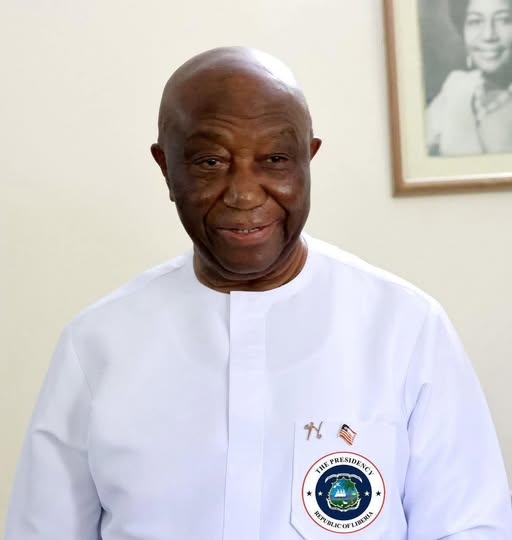
In a move signaling renewed momentum for post-war accountability, Joseph Nyuma Boakai has extended the mandate of Liberia’s War and Economic Crimes Court Office, buying time to transform long-standing justice promises into functioning institutions.
The extension, formalized through Executive Order No. 164, ensures the Office will continue operating through April 2027. The decision reflects the administration’s effort to bridge the gap between policy design and full implementation of two major judicial bodies: a War and Economic Crimes Court and a National Anti-Corruption Court.
Rather than launching the courts immediately, the government is focusing on groundwork—strengthening international partnerships, securing funding, and finalizing legal frameworks. Officials say this phased approach is critical to avoid past failures where ambitious reforms stalled due to weak institutional preparation.
The Office, initially created in 2024, has already drafted key legislation outlining how both courts will function. These proposals are now awaiting legislative review, with the Office expected to provide technical guidance throughout the process.
Under the renewed mandate, the Office will intensify engagement with global partners to attract financial and technical support. It is also tasked with designing the operational backbone of the courts, including administrative systems, staffing structures, and funding mechanisms. Regular reporting requirements—subject to independent audits—have been introduced to ensure transparency and measurable progress.
A structured timeline accompanies the extension. Within months, the Office must present plans for resource mobilization, legislative coordination, and full implementation. A midterm review will assess progress, while a final report in April 2027 will outline the transition toward fully operational courts.
Financially, the initiative will continue to draw from a dedicated allocation within the Ministry of Justice, totaling $2 million annually. The Office will maintain semi-independent status, operating with its own leadership and professional staff but under strict expectations of neutrality and legal integrity.
The extension comes as Liberia seeks to reinforce its commitment to transitional justice and anti-corruption efforts. By emphasizing preparation over speed, the administration appears determined to ensure that when the courts are finally launched, they will be equipped to deliver credible and lasting justice.


