


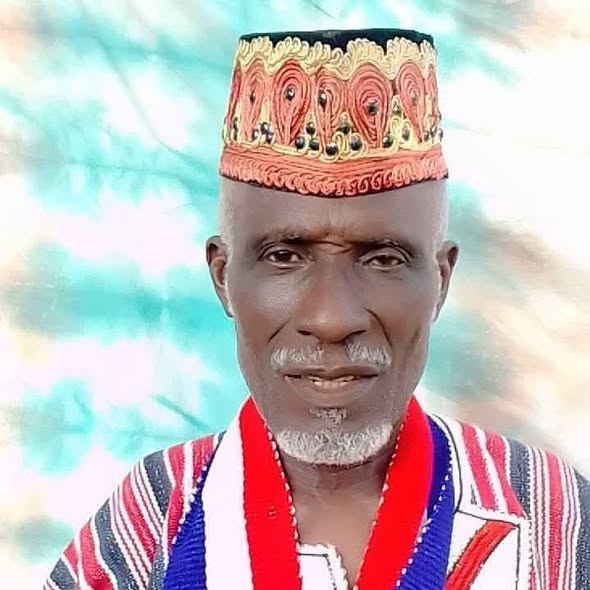
The arrival of the remains of former River Gee Traditional Council Chairman Chief James Pah Sayee in Fish-Town has triggered not only mourning across River Gee County, but also renewed reflection on the evolving role of traditional leadership within Liberia’s governance structure.
Hundreds of mourners, including local officials, traditional elders, family members, and residents, gathered in Fish-Town to receive the remains of the late chief, whose influence extended beyond customary authority into broader national discussions on peacebuilding, community governance, and cultural preservation.
Analytically, Chief Sayee’s death represents more than the loss of a respected elder; it highlights the gradual transition occurring within Liberia’s traditional governance system at a time when questions about cultural continuity, local authority, and rural leadership remain increasingly significant.
During his years as Chairman of the River Gee Traditional Council and later as Deputy Speaker of the Liberia Traditional Council, Chief Sayee emerged as a prominent advocate for integrating customary leadership into Liberia’s democratic framework. His leadership style, widely described as dialogue-driven and community-centered, earned him recognition as a stabilizing figure in southeastern Liberia.
Residents and traditional leaders credited him with helping strengthen cooperation among local communities while promoting peaceful dispute resolution and reconciliation during periods of tension. In rural Liberia, where traditional leaders often function as both cultural custodians and informal governance actors, such roles remain deeply influential despite the expansion of formal state institutions.
Chief Sayee, a native of Potupo Jayproken in River Gee County, also served as head of the county chapter of the Liberia National Council of Chiefs and Elders. Through that role, he became increasingly visible in national conversations surrounding customary governance, decentralization, and grassroots administration.
His national prominence expanded during the administration of former Liberian President Ellen Johnson Sirleaf, particularly during her second term, when he became part of international engagements representing Liberia’s traditional leadership system. Observers note that his participation in a delegation to the United States symbolized the growing effort to position traditional governance as a complementary institution within Liberia’s state-building process.
The late chief’s death was confirmed on April 22, 2026, at the John F. Kennedy Medical Center in Monrovia after weeks of reported illness. Prior to his passing, concerns about his health had already sparked public appeals for medical assistance from prominent citizens of River Gee County, including former electoral district official Marcus S. T. Solkroe.
Since news of his death emerged, tributes have poured in from local residents, national figures, and members of the River Gee diaspora community, commonly known as “Geepos.” Many have emphasized his role in preserving cultural identity and maintaining social cohesion in rural communities.
Analysts argue that the reaction to Chief Sayee’s passing underscores the enduring relevance of traditional leadership in Liberia, particularly in areas where customary authorities continue to mediate conflicts, reinforce social norms, and support local governance structures alongside elected officials.
At a broader level, his death also raises important questions about succession, institutional continuity, and the future of customary governance in Liberia. As modernization, urbanization, and political centralization continue to reshape the country’s social landscape, the challenge of preserving traditional institutions while adapting them to contemporary governance realities has become increasingly pronounced.
The arrival of his remains in Fish-Town marks the beginning of funeral rites and memorial ceremonies expected to draw dignitaries, traditional leaders, and citizens from across Liberia. For many residents, however, the ceremonies represent more than a farewell—they symbolize the closing of a chapter in River Gee’s traditional leadership history.
Ultimately, Chief James Pah Sayee’s legacy will likely be remembered not only for his service to River Gee County, but for his broader contribution to sustaining Liberia’s cultural heritage and reinforcing the role of customary leadership within national development and community governance.


