


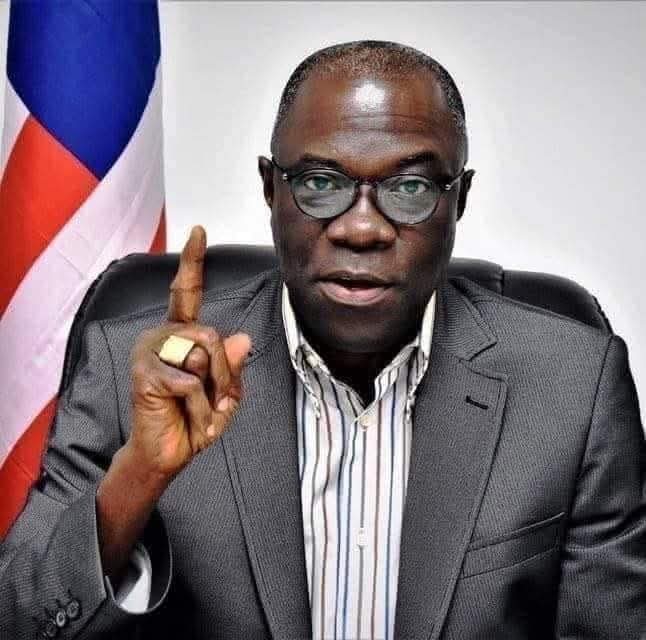
The emerging political discussion surrounding the possible 2029 senatorial ambitions of former Sinoe County Senator J. Milton Teahjay has increasingly shifted beyond electoral calculations to deeper questions about political consistency, alliance management, and long-term credibility within Liberia’s evolving political landscape.
Critics questioning Teahjay’s reported interest in contesting against Senator Augustine Chea argue that the issue is no longer simply about political competition, but about whether voters and former allies perceive his political relationships as stable and dependable.
Analytically, the criticism directed at Teahjay centers on allegations of shifting loyalties and repeated political realignments over the years. Opponents claim that several of his past political decisions demonstrate a pattern in which alliances were formed strategically but later abandoned when circumstances changed.
One of the earliest examples frequently referenced by critics dates back to the 2011 and 2014 political period involving the late Senator Mabutu Nyenpan. According to the allegations, Teahjay initially supported a political arrangement built around tribal balance, encouraging Representative Matthew Zarzar not to challenge the late Senator Joseph Nagbe in 2011 to preserve regional political representation. Critics allege that despite this earlier understanding, Teahjay later contested against Mabutu Nyenpan in the 2014 senatorial election and ultimately won the seat.
Political observers note that in Liberia’s local political culture, loyalty and informal alliance agreements often carry substantial weight beyond formal campaign structures. As such, accusations of political betrayal can have long-term reputational consequences, especially in counties where personal trust strongly influences voter behavior.
Further criticism relates to the 2017 electoral cycle, during which Teahjay was accused of abandoning former ally Jefferson Karmoh in favor of supporting Cryton Duncan in the District #1 representative race. Critics argue that the move weakened existing alliances and reflected a broader tendency toward politically expedient repositioning.
Ironically, some commentators point out that Duncan himself later emerged as a political rival, reinforcing perceptions that shifting alliances can eventually produce reciprocal political fallout.
Another major point of debate concerns the 2018 Sinoe County senatorial by-election, which followed the appointment of the late Senator Joseph Nagbe to the Supreme Court as Associate Justice. During that election, Teahjay reportedly supported Othello Doe Nagbe against Augustine Chea. However, critics note that by 2020, Teahjay had openly shifted support toward Chea and actively campaigned for him.
The current speculation surrounding a possible 2029 contest against Chea has therefore intensified scrutiny over what opponents describe as inconsistent political alignment. Critics argue that such reversals create uncertainty among allies and supporters regarding long-term political reliability.
Beyond alliance politics, analysts also point to broader questions about political renewal and leadership succession. Critics of Teahjay argue that after serving approximately five years as Superintendent and nine years as Senator, voters may increasingly question what additional contributions he could offer beyond his previous tenure in public office.
Some political voices have instead called for the promotion of emerging figures such as Othello Doe Nagbe and Atty. Maxwell Grigsby, suggesting that the county’s political future may benefit from generational transition and broader leadership diversification.
At the center of the debate is a larger issue confronting many democratic systems: whether political longevity alone remains sufficient for electoral relevance, or whether consistency, institutional trust, and coalition stability have become more important factors in sustaining political influence.
Ultimately, the growing conversation surrounding Teahjay’s potential candidacy reflects not only electoral rivalry but also a broader reassessment of political loyalty, credibility, and leadership continuity in Sinoe County politics.


