


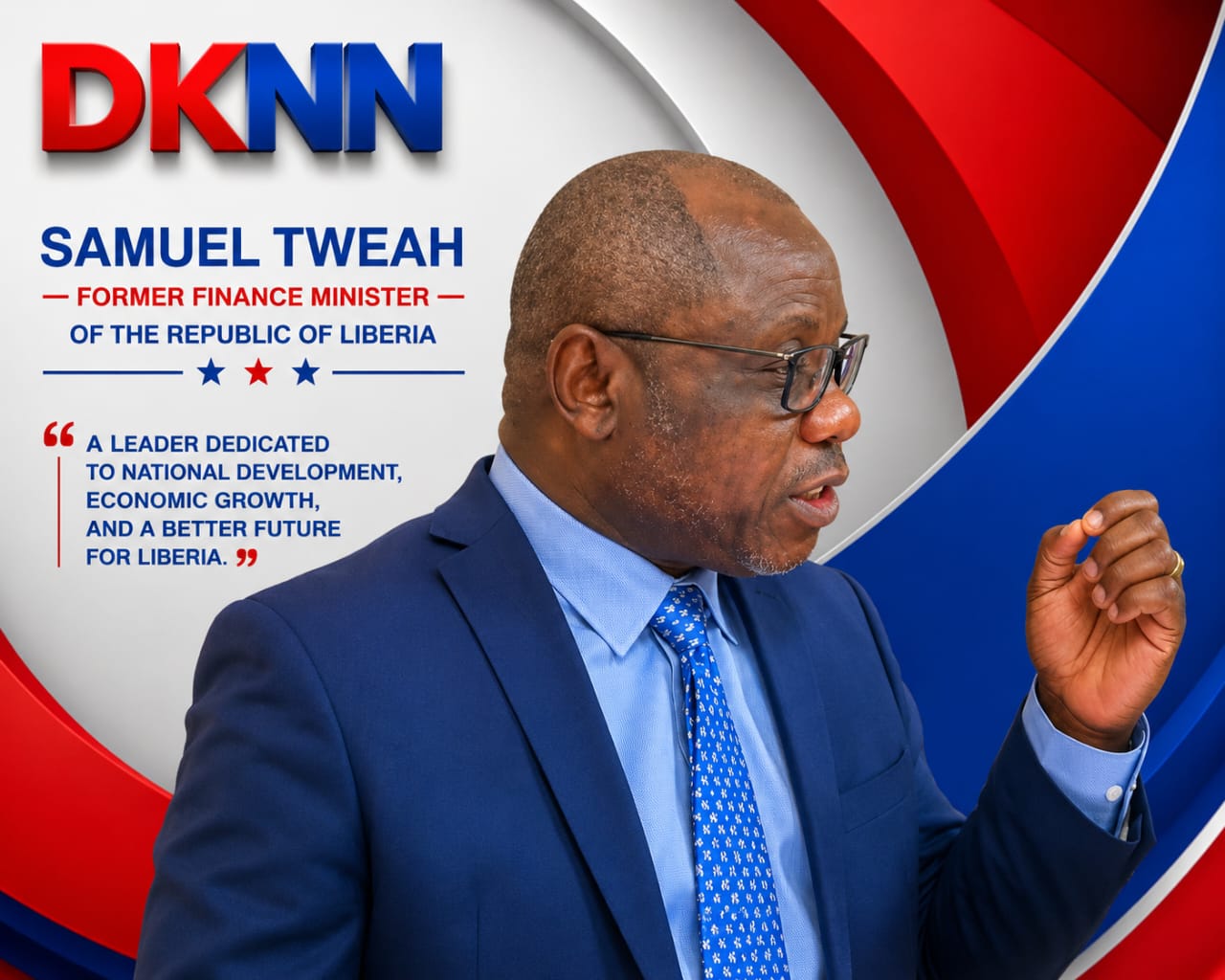
Former Liberian Finance and Development Planning Minister Samuel D. Tweah Jr. has publicly challenged what he describes as growing political intimidation amid reports that the government’s Asset Recovery and Property Retrieval Task Force is preparing formal communication related to an ongoing investigation.
In a statement released Wednesday through his official Facebook page, Tweah disclosed that his legal counsel, Arthur Tamba Johnson, informed him that Kla Martin of the Asset Recovery and Property Retrieval Task Force had indicated that an official letter addressed to him was ready for delivery. According to Tweah, he immediately instructed his lawyer to receive the correspondence on his behalf.
The former minister’s response reflects rising political and legal tensions surrounding Liberia’s broader accountability and asset recovery efforts under the administration of President Joseph Boakai.
Analytically, Tweah’s public posture suggests an attempt to frame the matter not solely as a legal process but as part of a wider political confrontation over governance, institutional authority, and the interpretation of accountability mechanisms in Liberia’s post-war democracy.
“I, Samuel D. Tweah, Jr., would never kowtow to political intimidation and blackmail,” he declared in the statement, signaling resistance to what he believes are politically motivated actions against him.
Tweah further invoked the memory of prominent Liberian figures and victims of the country’s turbulent past, referencing individuals such as Tonia Richardson, Weewee Debbar, Jackson F. Doe, and Gabriel Kpolleh, along with what he described as the 250,000 martyrs of Liberia’s history. His remarks appeared aimed at positioning his response within a broader narrative of political resilience and national struggle.
The former minister also announced plans to publicly release the contents of the anticipated communication once it is formally received. He stated that he would personally respond to the authorities and disclose the timeline for his engagement with the Task Force.
From a governance perspective, the development highlights the increasingly delicate intersection between anti-corruption enforcement and political perception in Liberia. While asset recovery initiatives are often promoted as essential tools for accountability and transparency, they can also become politically contentious when they involve high-profile former officials.
Tweah, who was recently acquitted in a separate legal matter, appears to be leveraging public messaging as both a legal and political strategy, portraying himself as prepared to confront scrutiny openly while questioning the motivations behind the process.
In addition to addressing the pending communication from the Task Force, Tweah announced plans to initiate what he termed a “national discourse” at the Center for Intellectual Exchange and Orientation (CIEO). According to him, the discussions will focus on governance, democracy, and development under the current administration.
He stated that the forum would examine what he described as the reversal of gains achieved since the end of Liberia’s civil conflict, signaling a broader political critique of the country’s current governance direction.
The situation unfolds amid heightened national debate over accountability, institutional independence, and democratic consolidation in Liberia. Political observers note that the handling of such cases may significantly influence public confidence in both anti-corruption institutions and the broader justice system.
As of publication, neither the Asset Recovery and Property Retrieval Task Force nor representatives of the Boakai administration had publicly responded to Tweah’s remarks.
Overall, the dispute underscores a broader analytical question confronting Liberia’s political environment: whether ongoing accountability initiatives will be viewed primarily as institutional reform efforts or as politically charged instruments within an increasingly polarized national landscape.


