


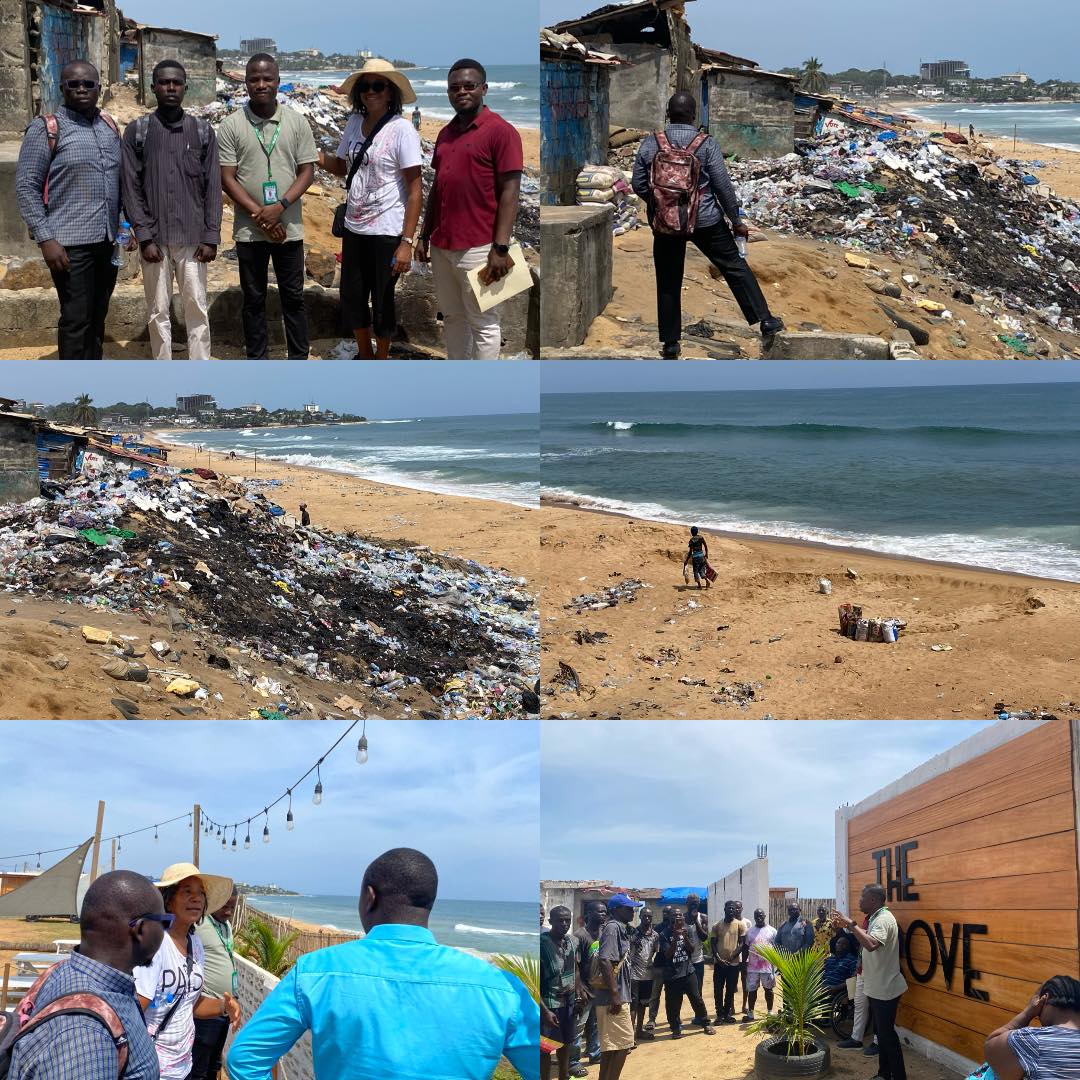
A coordinated environmental push unfolded in Trench Town on Tuesday, April 28, 2026, as government agencies, environmental groups, and local residents joined forces in a public awareness campaign aimed at confronting the growing threats facing Liberia’s coastline.
The initiative, led by Madam Tolbert, brought together representatives from the Monrovia City Corporation, the Environmental Protection Agency (EPA), For Beach Liberia, and community stakeholders in what was described as a collective intervention to protect one of the area’s most important natural assets.
At the center of the campaign were three major environmental concerns increasingly affecting the Trench Town shoreline: plastic waste pollution, illegal sand mining, and the buildup of unmanaged debris along the beach. These issues, organizers warned, are gradually undermining both the ecological health and physical stability of the coastal area.
Speaking during the engagement, Madam Tolbert stressed that the beach is not only a scenic space but also a vital environmental and economic resource for the community. She cautioned that continued neglect and harmful human activity are placing marine ecosystems, public health, and coastal infrastructure at risk.
She specifically highlighted the growing problem of plastic waste, noting that improper disposal habits are contributing to clogged drainage channels, polluted waters, and the destruction of marine life. She urged residents—particularly young people—to take an active role in maintaining cleanliness and adopting responsible waste management practices.
Environmental expert Mr. Teddy P. Taylor of the EPA reinforced these concerns, focusing on the dangers of illegal sand mining. He explained that the uncontrolled extraction of sand weakens the shoreline’s natural defenses, accelerates erosion, and increases the vulnerability of nearby homes and public infrastructure to coastal damage.
The Monrovia City Corporation used the occasion to encourage stronger community participation in sanitation and pledged continued collaboration with local leadership structures to improve waste management systems in coastal settlements.
Meanwhile, For Beach Liberia emphasized that coastal protection cannot be left to government alone. The organization called for broader civic responsibility, urging citizens to actively discourage littering and report harmful activities that threaten the coastline’s long-term survival.
Community residents of Trench Town responded positively to the campaign, welcoming what many described as a long-overdue intervention. Several participants expressed appreciation for the direct engagement between institutions and residents, noting that sustained public education is essential to changing behavior and preserving the environment.
Many locals also described the initiative as timely, given the increasing pressure on Liberia’s coastal zones from human activity and environmental degradation.
The campaign reflects a broader national concern over coastal sustainability and underscores the growing recognition that protecting Liberia’s beaches will require consistent collaboration between government institutions, civil society organizations, and the communities that depend on them most.


