


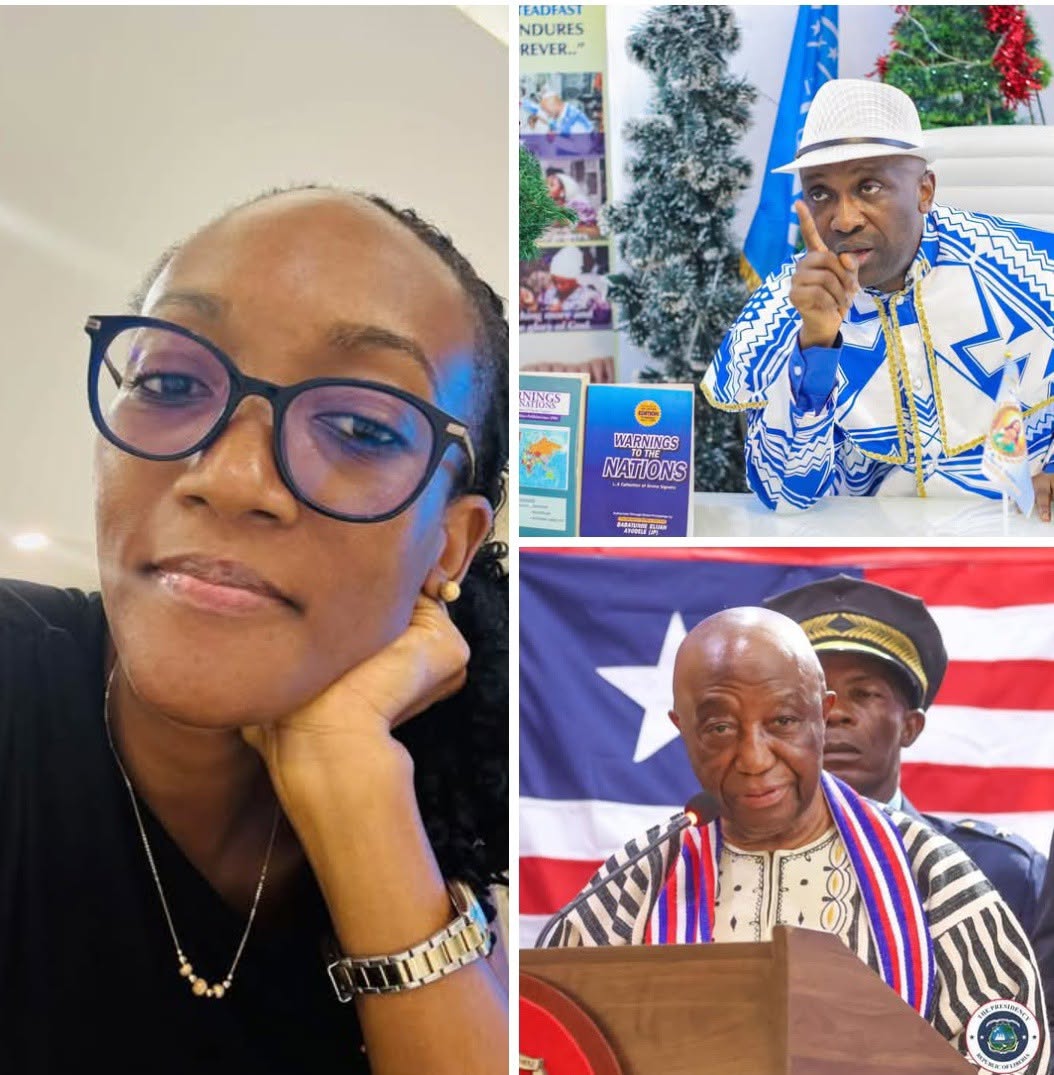
MONROVIA, LIBERIA – A senior member of the Alternative National Congress (ANC) has sparked renewed debate over the intersection of religion, politics, and diplomacy, questioning the Liberian government’s decision to engage Nigerian authorities over controversial prophetic remarks made by a foreign cleric concerning Liberia’s future.
In a detailed public commentary, ANC Executive Committee member Morial Yeakula argued that prophetic declarations have long been a part of political and religious discourse across Africa and should not be treated as matters requiring diplomatic intervention between sovereign states.
His remarks come amid growing public discussion surrounding statements attributed to Nigerian cleric Primate Elijah Ayodele regarding Liberia’s political and economic outlook under President Joseph Nyuma Boakai’s administration.
According to Yeakula, Liberians have historically witnessed numerous political prophecies from both local and international religious leaders, some of which were later viewed as accurate while others failed to materialize.
Drawing on past examples, he recalled a prophecy allegedly delivered during the 2017 electoral period by Nigerian preacher Apostle Johnson Suleman. According to Yeakula, the cleric claimed to have foreseen a footballer—widely interpreted as former President George Weah—winning the election but facing significant challenges afterward.
“Weah eventually won the election and received the mandate, but the country experienced serious difficulties during his administration,” Yeakula noted.
He further pointed out that years later, Apostle Suleman reportedly delivered a different prophecy, suggesting that Liberia would enter a period of blessings beginning in 2023. Yeakula referenced President Boakai’s election victory and the preacher’s subsequent visit to Liberia as examples of how religious predictions often evolve over time.
The ANC executive argued that prophecy, by its nature, is not an exact science and should not be interpreted as an official statement of fact.
“A prophecy can appear accurate today and prove inaccurate tomorrow,” he stated. “Religious leaders are not God. Their words are not scripture. They are human beings who preach, teach, heal, and share what they believe to be divine revelations.”
Yeakula also referenced other well-known prophetic declarations across Africa and beyond, including predictions made by the late Nigerian televangelist T.B. Joshua. While some of those predictions were widely regarded as accurate, others, such as forecasts relating to international elections, failed to materialize.
According to him, this reality demonstrates the uncertainty that often surrounds prophetic messages and highlights why governments should exercise caution when reacting to them.
He further noted that Liberia itself has a long history of stories and narratives surrounding prophecies attributed to respected religious figures, including Mother Dukuly, Archbishop Michael Francis, Bishop Isaac Winker, and others whose alleged predictions have often become part of national political discussions.
Yeakula observed that public reactions to prophecies are frequently influenced by political loyalties.
“When a prophecy favors our political interests, we celebrate it. When it does not, we criticize it,” he said. “That is a natural human reaction, but governments should be guided by policy and national priorities rather than emotional responses.”
The ANC official specifically questioned the decision to raise concerns about a prophecy through diplomatic channels, arguing that such actions could set an unusual precedent in international relations.
He asked what practical outcome Liberia expected from formally raising concerns about statements made by a private citizen in another country.
“What remedy is being sought?” Yeakula questioned. “Is the goal an apology, a withdrawal of the prophecy, or some form of official action against the pastor?”
While acknowledging that predictions involving political instability, economic hardship, or threats to national security can be unsettling, he emphasized that prophecies remain speculative by nature and should not be confused with verified intelligence or factual evidence.
Instead, Yeakula urged national leaders to focus on addressing the everyday challenges confronting Liberians, including economic hardship, unemployment, rising living costs, electricity shortages, and access to basic public services.
According to him, effective governance remains the strongest response to negative predictions about the country’s future.
“If the government succeeds in improving living conditions, strengthening the economy, and delivering essential services, then no prophecy of doom will carry significant weight among the population,” he argued.
Yeakula concluded by encouraging political actors across the spectrum to remain focused on governance and development rather than becoming distracted by debates over prophetic declarations.
His comments have added a new dimension to an ongoing national conversation about the role of religious pronouncements in public affairs and the extent to which governments should respond to predictions made by influential faith leaders.
The debate continues to generate strong reactions among political observers, religious communities, and ordinary Liberians, highlighting the enduring influence of faith, prophecy, and public perception in the country’s democratic landscape.


