


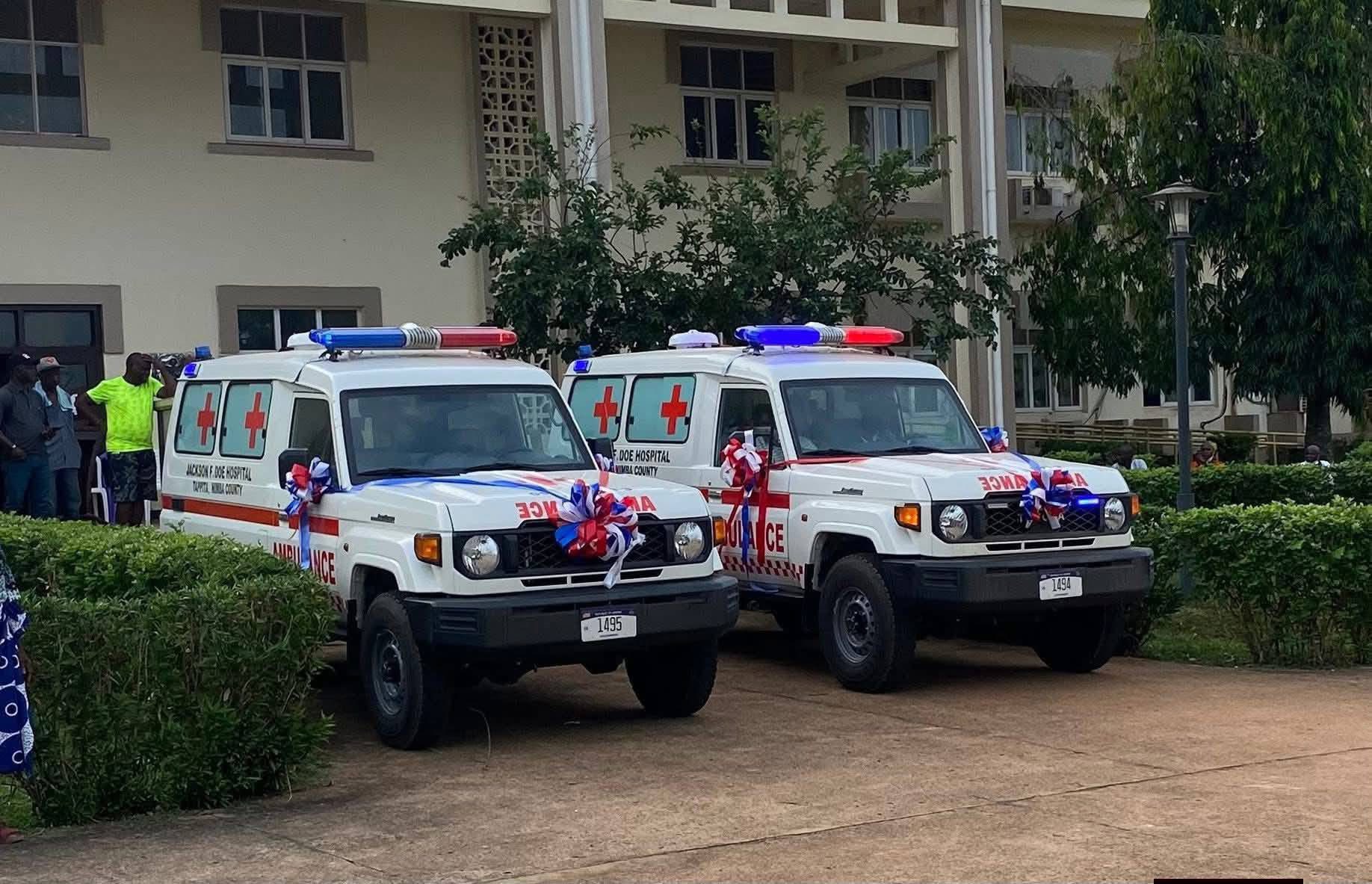
Jackson F. Doe Memorial Regional Referral Hospital has expanded its emergency response capacity with the acquisition of two new ambulances, a move health authorities say could significantly improve healthcare delivery and patient referrals across Nimba County and several leeward counties.
From an analytical perspective, the acquisition highlights the growing importance of emergency transportation infrastructure within Liberia’s healthcare system, particularly in rural and underserved regions where access to timely medical care remains a major challenge.
Hospital management stated that the ambulances are intended to strengthen the institution’s emergency response mechanism by improving the transportation of critically ill patients and facilitating faster referrals between healthcare facilities. The development is also expected to reduce delays that often affect emergency treatment outcomes in remote communities.
Speaking on the initiative, Dr. Victor Kaizer described the procurement as a major institutional step toward improving the quality and efficiency of healthcare services in Nimba County and surrounding areas. According to him, the investment reflects the hospital’s commitment to delivering more reliable and responsive medical care to the population.
Analytically, the expansion of ambulance services addresses a longstanding structural issue in Liberia’s health sector: the gap between healthcare availability and healthcare accessibility. While hospitals may possess medical personnel and treatment capacity, inadequate transportation systems often prevent patients from receiving timely care, especially in geographically isolated communities.
The hospital administration also linked the achievement to the broader development agenda of President Joseph Nyuma Boakai, expressing appreciation to the Liberian government for continued support to the health sector.
“We say a big thank you to the President, Vice President, and the Government. Our work will do the talking. We will continue to work for our people,” Dr. Kaizer stated.
Beyond the symbolic value of the acquisition, healthcare observers note that emergency mobility remains one of the most critical determinants of survival in rural medical systems. In many parts of Liberia, patients continue to face transportation barriers caused by poor road networks, long travel distances, and limited ambulance availability.
The additional ambulances are therefore expected to improve not only emergency response times but also coordination between referral hospitals and local clinics across the region.
The development further reflects ongoing efforts to decentralize healthcare delivery and strengthen regional medical institutions outside Monrovia. Analysts argue that sustained investments in emergency logistics, personnel training, and infrastructure will be necessary if Liberia intends to reduce regional disparities in healthcare access and outcomes.
Overall, the acquisition underscores a broader healthcare policy question in Liberia: whether expanding medical infrastructure alone is sufficient, or whether equal emphasis must be placed on transportation systems and emergency access mechanisms that connect vulnerable populations to lifesaving care.


