


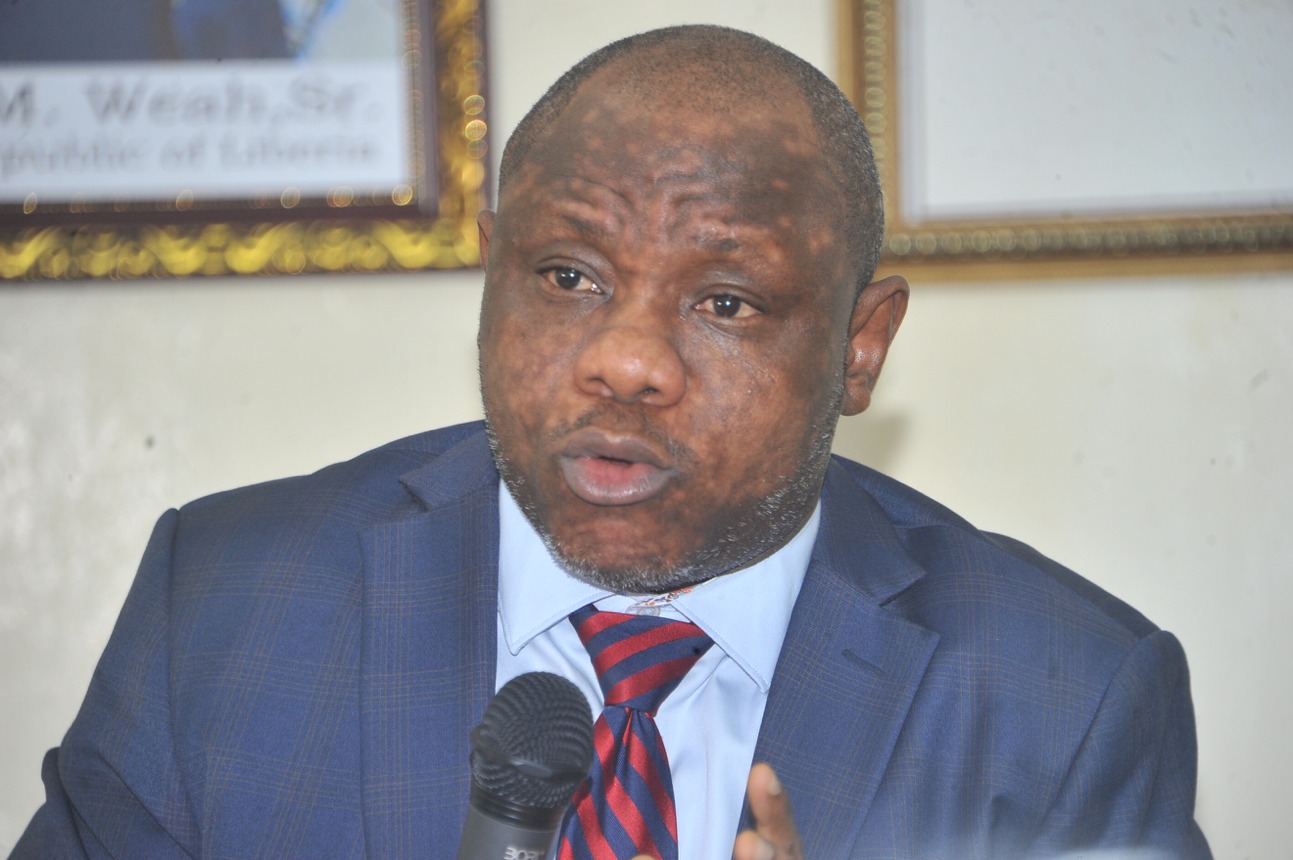
Questions over financial accountability have moved to the center of national debate after the Liberian government announced an independent investigation into significant revenue discrepancies involving billions in Liberian dollars and hundreds of millions in U.S. dollars that reportedly could not be fully reconciled across government financial systems.
The investigation follows a joint press conference held by the Ministry of Finance and Development Planning, Liberia Revenue Authority, and Central Bank of Liberia, during which authorities disclosed findings that revealed serious gaps in revenue collection and reconciliation processes between July 1, 2018, and December 31, 2024.
Rather than presenting the issue as isolated accounting errors, officials described the findings as broad systemic concerns requiring independent legal and institutional review.
According to authorities, Augustine Kpehe Ngafuan announced that the matter had been elevated to the highest level of government, with Joseph Nyuma Boakai directing the Liberia Anti-Corruption Commission and the Ministry of Justice to conduct an independent investigation into the findings.
Among the most concerning issues highlighted was the inability to trace approximately US$257.5 million and L$23.6 billion recorded in transitory bank accounts to the government’s General Revenue Accounts over the audit period.
Authorities also reported that an additional US$1.37 billion and L$68.39 billion recorded in General Revenue Accounts could not be fully matched with entries within the Tax Administration System.
Investigators further identified discrepancies involving matched and unmatched transactions that reportedly created variances of approximately US$373.9 million and L$16.7 billion.
The findings extended beyond reconciliation issues.
Audit reviews reportedly discovered inconsistencies in customs payment systems, including US$63.9 million in variances involving the customs platform ASYCUDA, where some payments lacked supporting receipt documentation.
Further concerns included US$26.04 million in revenue entries that could not be linked between customs and tax systems.
Financial records also reportedly showed unauthorized withdrawals totaling US$59,786 and more than L$551,000 from transitory accounts.
Investigators identified additional unexplained financial activities, including negative debit postings amounting to over US$301,000 and L$67.25 million, along with reversal transactions totaling US$16.06 million and L$503.1 million that reportedly lacked identifiable original transactions.
Authorities also pointed to unswept balances remaining in commercial bank transitory accounts, totaling approximately US$898,563 and L$60.76 million.
While government officials stressed that discrepancies do not automatically establish fraud or criminal conduct, the scale of the findings appears to have prompted concerns over financial oversight mechanisms and institutional controls.
With anti-corruption investigators and prosecutors now expected to examine the findings, public attention may increasingly shift from identifying missing records to determining whether the discrepancies reflect administrative failures, technological weaknesses, or potential misconduct.
The broader issue facing policymakers now may be whether Liberia’s revenue systems require more than investigation — and whether deeper structural reforms are needed to restore public confidence in the management of state resources.


