


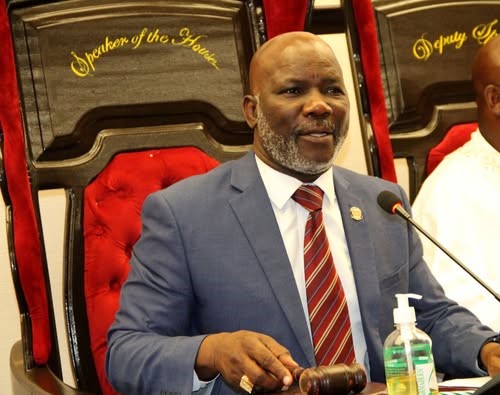
Monrovia, Liberia – Speaker of the House of Representatives, Hon. Richard Nagbe Koon, has expressed strong support for President Joseph Nyuma Boakai, Sr.’s recent Executive Order No. 151, which bans the export of unprocessed rubber from Liberia.
The Speaker called the decision “a bold and timely step” aimed at reducing Liberia’s reliance on raw material exports and moving toward an economy that adds value, creates jobs, and boosts economic independence.
For over a century, rubber has been one of Liberia’s biggest exports, but it has mostly been shipped in raw form. This limits the country’s ability to earn more revenue and create lasting jobs. Speaker Koon pointed out that this has prevented Liberia from fully benefiting from its natural resources.
Looking Back
Koon reminded the public that past administrations have tried similar measures. In 2014, former President Ellen Johnson Sirleaf issued Executive Order No. 50 to protect local rubber processing by discouraging raw rubber exports. Later, in 2022, former President George Manneh Weah issued Executive Order No. 114 to continue the moratorium to support the sector and attract local investment.
However, Koon said these efforts didn’t last long enough to create permanent change. “Now, with strong political will and support from lawmakers, we have a real chance to change Liberia’s economic future,” he said.
Legislative Support
Under Koon’s leadership, the House of Representatives has decided not to approve any deals involving Liberia’s natural resources unless they include clear rules for adding value locally. He stressed this is crucial to making sure Liberia’s wealth benefits its people instead of being sent abroad in raw form.
“Rubber has been key to Liberia’s economy for over a century. Yet, because it’s mostly exported raw, the benefits to our country and citizens have been limited. That has to change,” the Speaker said.
A Call to Action
Speaker Koon encouraged all industry players—especially small farmers, processors, and investors—to support this new path, seeing it as a chance to build a stronger and more inclusive economy.
He assured that the Legislature is ready to work with the Executive branch and industry leaders to make sure the ban is applied fairly and transparently, bringing long-term benefits to Liberians.
The Executive Order took effect immediately and has already sparked conversations among farmers and processors. Many welcome the move but also ask for help with financing, modern processing tools, and infrastructure to support local production.
Koon remained hopeful: “This policy is a turning point for Liberia. Together, we can turn our natural resources into real prosperity for all Liberians.”


