


May 1, 2026: MONROVIA, LIBERIA – Liberia’s road to the 2029 presidential election is already taking shape, with political actors sharpening their messages and citizens increasingly vocal about the country’s direction.
Although the next election remains years away, national debate is intensifying as frustrations over economic hardship, governance, and unmet public expectations continue to dominate conversations across the country.
At the center of the growing political discourse is a familiar concern: whether Liberia’s political leadership—past and present—has done enough to improve the lives of ordinary citizens.
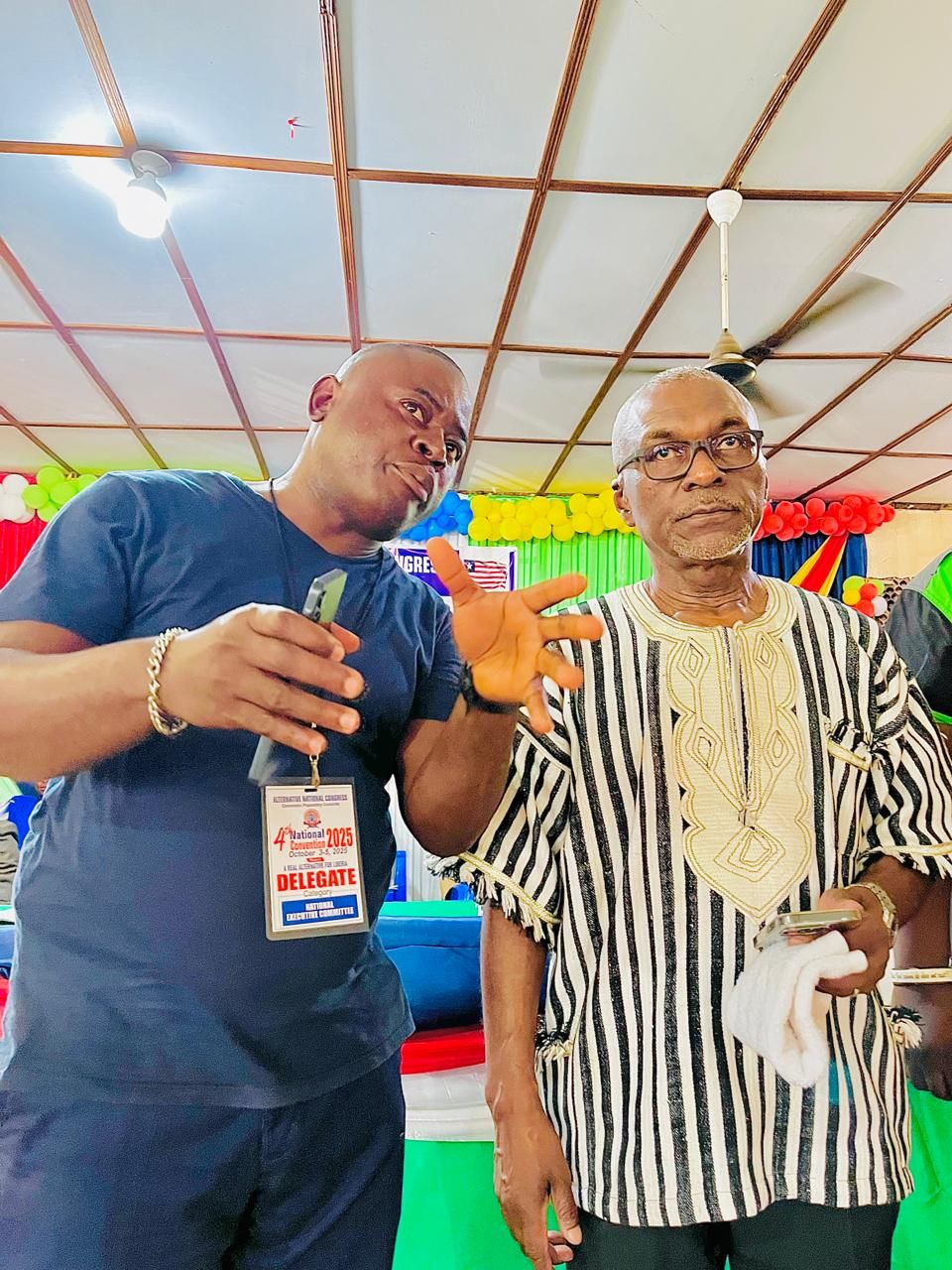
Sensee Kaidii, Communications Director of the opposition Alternative National Congress (ANC), has emerged as one of the latest voices to challenge the country’s political establishment. In a pointed critique, Kaidii argued that both former President George Weah and President Joseph Nyuma Boakai have failed to deliver meaningful progress for Liberians despite holding state power.
According to Kaidii, successive governments have fallen short in addressing core national issues, including unemployment, weak infrastructure, and widespread poverty. He said many Liberians remain burdened by worsening economic conditions and have seen little change in their daily lives despite repeated promises from political leaders.
His comments reflect a growing mood of dissatisfaction among voters who believe Liberia’s leadership class has struggled to translate political power into tangible national development.
As public frustration deepens, opposition figures are increasingly using the moment to present themselves as alternatives to the country’s traditional governance model.
Among the names drawing renewed political attention is Alexander B. Cummings, the businessman and political leader of the ANC, whose profile continues to rise as debate over Liberia’s future leadership gains momentum.
Supporters of Cummings argue that his experience in the private sector, coupled with his long-standing charitable and social contributions across Liberia, positions him as a credible alternative to conventional politicians. They say his record demonstrates practical leadership, strategic thinking, and a results-driven approach that Liberia urgently needs.
But critics remain unconvinced.
Opponents, particularly those aligned with the ruling establishment, argue that corporate success should not be confused with political competence. They maintain that governing a nation requires more than executive experience, pointing instead to the complexity of public administration, institutional reform, and national consensus-building.
That debate—between private sector efficiency and political governance experience—is quickly becoming one of the defining themes of Liberia’s early 2029 election conversation.
At the same time, concerns are mounting over the tone of national political discourse.
Observers say public debate is becoming increasingly confrontational, with misinformation, partisan rhetoric, and personal attacks threatening to overshadow substantive policy discussions. The trend has raised concerns among political commentators and ordinary citizens alike, many of whom fear that the country’s democratic space could become more polarized as the election draws closer.
Kaidii, however, insists the opposition must remain focused on issues rather than insults.
He has called for greater honesty, accountability, and policy-based engagement in Liberia’s political dialogue, urging political actors to prioritize solutions over propaganda and national progress over political point-scoring.
Across Liberia, many citizens say their priorities remain clear: better schools, improved healthcare, stronger infrastructure, and meaningful economic opportunity.
As political parties begin positioning themselves for 2029, voters are expected to play a more decisive role in shaping the national conversation—one increasingly driven not by slogans, but by demands for competence, credibility, and measurable results.
With the campaign season still distant but political tensions already rising, Liberia’s early electoral debate is revealing a public that is more alert, more skeptical, and far less willing to settle for promises without performance.


