


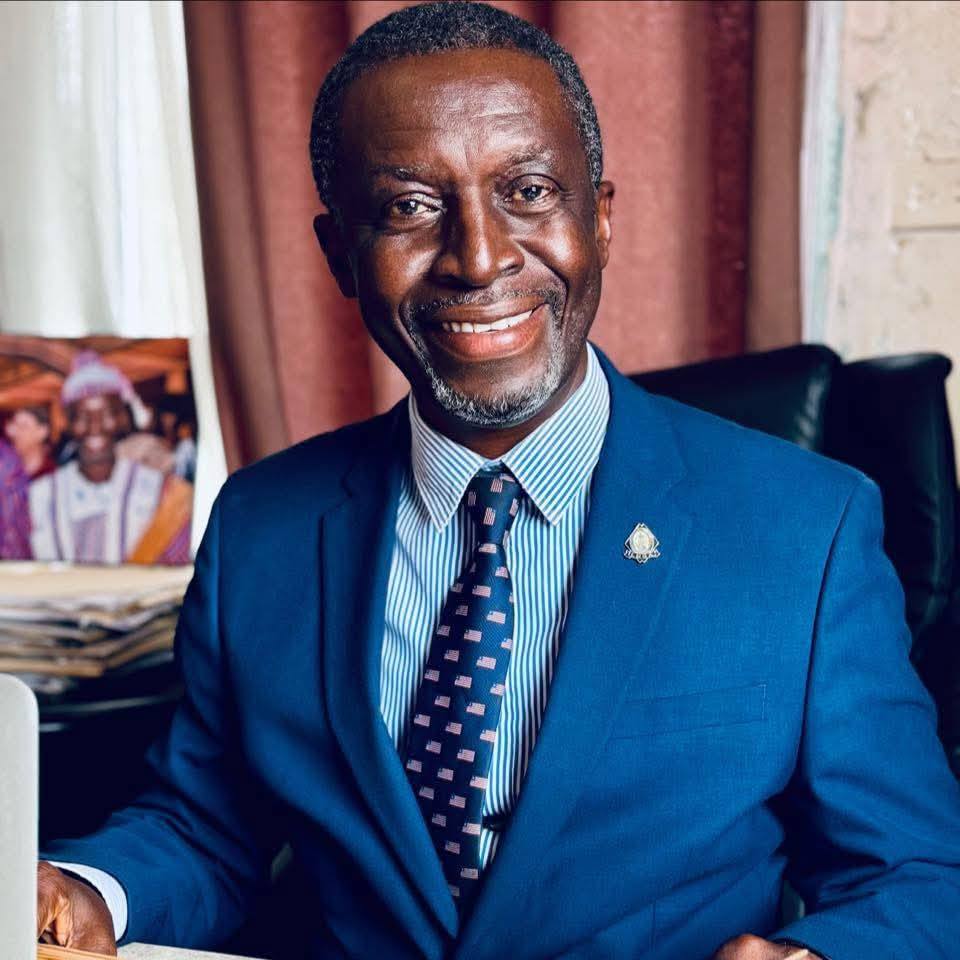
MONROVIA, Liberia — A diplomatic controversy is unfolding in Liberia following sharp criticism from Cllr. Tiawan Saye Gongloe, political leader of the Liberia People’s Party (LPP), who has condemned Vice President Jeremiah Kpan Koung for remarks interpreted as suggesting hostile intent toward neighbouring Guinea.
The dispute centres on comments attributed to Vice President Koung in which he reportedly stated that “two or three” unnamed Liberians could “take a city in Guinea”. The statement, which has circulated widely across social and traditional media, has triggered concern among opposition figures and civil society actors who warn that such rhetoric risks undermining regional stability.
In a strongly worded response, Gongloe described the Vice President’s remarks as “irresponsible, reckless, and inflammatory”, arguing that they are inconsistent with the diplomatic responsibilities of high office and could unnecessarily strain Liberia’s bilateral relations with Guinea.
“There is a current darkness permeating the circles of our government,” Gongloe said in a video message shared on social media. He further warned that the statement could escalate tensions between the two countries, adding that it was “not expected of a responsible vice president of Liberia”.
From a political communication standpoint, the controversy highlights a recurring challenge in fragile diplomatic environments: the gap between domestic political rhetoric and the discipline required in cross-border state relations. Statements made by senior officials, even in informal or rhetorical contexts, can carry disproportionate diplomatic weight when amplified through regional media ecosystems.
Gongloe argued that Vice President Koung’s comments effectively weakened Liberia’s diplomatic posture by introducing unnecessary suspicion into a relationship that, while occasionally strained, has largely been managed through established bilateral channels.
He emphasised that Liberia does not need escalatory language at a time when border coordination and regional cooperation remain essential. “We don’t need that,” he stated, framing the issue as one of national responsibility rather than partisan disagreement.
Beyond condemnation, Gongloe called for institutional accountability. He urged President Joseph Nyuma Boakai to establish a commission of inquiry into recent border-related issues, arguing that a structured investigation would demonstrate governmental seriousness in managing sensitive cross-border matters.
“That’s what a responsible government does,” he said, positioning the proposal as a governance mechanism rather than a political reaction.
Gongloe, who previously served as a presidential envoy to Guinea, also sought to downplay fears of escalation, expressing confidence that the historical and economic ties between the two countries would prevent armed conflict. “I can put my head on a chopping board; Guinea will never fight Liberia,” he said, framing his assessment as grounded in prior diplomatic engagement.
He further referenced what he described as longstanding mutual obligations between the two countries, suggesting that Guinea recognises its historical and regional indebtedness to Liberia. However, he cautioned that such historical goodwill does not eliminate the need for disciplined crisis management when tensions arise.
From a regional security perspective, the episode underscores how quickly political rhetoric can intersect with existing sensitivities along the Liberia–Guinea border, where issues of trade, migration, and security have periodically generated friction.
Although both governments have consistently reaffirmed commitment to peaceful resolution of disputes, the absence of an official clarification from the office of the Vice President has allowed the controversy to expand within political and media discourse.
Analytically, the situation reflects a broader governance risk: the amplification of elite political speech in an environment where diplomatic nuance is essential but often undermined by domestic political signalling. In such contexts, even ambiguous remarks can be reinterpreted as state positions, increasing the burden on institutional communication systems.
Gongloe’s intervention, therefore, adds a layer of political pressure on the Boakai administration, not only to clarify the Vice President’s remarks but also to reinforce formal mechanisms for managing sensitive border narratives.
As the situation stands, the issue is less about the literal feasibility of the statement in question and more about the diplomatic cost of unregulated political rhetoric in a region where perception often shapes policy consequences.


