


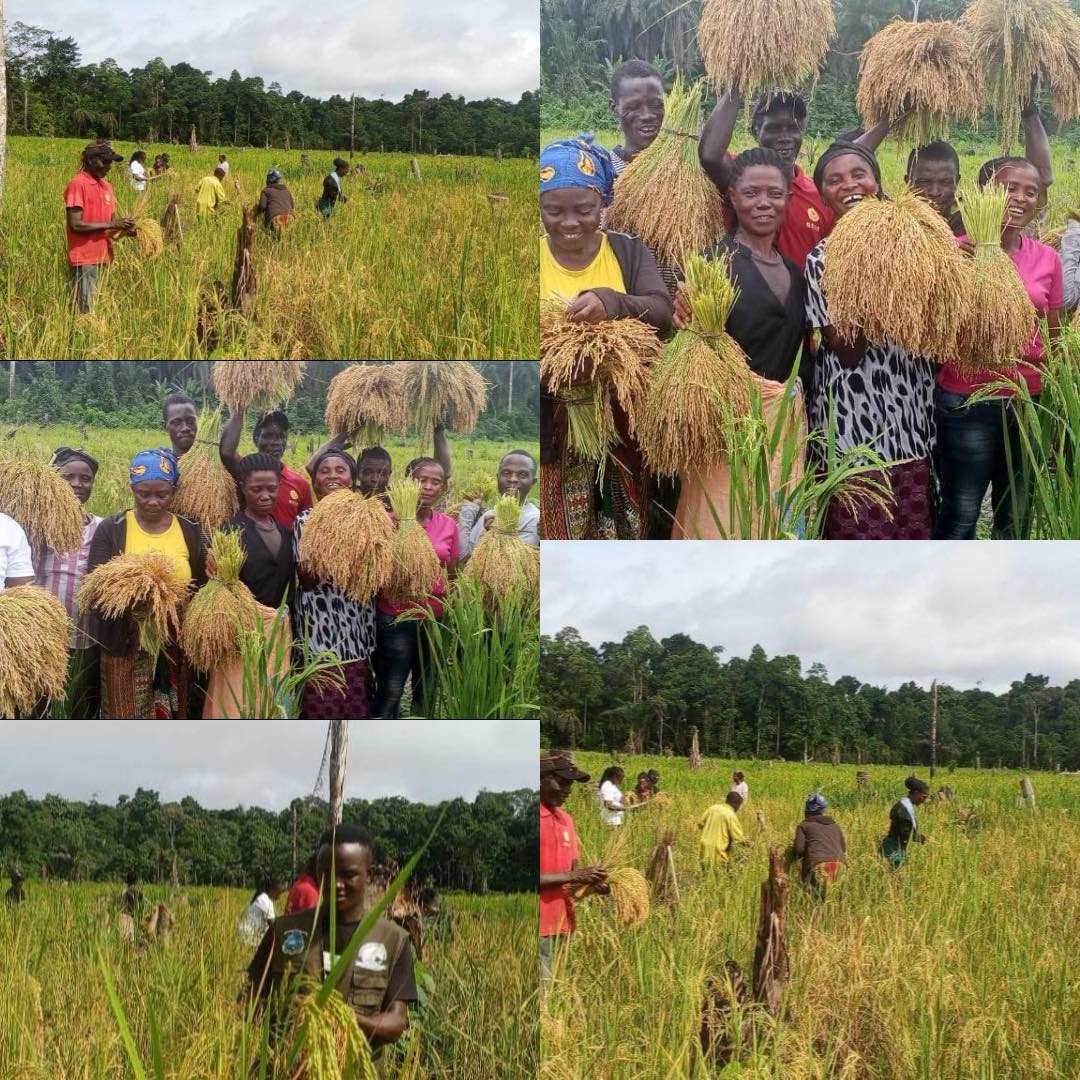
A strong rice harvest in Sinoe County is being viewed as a practical indicator of Liberia’s ongoing efforts to strengthen domestic food production and reduce reliance on imports.
In Grisgby’s Farm Community, located in the Butaw Statutory District, farmers have reported one of their most productive seasons in recent years following the cultivation of over 20 hectares of lowland rice. The initiative, supported by the Ministry of Agriculture through its Rural Economic Transformation Project (RETRAP), is projected to yield approximately 60 metric tons of rice.
Beyond the celebratory mood in the community, the development highlights the growing impact of targeted agricultural interventions. Farmers attribute the improved output to a combination of technical guidance, access to modern farming tools, and the introduction of enhanced seed varieties provided under the project.
Agriculture officials see the outcome as part of a broader national strategy aimed at improving food security through increased local production. Liberia has long depended on imported rice, making initiatives like RETRAP central to efforts to build a more self-sustaining agricultural system.
Local residents say the benefits extend beyond food availability. The harvest is expected to generate income for farming households and create economic opportunities for traders within and beyond the district, reinforcing the link between agriculture and rural livelihoods.
The success of the Sinoe project also points to a shift in how farming is being approached, with greater emphasis on lowland cultivation and improved techniques to maximize yield. Stakeholders believe such models, if scaled, could significantly transform agricultural productivity across the country.
Farmers and community leaders have welcomed the progress while calling for sustained investment to maintain momentum. Many expressed hope that continued government support will not only expand production but also attract younger Liberians to agriculture as a viable economic path.
As Liberia continues to navigate food supply challenges, the Sinoe harvest offers a case study in how coordinated support and local engagement can translate into measurable gains in both production and community resilience.


