


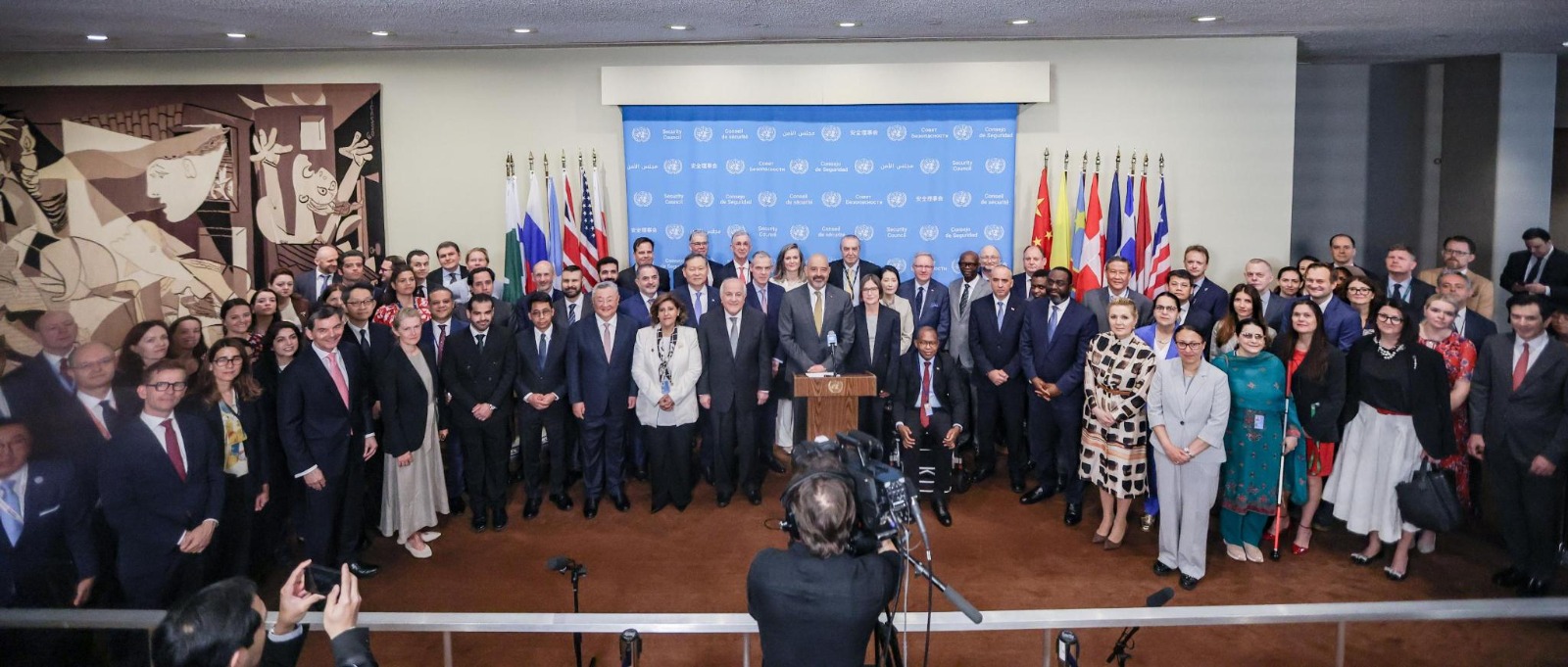
The international community is confronting a sobering reality: civilians are increasingly paying the highest price in modern warfare. As armed conflicts expand across continents and intensify in complexity, growing concerns are emerging over the weakening respect for International Humanitarian Law (IHL)—the legal framework designed to limit the suffering caused by war and protect those who are not participating in hostilities.
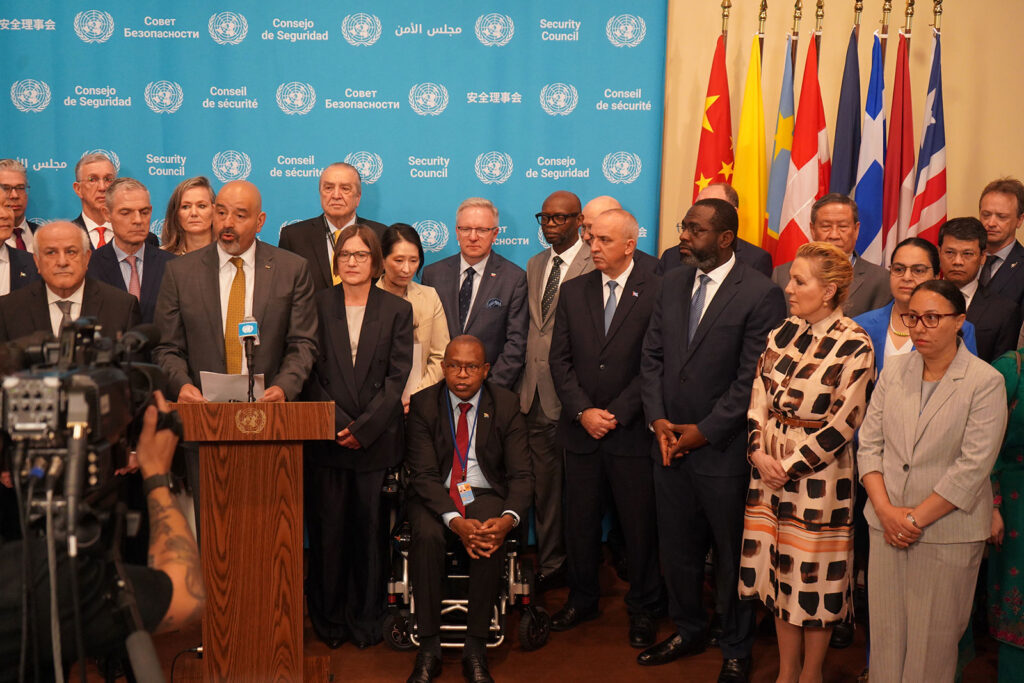
In a strong and urgent appeal delivered ahead of the United Nations Security Council’s annual debate on civilian protection, Jordan’s Permanent Representative to the United Nations, Ambassador Walid Khalid Obeidat, speaking on behalf of 88 nations and Jordan itself, warned that the world is witnessing a dangerous deterioration in adherence to the laws of war.
The statement was more than a diplomatic address; it represented a collective warning from a broad coalition of nations that current global conflict trends are creating conditions with potentially devastating humanitarian consequences.
A World of Expanding Conflict and Civilian Suffering
The scale of today’s humanitarian crisis is staggering. Approximately 130 armed conflicts are currently affecting populations across the globe, exposing civilians to increasingly severe conditions and widespread insecurity.
Modern warfare is leaving deep and long-term scars on societies. Civilians are experiencing relentless bombardments and attacks involving explosive weapons, while unexploded remnants of war continue to endanger communities long after battles end. Critical infrastructure—including hospitals, water systems, schools, and other life-sustaining services—is increasingly caught in the crossfire.
The destruction extends beyond physical structures. Communities are being uprooted at unprecedented rates, creating waves of displacement that separate families and disrupt entire generations.
According to the UN Secretary-General’s annual report referenced in the statement, more than 37,000 civilian deaths were recorded across twenty armed conflicts in 2025. Behind these figures lies a broader human cost: interrupted education, lost livelihoods, psychological trauma, and diminished opportunities that could affect societies for decades.
Analysts argue that these consequences are reshaping the social and economic futures of conflict-affected regions. Children forced out of classrooms today may become adults facing limited economic prospects tomorrow, while repeated cycles of displacement and instability can weaken social cohesion for generations.
The Growing Erosion of the Rules of War
International Humanitarian Law was established to create boundaries in warfare—to ensure that even during armed conflict, there are limits that all parties must respect.
The fundamental principles of IHL require the protection of civilians, prohibit unnecessary suffering, and seek to preserve essential services and infrastructure. These rules are legally binding on all parties involved in armed conflicts, regardless of political differences or military objectives. However, concerns are mounting that these protections are increasingly being ignored.
The statement stressed that the issue is not the absence of legal frameworks; rather, it is the declining political commitment to enforcing them. The challenge facing the international community is therefore not only legal but deeply political.
Experts increasingly warn that when violations of humanitarian law become normalized or go unaddressed, they risk creating a dangerous precedent in future conflicts. Weak enforcement mechanisms and inconsistent accountability may contribute to a cycle in which humanitarian standards gradually lose their effectiveness.
The Global IHL Initiative: A New Diplomatic Response
Against this backdrop, the Global Initiative to Galvanize Political Commitment to International Humanitarian Law emerged as an attempt to reverse this trend.
Launched in September 2024 by Brazil, China, France, Jordan, Kazakhstan, and South Africa, alongside the International Committee of the Red Cross (ICRC), the initiative seeks to renew high-level international commitment to humanitarian principles and improve practical implementation of existing laws.
Rather than creating new legal structures, the initiative aims to strengthen compliance with the rules that already exist. Its rapid growth demonstrates significant international interest.
To date:
- 111 countries have formally joined the initiative.
- 27 states are serving as co-chairs across seven specialized workstreams.
- More than 160 states have participated in consultations and policy discussions.
The breadth of participation suggests that concerns regarding the erosion of humanitarian law cut across political alliances and regional divides.
Addressing the Challenges of Modern Warfare
One of the initiative’s major objectives is addressing the realities of contemporary warfare, which increasingly differ from traditional battlefield scenarios. Participating states are examining several urgent issues, including:
Protection of hospitals and civilian infrastructure
Medical facilities have become increasingly vulnerable in modern conflicts, creating severe humanitarian consequences when healthcare systems collapse.
Naval warfare and maritime security
As strategic competition expands into maritime spaces, questions surrounding the application of humanitarian law at sea are gaining greater importance.International Humanitarian Law as a pathway toward sustainable peace
Participants are exploring how respect for humanitarian principles may contribute not only to reducing suffering during war but also to creating conditions for long-term stability.
Protection of humanitarian personnel and civilians
Aid workers and humanitarian responders continue to face increasing risks in conflict zones, raising urgent concerns about safeguarding those providing life-saving assistance.
These discussions indicate a broader recognition that warfare itself is evolving—and humanitarian protections must remain relevant within changing military realities.
Jordan Positions Itself at the Center of Global Humanitarian Diplomacy
Ambassador Obeidat also announced that Jordan will host a High-Level Conference on Humanity in War on December 7, following two years of extensive international consultations.
The conference is expected to represent a major milestone in efforts to transform discussions into concrete action.
By hosting the summit, Jordan appears to be positioning itself as a key actor in international humanitarian diplomacy, building on its longstanding role in regional and global peace efforts.
The event will likely serve as a platform for governments to present commitments, recommendations, and strategies aimed at strengthening implementation of humanitarian law on the ground.
Three Calls to Action
The statement concluded with three direct appeals to the international community:
First, states were urged to prioritize respect for International Humanitarian Law and civilian protection in both domestic and foreign policy decisions.
Second, countries not yet participating in the Global IHL Initiative were encouraged to join and actively contribute to its practical outcomes.
Third, governments were asked to ensure representation at the Jordan conference at the highest political levels possible.
The Larger Question Facing the International Community
The message delivered by the coalition of 88 states extends beyond diplomacy. It raises a broader question confronting the international system: can humanitarian principles remain effective amid increasingly complex and prolonged conflicts?
The laws of war were created on the belief that even in humanity’s darkest moments, certain boundaries should never be crossed.
Whether renewed political commitment can reverse current trends remains uncertain. However, the warning from the international community is clear: if protections for civilians continue to weaken, the humanitarian consequences may extend far beyond today’s battlefields and shape global stability for generations to come.


