


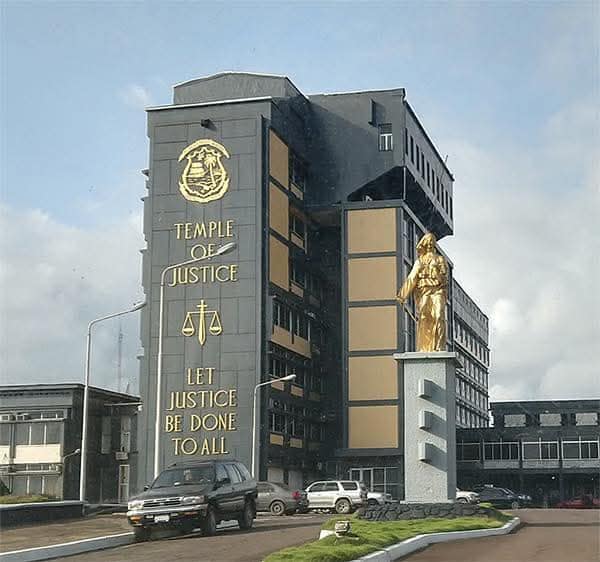
MONROVIA, Liberia — Liberia’s constitutional order faces another critical moment as the Supreme Court prepares to issue a highly anticipated ruling in the legal dispute between Montserrado County lawmaker Yekeh Kolubah and the leadership of the House of Representatives, a case many observers believe could redefine the boundaries of political authority in the country.
The decision, expected to be delivered by Yussif D. Kaba, has moved beyond a dispute involving a single legislator and increasingly become a broader constitutional debate over institutional power, judicial oversight, and the limits of legislative authority.
At the center of the case is a Bill of Information filed by Representative Kolubah against House Speaker Richard Nagbe Koon, Deputy Speaker Thomas Fallah, and other members of the House leadership.
Kolubah argues that House leadership violated prior directives from the Supreme Court and failed to respect constitutional due process in actions taken against him within the Legislature. The allegations have triggered legal and political discussions about whether the House acted within its constitutional authority or crossed boundaries that require judicial intervention.
While previous confrontations between the legislative and judicial branches have surfaced in Liberia, legal observers say this case presents a more fundamental question: Can the Legislature operate without judicial oversight in disciplinary matters involving its own members, or do constitutional safeguards extend beyond the walls of the Capitol Building?
Supporters of Kolubah contend that no branch of government should function beyond constitutional review. They argue that judicial oversight exists precisely to ensure that due process and constitutional rights are protected regardless of political position or institutional authority.
Others, however, maintain that the Legislature possesses internal autonomy and should retain authority over its own disciplinary procedures without outside involvement. They warn that excessive judicial intervention could weaken legislative independence and disrupt the constitutional balance between branches of government.
Political analysts suggest the ruling may carry consequences well beyond the immediate dispute. Depending on the Court’s interpretation, the decision could establish new legal standards governing how lawmakers are disciplined, define the reach of judicial authority, and shape future relationships between the courts and elected officials.
As anticipation grows ahead of the judgment, attention is increasingly shifting from personalities to constitutional principles.
The question now facing Liberia is not only whether one lawmaker was treated fairly—but whether the country’s institutions are prepared to define where political authority ends and constitutional accountability begins.


