


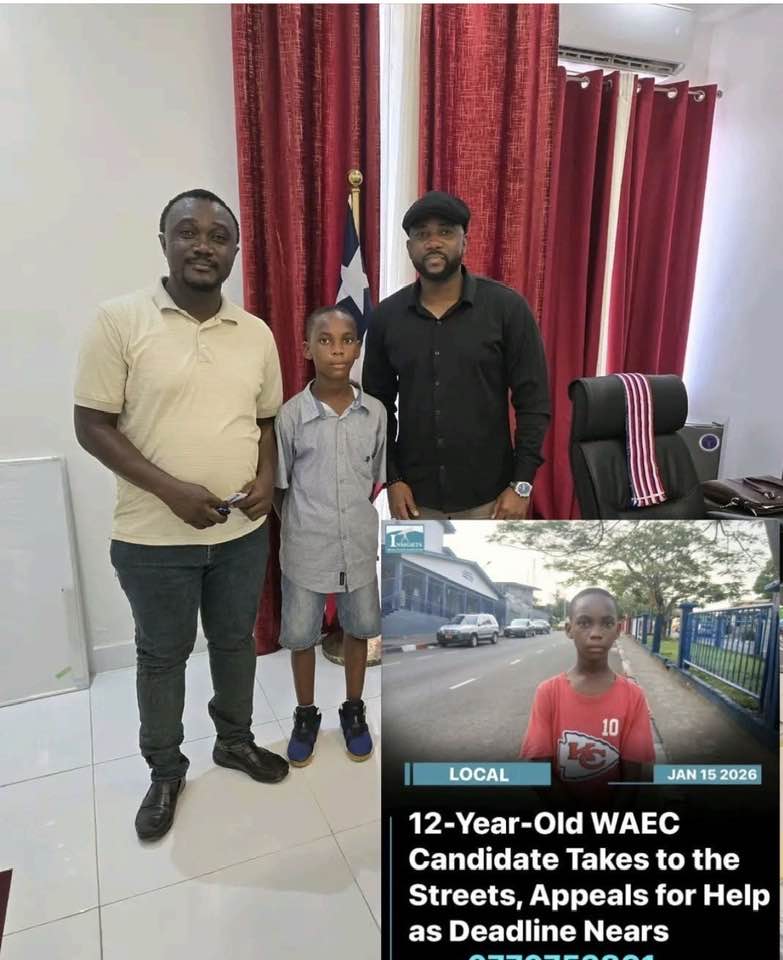
What should deeply concern every Liberian is not that assistance was extended to a child in distress, but that the child was forced to beg publicly in the first place. The growing tendency to celebrate individual political interventions in cases of obvious institutional failure reflects a dangerous normalization of poor governance. In Liberia today, charity is increasingly mistaken for leadership, and sympathy is allowed to substitute for accountability.
A 12-year-old child moving from radio station to newspaper office in search of WAEC fees is not a symbol of national compassion. It is a glaring indictment of a broken education and social protection system. It exposes institutions that fail to anticipate vulnerability, policies that do not protect the poor, and a political culture that reacts only when hardship becomes publicly embarrassing.
Disturbingly, public discourse often shifts almost immediately from asking why the system failed to praising who intervened. This reflex lies at the heart of the problem. When lawmakers or public officials step in to solve crises that should never have existed under proper oversight, they are not demonstrating leadership—they are obscuring failure. The applause that follows such interventions only deepens the dysfunction, because it removes pressure for systemic reform.
WAEC fees are not acts of generosity. They are predictable obligations within a national education framework that legislators approve, fund, and supervise. In a functioning system, clear mechanisms would already exist to support students from struggling families. No child should ever be compelled to beg publicly for the right to sit a national examination that shapes their future.
This pattern sends a dangerous message to society: that opportunity and survival depend on visibility, political access, and personal connections rather than rights guaranteed by public institutions. It strips poor families of dignity and teaches children early that systems cannot be trusted—only powerful individuals can be.
At D-Kanty News Network, we believe the real tragedy is not that a fee was paid, but that the failure which made the payment necessary was hidden behind praise. One child is assisted, headlines are written, and the thousands facing the same silent struggle remain abandoned. The system stays weak, untouched, and unchallenged.
Liberia does not need more politicians playing the role of saviors. It needs leaders committed to building institutions that work consistently and fairly. It needs education policies that account for poverty, budgets that reflect social realities, and safety nets that function without requiring public humiliation to activate them.
Until Liberians reject charity-as-governance and demand institution-building as the true measure of leadership, these stories will continue to repeat themselves—children suffering quietly, politicians celebrated loudly, and a broken system preserved in plain sight.
An Editorial by D-Kanty News Network (DKNN)


