


MONROVIA, LIBERIA – Grand Bassa County Senator Amara Konneh has called for a more honest national conversation about Liberia’s economic condition, urging policymakers to look beyond official financial gains and confront the worsening hardship facing ordinary citizens.
In a detailed reflection on the country’s economic direction, Konneh acknowledged recent progress made by the Executive Branch in securing international financial support, particularly from the International Monetary Fund (IMF) and the World Bank. He described the government’s ability to obtain a 21-month IMF support program valued at SDR 193.8 million—approximately US$266 million—as a notable step toward strengthening Liberia’s macroeconomic stability.
According to Konneh, the financing package offers Liberia a strategic opportunity to build resilience against climate-related shocks, public health emergencies, and external economic disruptions. He credited the Boakai administration for securing the arrangement and praised Finance Minister Augustine Ngafuan, Central Bank Executive Governor Henry Saamoi, and their teams for navigating a difficult global financial environment marked by tightening aid flows and reduced concessional support.
But while acknowledging these gains, Konneh warned that positive macroeconomic signals alone do not reflect the daily reality confronting most Liberians.
He said the more urgent national concern remains the growing pressure on households struggling to afford food, transportation, education, and healthcare.
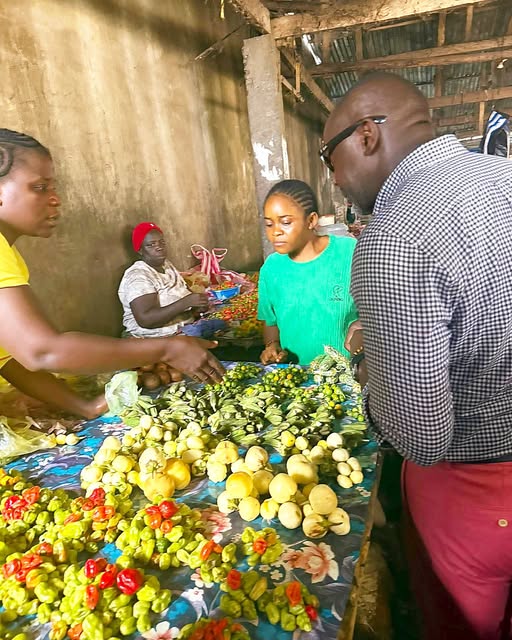
Drawing from direct conversations with petty traders at Old Road Market in Monrovia, Konneh said ordinary Liberians are increasingly burdened by rising commodity prices driven largely by higher transportation costs and fuel prices. He noted that market women described another wave of price increases in locally supplied agricultural goods, deepening pressure on already strained family incomes.
For Konneh, those conversations highlighted what official statistics often fail to capture: the steady erosion of purchasing power among ordinary Liberians and the widening gap between economic policy achievements and lived reality.
He argued that while citizens grapple with inflation and economic uncertainty, the national legislature has become distracted by internal political disputes rather than focused on urgent relief measures. He criticized lawmakers for devoting energy to institutional infighting, political retaliation, and suppressing dissent while many households continue to struggle under worsening economic conditions.
Konneh cautioned that whatever modest gains were achieved through the Presidential Committee on basic commodities—led by Vice President Jeremiah Kpan Koung in 2025—are now being undermined by global pressures, including instability in the Middle East, which continues to drive fuel-related shocks across vulnerable economies like Liberia.
He said the country must now confront the reality that more than half of its population remains trapped in multidimensional poverty, with severe deprivation across health, education, and living standards. In his view, this is the clearest indicator that macroeconomic stability has yet to translate into broad-based social relief.
Konneh further argued that Liberia’s economic structure remains too fragile to absorb growing public demand, noting that the country continues to depend heavily on agriculture and mining—two sectors he said remain vulnerable to shocks and incapable of creating enough sustainable jobs, especially for young people.
He pointed to rising youth unemployment, including the long lines of young Liberians seeking recruitment into the Armed Forces of Liberia, as evidence of a deepening employment crisis and a shrinking opportunity base for the country’s younger population.
To address these challenges, Konneh called for urgent reforms aimed at expanding domestic economic participation.
He urged the government to fully enforce Liberia’s Liberianization policy and local procurement laws, arguing that too many sectors intended for Liberian participation remain dominated by foreign businesses. According to him, stronger enforcement would help expand local enterprise, create jobs, and retain more economic value within the country.
He also proposed a review of Liberia’s personal income tax structure, warning that inflation has pushed many workers into higher tax brackets even though their real earnings have not improved. He said adjusting the tax system could provide immediate relief to working families already under significant financial pressure.
Konneh said he intends to work with fellow lawmakers on possible reforms when the Legislature returns from constituency break. Beyond policy, however, Konneh framed the moment as a test of national political courage.
He called on public officials, civil servants, and citizens alike to engage more honestly with Liberia’s economic challenges and to resist political intolerance, censorship, and the growing tendency to dismiss criticism rather than confront reality.
According to him, Liberia’s long-term progress will depend not only on international financial support, but on the willingness of Liberians themselves to confront difficult truths and make practical, sometimes uncomfortable, decisions in the national interest.
He also had pointed words for partisans within the ruling Unity Party, urging them to spend less time reacting defensively to criticism and more time listening to the frustrations of struggling Liberian families whose daily concerns remain rooted in unemployment, inflation, and economic uncertainty.
For Konneh, the country’s central challenge is no longer simply securing financial support abroad—it is ensuring that economic policy delivers visible and meaningful relief at home.


