


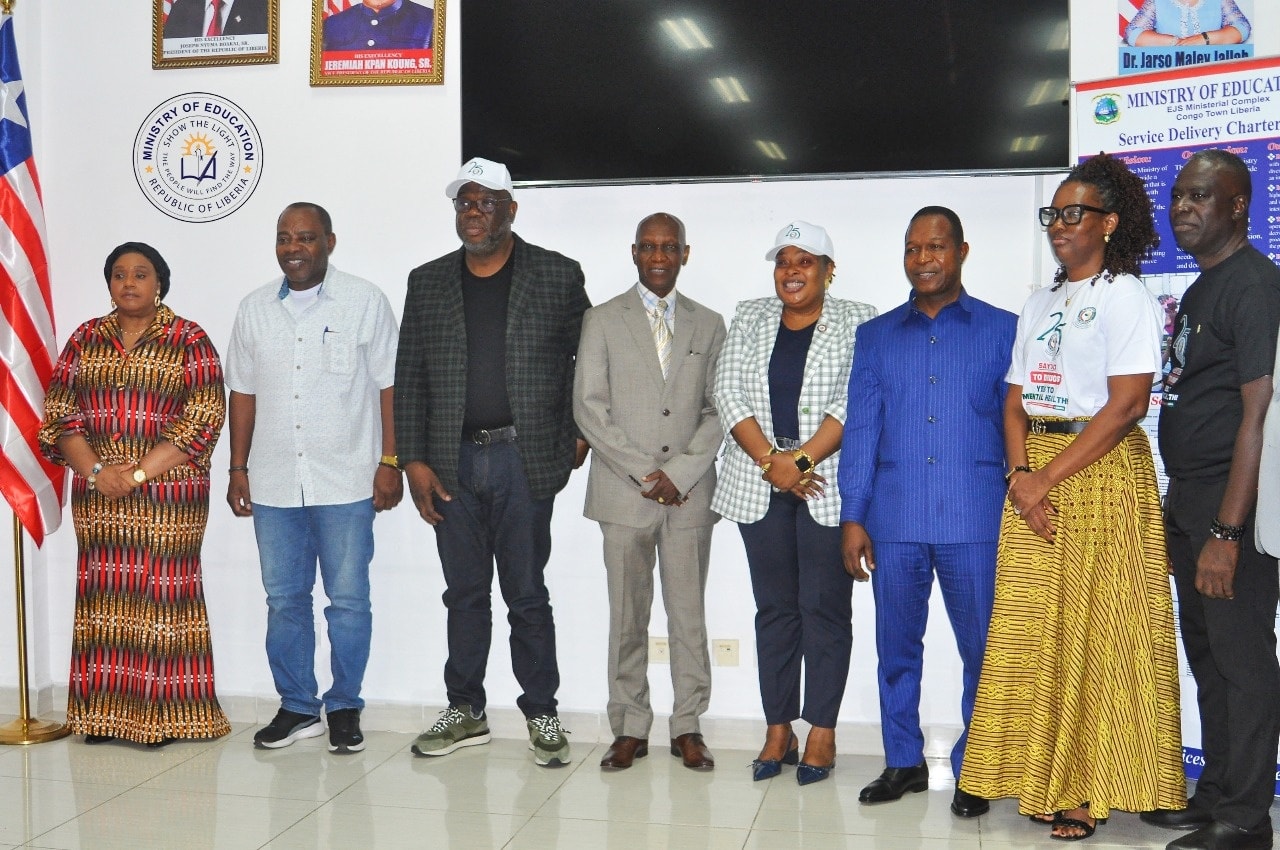
Monrovia, August 4, 2025 – Liberia’s Ministry of Education welcomed a high-level delegation from the ECOWAS Health Committee today at the Ellen Johnson Sirleaf Ministerial Complex in Congo Town. The visit highlights the urgent need for regional cooperation to tackle rising drug abuse and mental health challenges among youth in West Africa.
Dr. Olando Dias Perreira, Chairperson of the ECOWAS Health Committee, stressed the seriousness of the problem. “This is not just a public health issue—it is a regional development emergency,” he said. “ECOWAS is working with member states to align laws and policies that address the root causes of drug abuse and mental health struggles among young people.”
Liberia’s Minister of Education, Dr. Jarso Maley Jallah, expressed the government’s commitment to this cause. “Drug abuse is a global challenge. We must work together to protect and empower our youth,” she said. “Liberia will use the findings from this visit to strengthen our national education policies and support the ongoing ‘Say No to Drugs’ campaign.”
The meeting included key Liberian officials such as Senator Edwin Melvin Snowe, Representatives Samuel Enders and Maima Briggs Mensah, and Deputy Ministers Dr. Samuel Toe, Hon. Amos A. Fully, and Hon. Nyenkeh Y. Forkpa. ECOWAS delegates also participated, emphasizing the collaborative effort.
Liberia’s education sector faces significant challenges. The 2023 Liberia Demographic and Health Survey found that one in five urban adolescents were exposed to drugs or alcohol before turning 18. School counselors are scarce, with only one counselor for every 3,000 students nationwide—far below the WHO’s recommended ratio of one per 250 students. An internal Ministry report from 2024 showed that over 35% of secondary schools reported disciplinary issues linked to suspected drug use, especially in Montserrado, Nimba, and Grand Bassa counties.
Despite these hurdles, Liberia is making progress. The 2022 National Education Sector Plan includes mental health training for teachers and aims to set up peer-support clubs in 60% of high schools by 2026. However, funding and coordination across agencies remain areas that need improvement.
The partnership with ECOWAS is seen as a way to bring technical support and encouragement to expand youth-focused programs. Plans include school awareness campaigns and creating a cross-border youth task force as part of a pilot program to build mental health resilience.
Minister Jallah closed by saying, “Our children’s mental health is national security. We welcome ECOWAS’s vision and will work closely to build a safer, drug-free generation.”


