


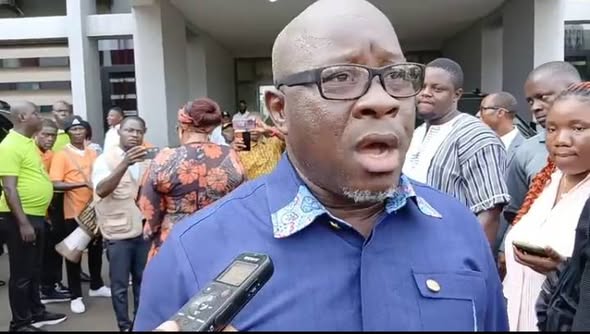
Bong County District #3 Representative Josiah Marvin Cole has refused to apologize for remarks opposing same-sex marriage, following his ejection from the 79th Gbarnga District Conference of the United Methodist Church (UMC) in Gbartala, Lower Bong County. The incident has reignited debate at the intersection of religion, politics, and personal belief in Liberia’s public discourse.
Speaking after the disruption, Rep. Cole reiterated that his position is grounded in his interpretation of the Bible and what he described as a moral obligation to speak “the truth,” regardless of public backlash. He maintained that he does not support same-sex marriage—whether between men or between women—and insisted that his stance is neither new nor negotiable.
Cole framed his refusal to apologize as a matter of leadership and principle. He argued that leaders must stand by their words even under pressure, adding that adherence to biblical teachings should outweigh popular opinion. According to him, his comments at the conference merely echoed statements he has made in the past, making an apology unnecessary and, in his view, inappropriate.
The lawmaker also challenged what he described as attempts by church leaders to claim collective authority over Methodist congregants. While acknowledging disagreement within the church, Cole emphasized that pastors are not infallible and that individual members may hold divergent views. He questioned whether any single cleric could credibly claim to speak for all Methodists, especially on a deeply divisive social issue.
Cole’s removal from the conference reportedly followed an alleged remark labeling the United Methodist Church a “gay church,” a statement that many attendees found offensive and provocative. The reaction underscores existing tensions within religious institutions grappling with evolving global debates on sexuality, doctrine, and inclusion.
Beyond the immediate controversy, the episode highlights broader fault lines in Liberian society, where religious belief continues to play a powerful role in political identity and public rhetoric. Cole’s defiance may consolidate support among conservative constituents who share his views, but it also risks alienating religious communities and voters who favor a more inclusive approach.
As the debate continues, the incident raises questions about the limits of free expression within religious spaces, the responsibilities of public officials when addressing faith-based audiences, and how Liberia navigates culturally sensitive issues in an increasingly pluralistic society.


