


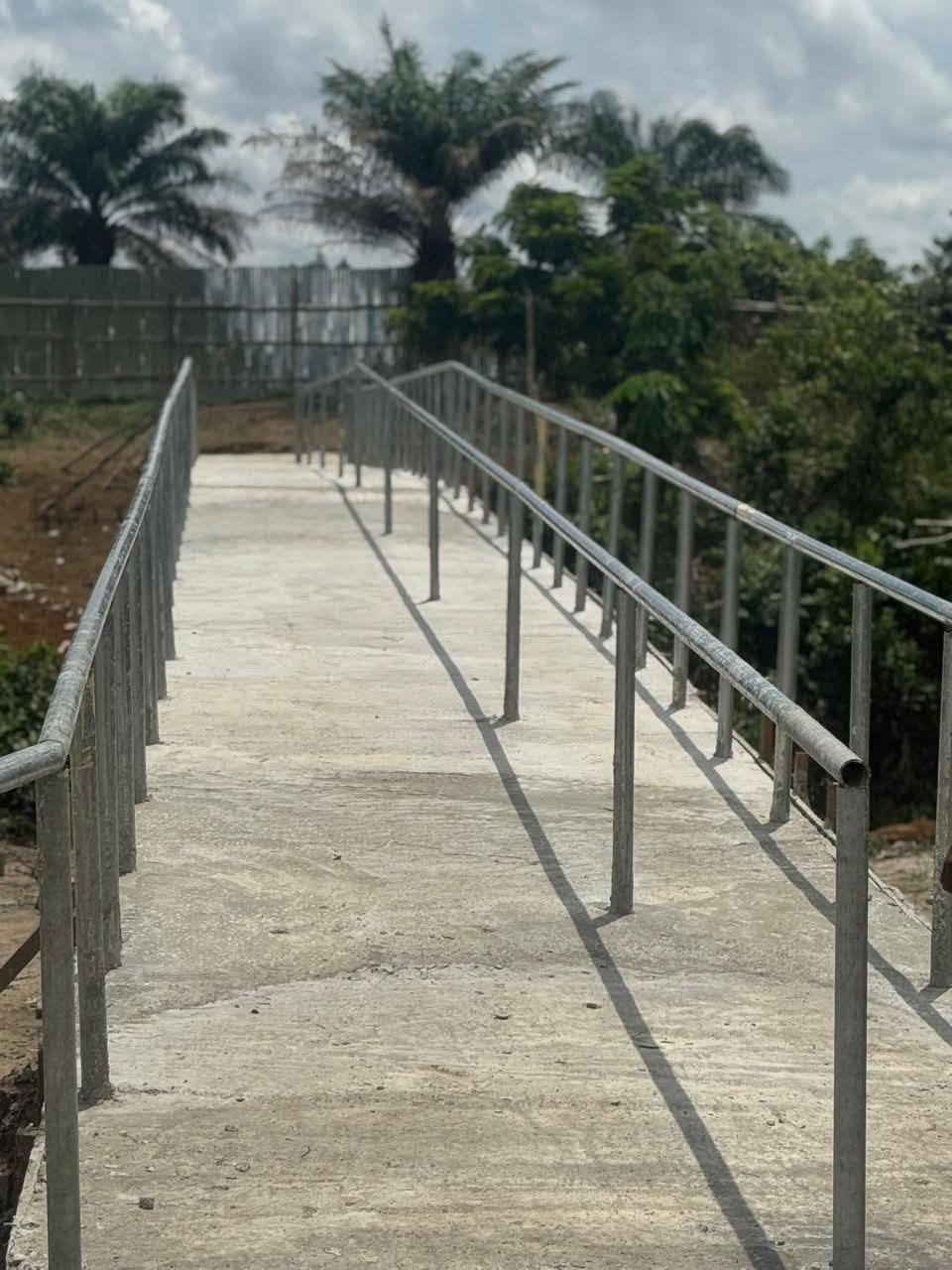
DOLO TOWN, Margibi County — For years, crossing the river between the MBI Community and Dolo Town was a daily gamble for residents of Lower Margibi. Mothers clutched their children tightly, students timed their journeys around the rain, and traders weighed the risk of losing goods—or lives—against the need to earn a living. Today, with the completion and dedication of the MBI–Dolo Town Bridge, those fears are giving way to relief, gratitude, and renewed hope.
The bridge, constructed through the Liberia Agency for Community Empowerment (LACE) under the legislative development initiative of District #2 Representative Ivar K. Jones, has become more than a physical structure. For families who once lived with anxiety at every crossing, it represents safety, dignity, and a return to normal life.
Before the Bridge: A Daily Struggle
Residents recall a time when the river dictated their routines. During the rainy season, floodwaters often rose without warning, turning a simple crossing into a dangerous ordeal. Parents speak quietly about schoolchildren who slipped, were swept away, or never made it home. Some families still mourn loved ones lost while attempting to cross.
“We used to pray every morning before our children went to school,” said one mother in Dolo Town. “When the rain fell, we feared the worst.”

Traders from the MBI Community describe balancing produce on their heads while navigating unstable paths, knowing one misstep could mean injury or death. Motorcyclists and keh-keh drivers often refused to cross altogether, isolating communities and cutting off access to markets, clinics, and relatives.
After the Bridge: A New Routine
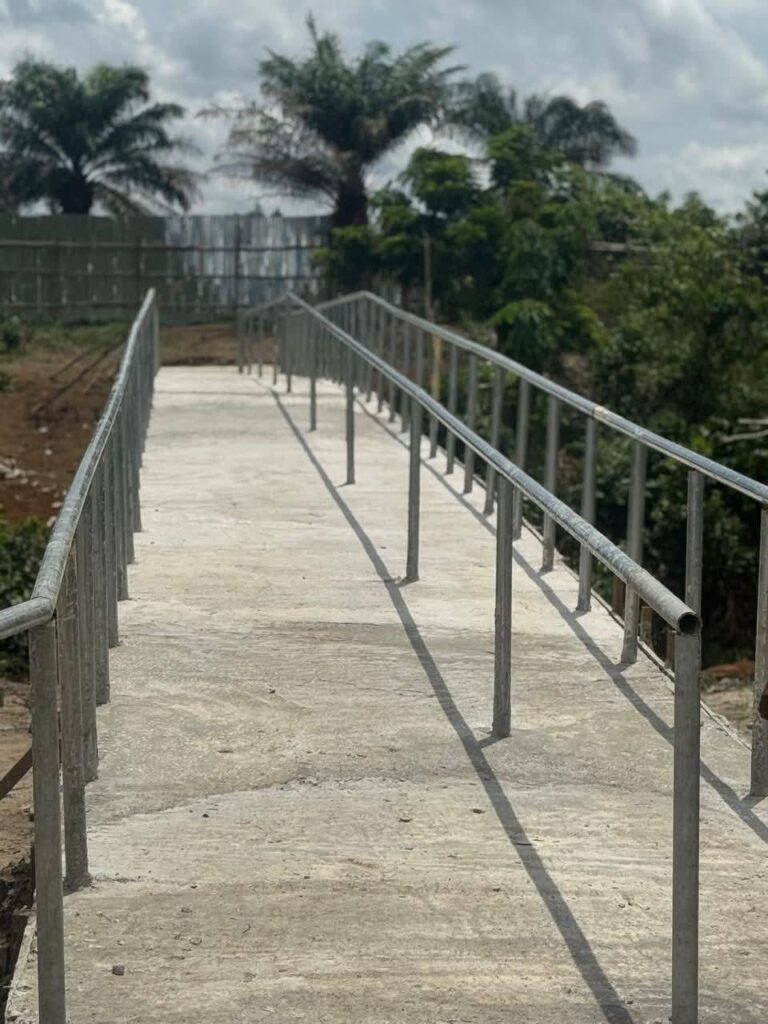
The newly constructed bridge now offers a stable, reliable passage for pedestrians, motorcycles, and keh-kehs. Children walk to school with confidence. Elderly residents cross without assistance. Market women move their goods without fear of losing everything to the river. For many, the change is immediate and deeply personal.
“My children no longer miss school because of rain,” said a father from Sam Town. “We can move freely now. Life feels lighter.”
Health workers also report improved access, as patients can now reach clinics more quickly and safely, even during periods of heavy rainfall.
A Community Celebration
The official dedication of the bridge on January 17, 2026, drew residents from Dolo Town, the MBI Community, and surrounding areas. Traditional elders, community leaders, and local officials gathered not just to witness a ceremony, but to celebrate a shared victory over years of hardship.
Representative Ivar K. Jones, who formally turned the bridge over to the community, urged residents to see the structure as their own and to protect it for future generations. His message resonated strongly with parents who view the bridge as a safeguard for their children’s lives.
“This bridge is not just cement and steel,” one elder remarked. “It is peace for our people.”
Hope Beyond the River
Beyond safety, the bridge is already strengthening social ties. Families separated by seasonal flooding now visit one another freely. Community events are better attended. Small businesses are beginning to expand, as movement between towns becomes easier and more predictable.
Residents believe the bridge will help reduce isolation and poverty by improving access to opportunity. For young people, it symbolizes a future where geography no longer limits ambition.
As dusk settles over Dolo Town, children can be seen crossing the bridge laughing, backpacks on their shoulders, no longer chased by fear or rising waters. For families who endured years of loss and uncertainty, the MBI–Dolo Town Bridge is more than an infrastructure project—it is a promise kept, and a safer path forward for generations to come.


