


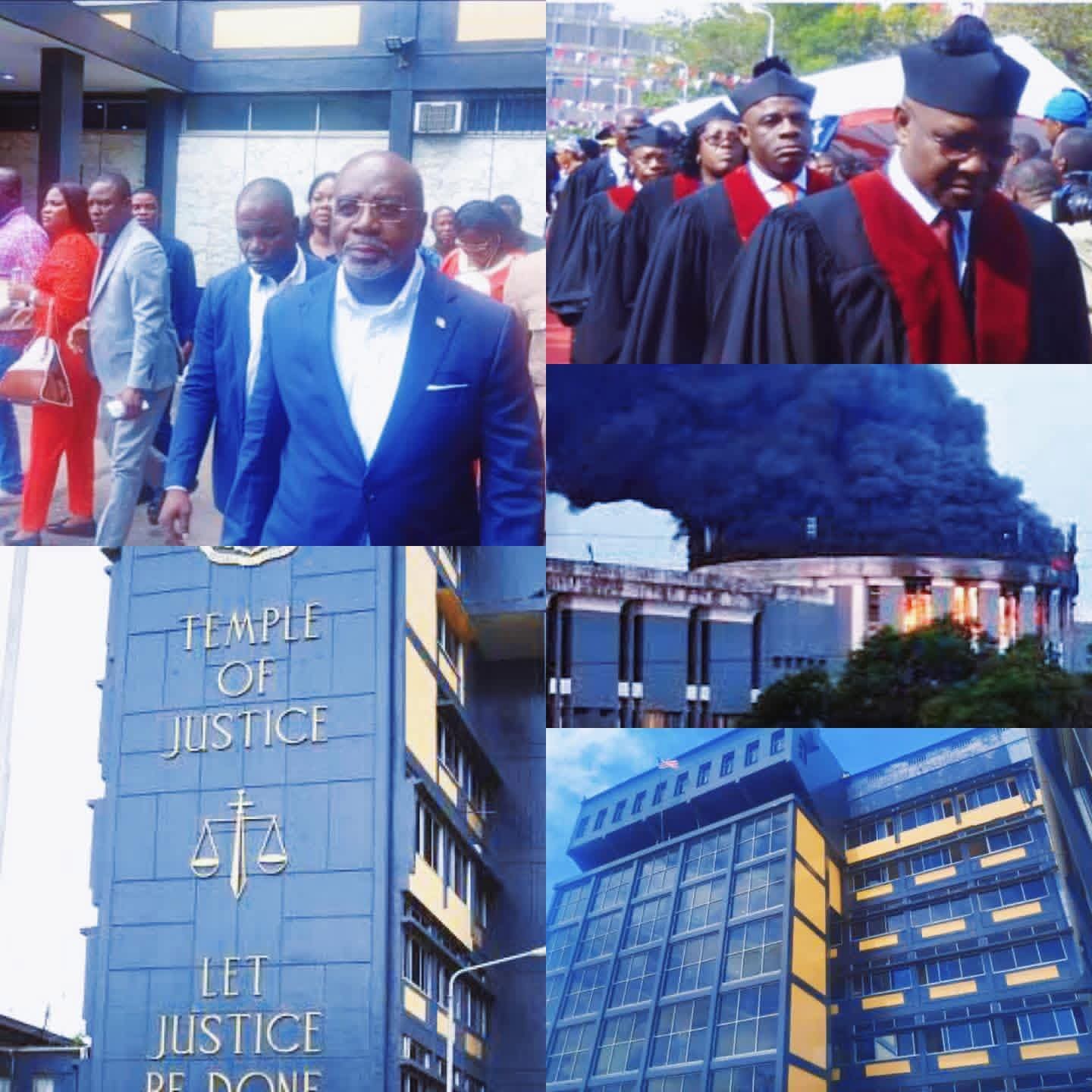
Following the jury’s dissolution, defence lawyers for former House Speaker J. Fonati Koffa and his co-accused in the Capitol Arson case have formally requested bail and revealed their plan to seek remedies from the Supreme Court of Liberia.
This move comes after Criminal Court “A” Judge Roosevelt Z. Willie’s decision on Friday, January 2, 2026, which ordered the jury to be completely disbanded and put the case on hold until the next court term.
State prosecutors’ request, alleging juror misbehaviour and arguing that the jury panel had been compromised, leaving it unable to give a fair and impartial conclusion, served as the impetus for the ruling.
This move comes after Criminal Court “A” Judge Roosevelt Z. Willie’s decision on Friday, January 2, 2026, which ordered the jury to be completely disbanded and put the case on hold until the next court term.
State prosecutors’ request, alleging juror misbehaviour and arguing that the jury panel had been compromised, leaving it unable to give a fair and impartial conclusion, served as the impetus for the ruling.
State Prosecutor Cllr. Augustine Fayiah rejected the bail request, claiming it was against established legal precedent and procedurally incorrect. He argued that bail ought to have been discussed earlier in the trial and warned that giving it now would go against the stare decisis principle.
Judge Willie accepted the defense’s exception in his decision, but he refused to issue bail right away. He emphasised that some bail criteria had not yet been fully satisfied by citing an earlier ruling that outlined those limitations.
Court officials claim that even if three of the defendants were already set on a flat rate, the remaining defendants would still need to have their chance of fleeing evaluated before a final bail judgement is made.
On December 29, the 41st day of jury deliberations during the November Term of Court, the prosecution filed a motion that resulted to the jury’s dissolution.
The request was made in the midst of growing public scrutiny and escalating disagreements about the prosecution’s case, including challenges to video exhibits and forensic evidence that jurors were allegedly dubious of throughout the hearings.
Due to these developments, the case is now ready for the Supreme Court to consider legal issues about bail, process, and the trial’s continuance.


