


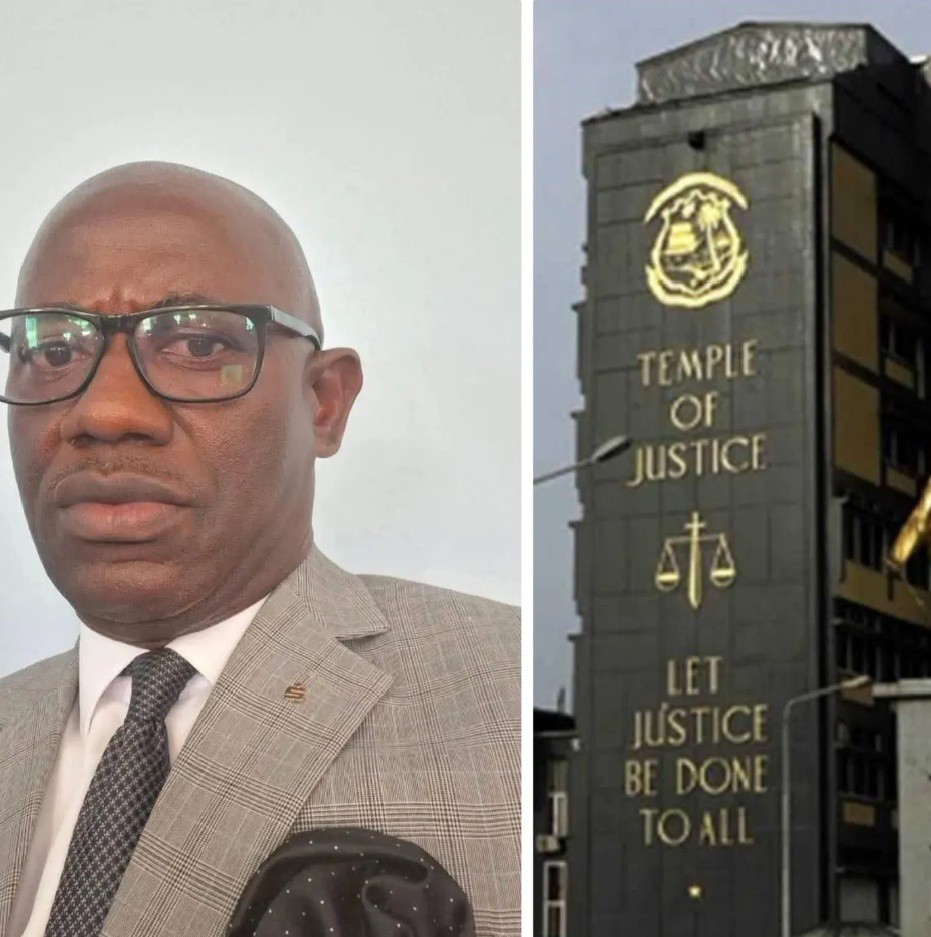
MONROVIA, LIBERIA – April 30, 2026 – The ongoing high-profile financial and national security trial took a significant turn this week as key defense witnesses challenged the prosecution’s central theory, casting doubt on allegations surrounding alleged irregularities in Liberia’s security funding framework.
At the center of Wednesday’s proceedings was testimony from Jefferson Kanmoh, the third defense witness, whose statements directly confronted the prosecution’s interpretation of a controversial letter they claim constitutes an “admission” of wrongdoing within the National Joint Security system.
Dispute Over “Joint Security” Concept Weakens Prosecution Argument
The prosecution has argued that a letter authored by a former National Security Advisor under ex-President George Weah effectively “admitted” the Financial Intelligence Agency (FIA) into the National Joint Security architecture as part of an alleged coordinated scheme to defraud the government.
However, Kanmoh rejected that interpretation outright, telling the court that the prosecution had fundamentally misread both the intent and legal meaning of the communication.
He explained that “Joint Security” is not a legally established institution under Liberian law and does not exist as a formal statutory body. According to him, the term is commonly used to describe a coordination framework among existing security institutions rather than a legally defined entity with admission procedures.
Kanmoh further questioned the prosecution’s logic, noting that the FIA was already an integrated component of Liberia’s national security architecture and therefore could not be “admitted” into something that is not legally constituted.
“No individual, not even the President, who chairs the National Security Council, can admit an agency into a so-called National Joint Security structure,” Kanmoh testified, reinforcing the defense’s position that the prosecution’s theory rests on a flawed institutional interpretation.
His testimony significantly undermines the prosecution’s reliance on the disputed letter, which had previously been presented as a cornerstone of its conspiracy narrative.
Legal observers noted that earlier arguments by prosecution counsel Cllr. Richard Scott attempted to equate “security apparatus” with “security institutions,” suggesting that Kanmoh’s reference implied formal inclusion of the FIA within a structured body. However, Kanmoh maintained that the term “apparatus” broadly includes systems, institutions, and mechanisms, not a singular legal entity.
$6.2 Million Security Funding Explained as Structured Government Disbursement
Turning to the contested US$6.2 million national security allocation, Kanmoh testified that he was aware of the approval of election-related security funding through the National Security Council, with disbursements processed via the Ministry of Justice in phased installments.
He emphasized, however, that he had no direct involvement in the technical breakdown or execution of the disbursement process, which he said fell under the statutory responsibility of the Ministry of Finance.
His testimony aligned closely with earlier statements made by co-defendant Samuel D. Tweah Jr., who informed the court that the funds were released in accordance with National Security Council approval and were not disbursed as a single lump sum but rather in structured tranches over time.
Defense Narrative Gains Consistency Across Witnesses
Kanmoh’s account further reinforced the broader defense argument that the disputed funds formed part of a legally approved national security budget tied to election preparedness.
He confirmed receiving communication from then Acting Justice Minister Cllr. Nyanti Tuah indicating the availability of funds for joint security operations. However, he noted that he could not recall prior consultation regarding his letter before it was issued.
During juror questioning, Kanmoh maintained a careful and non-political tone, stating that he could not provide retrospective political justification for actions now under judicial scrutiny.
One juror pressed him on his reaction to receiving official communication regarding available funds, while another requested the reading of his prior statement to the Liberia Anti-Corruption Commission (LACC), which reaffirmed that the funds were linked to an approved national security budget authorized at the highest level of government.
Growing Judicial Scrutiny of Prosecution Theory
Several juror questions appeared to probe the foundation of the prosecution’s “admission” theory, particularly regarding Kanmoh’s administrative role and whether assigning budget codes implied deeper operational control over financial disbursements.
Observers in the courtroom noted an emerging skepticism toward the prosecution’s interpretation of administrative correspondence as evidence of criminal intent.
Expert Testimony Strengthens Defense on Public Financial Authority
Earlier in the proceedings, former Deputy Minister for Fiscal Affairs Dr. Samora P.Z. Wolokollie provided detailed testimony on Liberia’s Public Financial Management framework, clarifying the legal authority of the Minister of Finance in emergency funding situations.
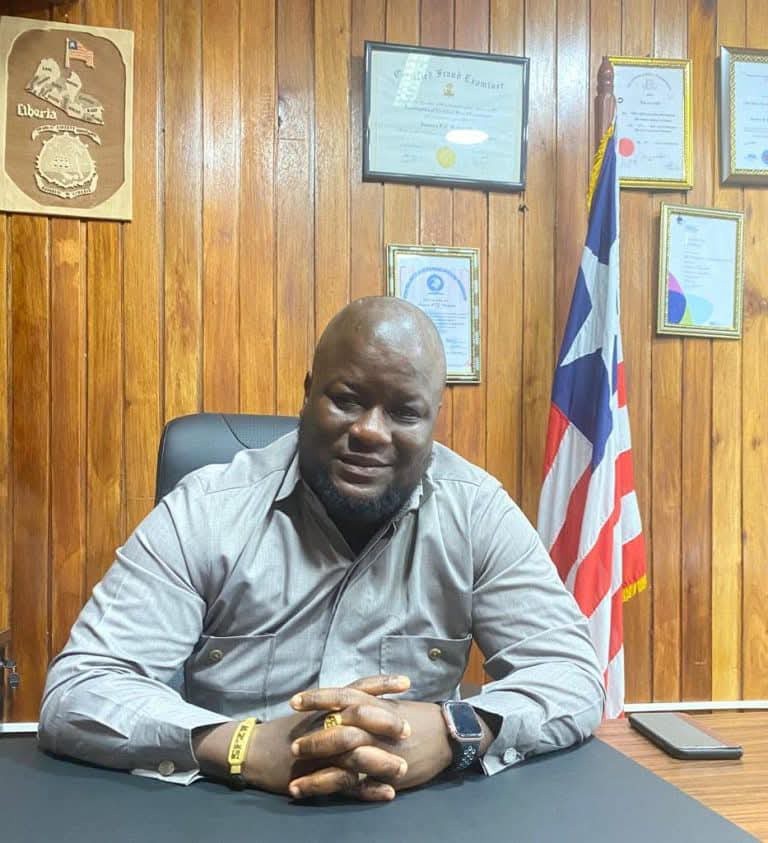
Dr. Wolokollie explained that the Minister is empowered by law to authorize contingent allotments in urgent circumstances, even in the absence of prior appropriation, provided such actions fall within established regulatory and legal guidelines.
He further clarified that a request letter from an agency or official is purely administrative and does not override the Minister’s statutory authority under public financial regulations.
His testimony was widely interpreted as reinforcing the legality of the financial processes under review and narrowing the scope of alleged procedural violations.
In a notable development, the prosecution conducted only a single question during cross-examination of Dr. Wolokollie, a moment that courtroom observers viewed as indicative of the strength and clarity of his testimony.
Proceedings Continue as Defense Builds Momentum
As the trial progresses, the defense continues to present witnesses aimed at dismantling the prosecution’s central allegations of conspiracy and financial misconduct.
With testimony increasingly focusing on legal interpretation, administrative authority, and institutional structure, the case is gradually shifting from questions of intent to questions of governance framework and statutory compliance.
The hearing resumes Monday, with additional defense witnesses expected to take the stand.


