


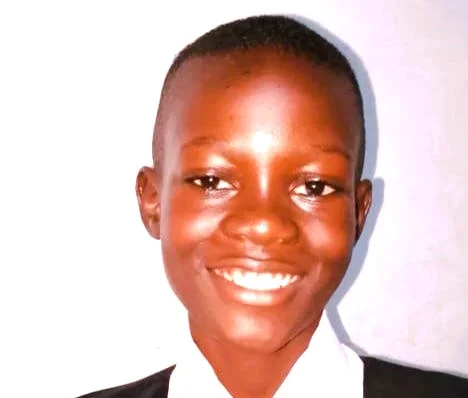
Paynesville, Liberia – July 22, 2025 — In a nation where access to quality education remains an uphill battle, the story of Divine Victor Koffa — a 13-year-old academic prodigy on track to graduate high school — is not just inspiring; it is transformative.
Born in 2012 in Doe Community, one of Monrovia’s lower-income areas, Divine has defied the odds. Currently enrolled at James N. Davies Seventh-day Adventist High School in Paynesville, Divine is set to become one of Liberia’s youngest high school graduates during the 2024/2025 academic year. His goal? To become a medical doctor, a dream that shines brightly in a country grappling with both a struggling education system and a dire shortage of medical professionals.
Early Excellence in a Struggling System
Divine began school at the age of three at Belinie Christian Foundation School in Neezoe. From the outset, he demonstrated brilliance — recording an average of 99 in the 2015/2016 academic year. That early momentum never waned. Over the years, his consistently high scores earned him five double promotions, allowing him to leap ahead of peers much older than him. By the 2021/2022 academic year, he had entered senior high school.
What’s remarkable about Divine’s story is not just his age or performance — it’s the rarity of such academic excellence in a system marked by underperformance. According to UNESCO and Liberia’s Ministry of Education data (2023), only 39% of Liberian students complete secondary education by age 18. Meanwhile, more than 62% of Grade 12 students failed the 2022 West African Senior School Certificate Examination (WASSCE), highlighting the gravity of the educational crisis.
Amid this reality, Divine stands out not merely as an exception but as a challenge to the norm — evidence of what is possible when talent meets opportunity and support.
A Call for Support and Opportunity
Divine’s father, Maximmillian N. Koffa, is now appealing to individuals, institutions, and philanthropists to help his son take the next step: university. Divine hopes to major in Biology and Chemistry before attending medical school. But in Liberia, where over 70% of tertiary students drop out due to financial hardship (MoE 2022), that next step is far from guaranteed.
“We are seeking support from friends who care, and from people of goodwill, to be a blessing to Divine,” Mr. Koffa wrote. “He has proven himself over and over, and now he needs help to take the next step.”
Liberia currently has fewer than 300 licensed medical doctors serving a population of approximately 5.5 million, according to the Liberia Medical and Dental Council. That ratio — about one doctor per 18,000 people — is one of the lowest in West Africa. The prospect of nurturing a future doctor like Divine is not just a personal ambition; it’s a national necessity.
Nurturing Exceptional Talent in a Fragile System
Liberia’s educational challenges are well-documented: overcrowded classrooms, undertrained teachers, insufficient resources, and infrastructure deficits. While reforms are underway, progress remains slow. The government has introduced curriculum improvements and teacher training initiatives under the Education Sector Plan 2022–2026, but outcomes remain uneven.
“Divine is a beacon of possibility,” says education analyst Sarah Toe, based in Monrovia. “His story proves that excellence can emerge even under difficult conditions. But if we do not invest in these outliers, we are wasting national potential.”
Indeed, Divine’s success is a reminder that while systemic reform is vital, there is also a need for targeted support mechanisms to help exceptional students thrive — scholarships, mentorship, early university enrollment programs, and access to global academic networks.
The Bigger Picture
Divine’s story may seem unique, but it should not be. Liberia’s future depends on cultivating a generation of highly skilled professionals, especially in critical sectors like health and education. The African Development Bank has warned that without human capital investment, countries like Liberia risk remaining trapped in cycles of poverty and underdevelopment.
To prevent that, institutions, alumni networks, and development partners must step in — not just to applaud academic prodigies, but to ensure they realize their full potential.
For now, Divine Victor Koffa waits for his WASSCE results — and for the opportunity to begin the next chapter of an already extraordinary life. Whether Liberia helps him take that step may say more about the nation’s priorities than any policy document ever could.


