


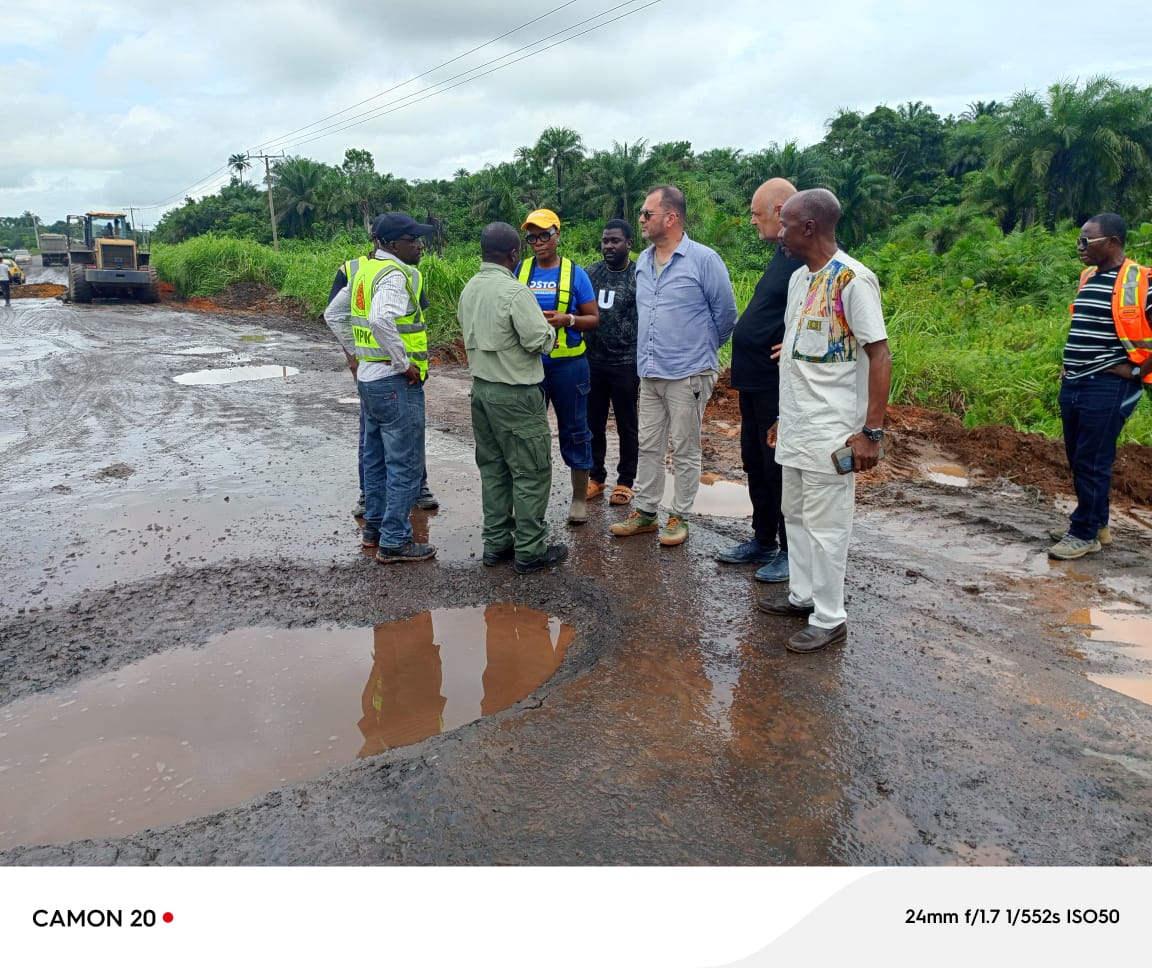
Public-Private Partnership Aims to Strengthen Infrastructure and Economic Connectivity in Western Liberia
In a move hailed as a milestone for infrastructure renewal and public-private cooperation, Bea Mountain Mining Company (BMMC) has partnered with the Government of Liberia to rehabilitate the Bomi-Monrovia highway — a major transport corridor that links the capital with western Liberia.
The highway, vital for trade, healthcare access, education, and rural development, has suffered from years of degradation caused by overloaded trucks, poor drainage, and seasonal rainfall. The joint rehabilitation effort — formally launched last week — represents one of the most strategic infrastructure initiatives in the region since 2020.
Speaking at the launch ceremony, Mr. Alpaslan Ozbilge, BMMC’s Government & Community Affairs Manager, highlighted the company’s motivation for supporting the project.
“We are not only here to mine resources but to invest in the future of Liberia. This highway is a lifeline for many – for trade, mobility, and access to essential services,” he said. “We are proud to be part of this transformation.”
BMMC has committed to providing daily supplies of crushed rock and occasional heavy equipment support to assist in resurfacing and stabilizing the road. On the day of the launch, more than 30 trucks filled with crushed stone were seen transporting materials from BMMC’s operations to roadwork teams — a clear sign of the company’s immediate engagement.
A Strategic Route in Disrepair
The 80-kilometer Bomi-Monrovia highway is a critical artery connecting the economic activities of Grand Cape Mount, Bomi, and Gbarpolu Counties to the capital. Over the past five years, road users have faced increasing delays, higher transportation costs, and risks to personal safety due to the road’s deteriorated condition.
According to a 2023 report from Liberia’s Ministry of Public Works, nearly 60% of Liberia’s secondary and feeder roads are in poor or very poor condition, directly impacting trade, agricultural distribution, and access to rural communities. The Bomi-Monrovia corridor was classified as “high-priority” in that report.
Assistant Minister for Operations at the Ministry of Public Works, Hon. Margret Sarsil, praised BMMC’s leadership and swift action.
“Bea Mountain’s timely and proactive contribution shows the strength of public-private partnerships,” she said. “This initiative is not only addressing road conditions but also fostering national progress.”
Economic and Social Impact
Beyond improving travel time, the rehabilitation is expected to have a ripple effect on several development sectors. Faster and safer transport means better access to health centers, schools, and markets — particularly for rural populations who often suffer from isolation during Liberia’s six-month rainy season.
Liberia’s National Transport Master Plan (2021–2030) identifies road infrastructure as a core pillar of economic recovery, noting that approximately 85% of national trade relies on road transport. The Bomi-Monrovia highway, being one of the few roads linking key mining and agricultural zones to the capital, is critical to this vision.
Mr. Ozbilge emphasized that BMMC’s support is part of a broader corporate philosophy rooted in community development and shared prosperity.
“This is about more than road repair,” he said. “It’s about building a foundation for economic growth, safety, and shared success. When communities thrive, we all benefit.”
Model for Public-Private Partnerships
The collaboration between the Ministry of Public Works and Bea Mountain is being viewed as a model for future infrastructure development in Liberia. While the government faces financial constraints — with less than 3% of the national budget allocated to roads and bridges in FY2024 — partnerships with private sector actors can offer both technical and logistical support to fill critical gaps.
Analysts argue that such partnerships could be replicated in other regions where mining and agribusiness companies operate, especially where road conditions limit productivity and social mobility.
“This is a positive example of how corporate social responsibility can align with national development priorities,” said Ellen K. Moore, an infrastructure consultant based in Monrovia. “If well-monitored, it can catalyze regional growth while holding companies accountable to the communities they profit from.”
Looking Ahead
As road rehabilitation progresses, communities along the Bomi-Monrovia corridor are expected to experience immediate improvements in transport efficiency and local commerce. The Ministry of Public Works has confirmed that it will oversee engineering compliance and maintenance scheduling to ensure quality and sustainability.
For now, the BMMC-Government partnership offers renewed hope to citizens who rely on Liberia’s vulnerable road network — and a blueprint for collaborative development that moves beyond rhetoric to real, tangible change.


