


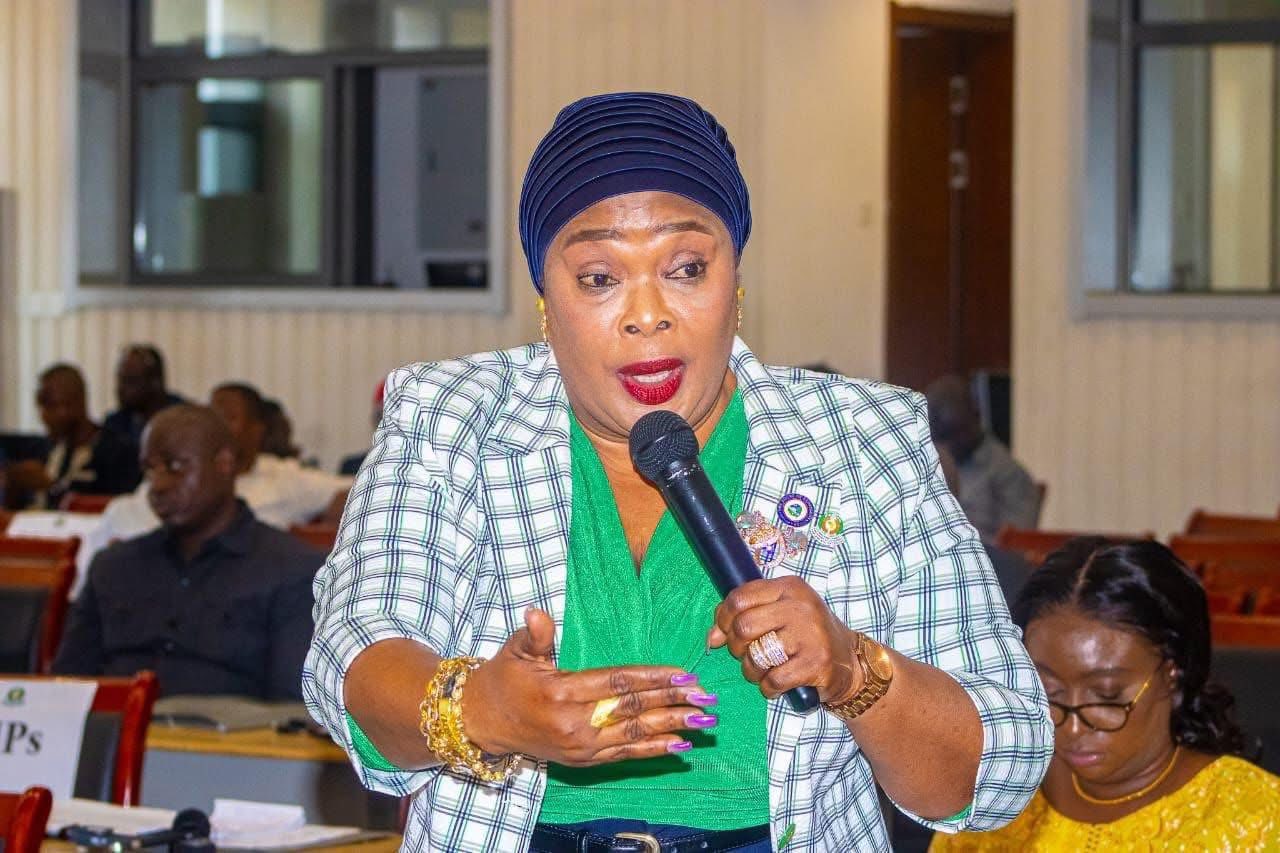
A strongly worded public statement by Representative Moima Briggs Mensah has triggered renewed political debate in Liberia, with observers interpreting her remarks as a broader critique of gender dynamics, political loyalty, and leadership culture within opposition politics.
Although the lawmaker did not directly mention any individual, her comments have widely been linked to Alexander B. Cummings, leader of the Alternative National Congress (ANC), amid speculation surrounding internal disagreements and the alleged sidelining of a prominent female political ally.
In a lengthy social media statement, Briggs challenged what she described as the pattern of celebrating women’s political loyalty during moments of crisis while allegedly excluding them from influence and recognition once political stability is restored.
“Silence does not mean blindness,” she wrote, questioning whether loyalty in politics is only appreciated “when it is convenient.”
From an analytical perspective, the statement reflects deeper structural tensions within Liberia’s political culture, particularly regarding the role of women in opposition movements and power-sharing arrangements. While women are often central to political mobilization, advocacy, and public defense of political figures, debates persist over whether they receive proportional inclusion in leadership and decision-making structures.
The controversy intensified after political commentators and social media users interpreted Briggs’ remarks as an indirect response to concerns surrounding an unfilled political position and the treatment of a female supporter reportedly viewed as instrumental during previous political battles involving the ANC leadership.
Briggs argued that women in politics are frequently expected to defend political institutions and leaders without being afforded equal opportunities for advancement or influence. Her comments suggested growing frustration with what some activists describe as symbolic inclusion rather than substantive empowerment.
“Too often, women are expected to defend, to sacrifice, to endure — but never to rise,” she stated.
Her remarks further signaled a possible strategic shift in political alliances and engagement among female political actors. Briggs declared that loyalty would no longer be automatic or emotionally driven, emphasizing that future political support would be based on strategy, reciprocity, and accountability.
“The era of using women’s loyalty as political insurance is over,” she wrote. “Support will be strategic, not sentimental.”
Analytically, the statement may indicate broader recalculations taking place within Liberia’s opposition landscape ahead of future political contests. As opposition parties continue efforts to consolidate support and maintain internal cohesion, unresolved tensions around representation, influence, and leadership recognition could become increasingly significant.
The controversy also highlights the evolving role of gender discourse in Liberian politics, where conversations about women’s participation are shifting beyond representation toward questions of institutional power and political equity.
Briggs additionally framed the issue as one of leadership accountability, asserting that genuine leadership is demonstrated through responsibility and fairness rather than rhetoric or political symbolism alone.
Public reactions to the statement have remained divided. Supporters praised the lawmaker for openly addressing what they view as entrenched gender imbalances within political structures, while critics argued that the remarks risk exposing or intensifying fractures within opposition ranks.
As of press time, neither Alexander Cummings nor representatives of the ANC had publicly responded to the statement.
Overall, the incident underscores a growing analytical question within Liberia’s political environment: whether opposition institutions are prepared to adapt to rising demands for gender equity, internal accountability, and more inclusive leadership structures in an increasingly competitive democratic space.


