


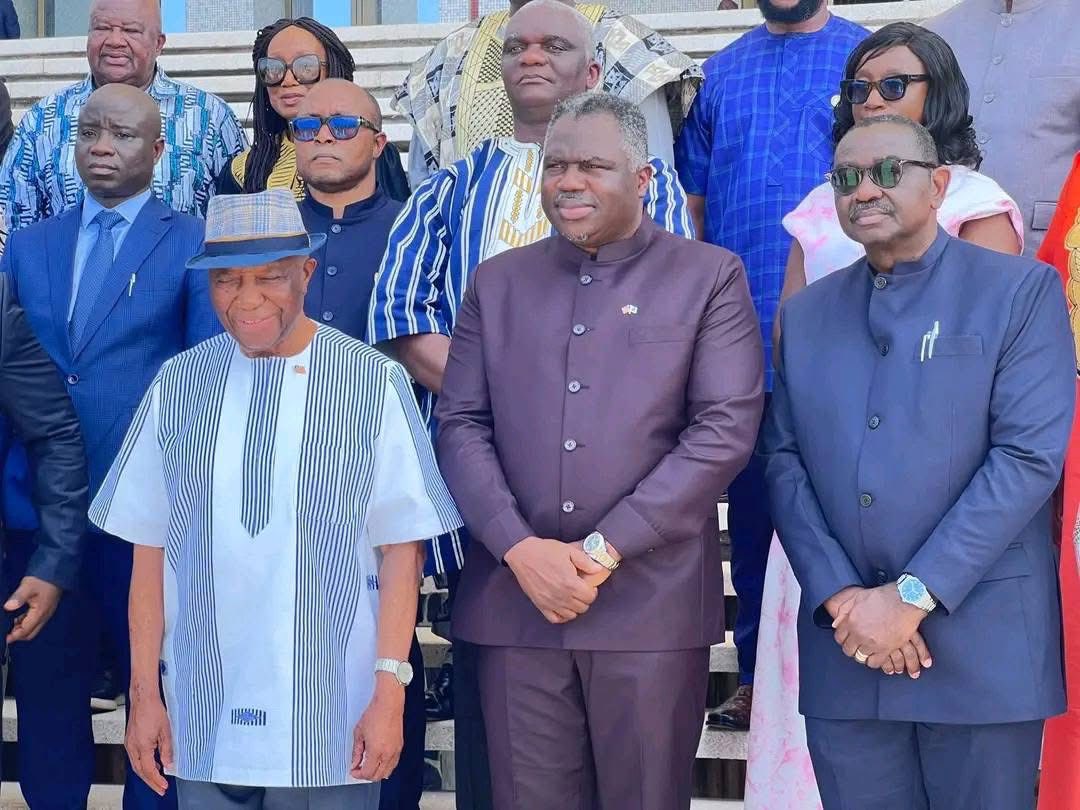
In a move signaling tighter government control over Liberia’s natural resources, President Joseph Nyuma Boakai has assigned Vice President Jeremiah Koung to oversee the long-delayed Putu Mountain concession. The decision reflects a growing emphasis on ensuring that Liberia’s mineral wealth benefits the nation rather than outside investors.
Speaking during a recent cabinet meeting in Monrovia, President Boakai stressed that Liberia will no longer allow its resources to be exploited by investors who fail to contribute meaningfully to national development.
“We are not going to take our resources and give them to people who cannot develop our country,” Boakai declared. “We will give this responsibility to the Vice President to take charge of the Putu Mountain.”
Located in Grand Gedeh County, southeastern Liberia, Putu Mountain is believed to contain substantial iron ore deposits, making it one of the country’s most significant untapped mineral resources. The concession has long been plagued by delays, stalled agreements, and uncertainty surrounding potential investors.
With Vice President Koung now directly supervising the project, the government aims to restore momentum, monitor negotiations, evaluate investors, and ensure any agreements align with national interests and local development goals.
Political analysts suggest that this move could signal a broader shift in how Liberia handles large-scale concession agreements, particularly in the extractive sector, prioritizing accountability and national benefit over expediency.
President Boakai clarified that no final deadline has been set for the Putu Mountain concession, highlighting the administration’s careful approach. “We haven’t put a deadline on when the Putu issue will come to an end, but we will see what we can do with that,” he stated.
The President’s comments come amid a national conversation about how Liberia manages its mineral wealth. Civil society groups, economic observers, and local communities have repeatedly called for more transparency, stronger oversight, and development-focused agreements that create jobs, infrastructure, and broader economic growth.
Experts say that if properly managed, the Putu Mountain project could generate thousands of jobs, increase government revenues, and stimulate economic activity in southeastern Liberia. Yet many Liberians remain wary due to past concessions that failed to deliver on promises, leaving communities and the national economy shortchanged.
A Watchful Eye on Liberia’s Future
By assigning Vice President Koung to oversee the concession, the government signals both commitment and accountability. Investors, policymakers, and citizens will be closely monitoring the administration’s next moves to ensure that Liberia’s natural resources are developed responsibly and for the benefit of the people.
The decision sets a precedent for how Liberia may handle future resource concessions—prioritizing national interest, transparency, and community development over short-term gains.


