


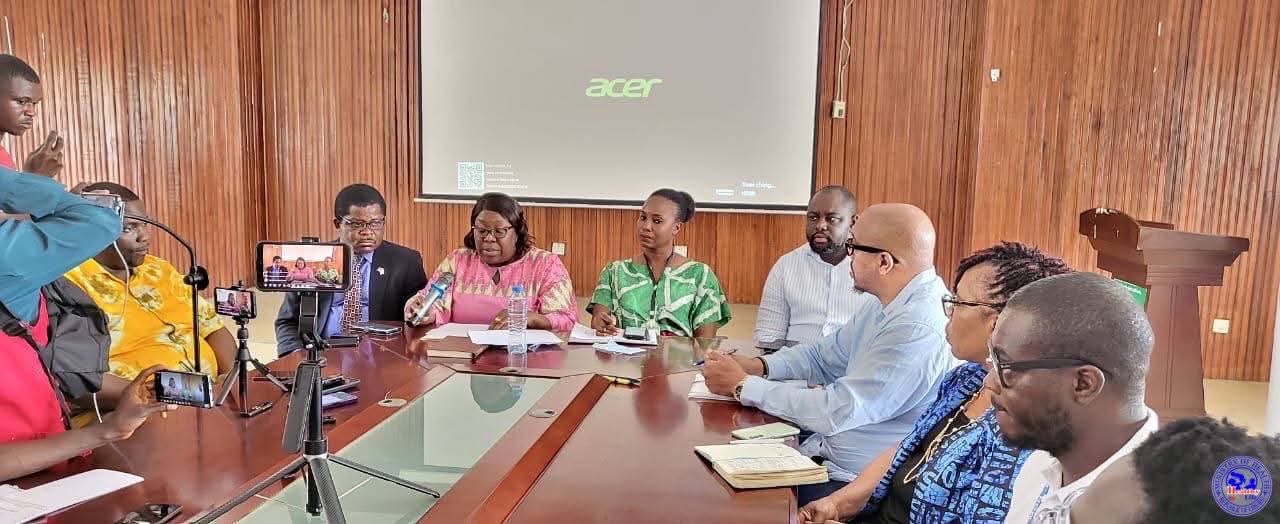
Monrovia, November 7, 2025- Liberia is battling a rising wave of Mpox infections, with health authorities confirming more than 2,400 suspected cases across all 15 counties. The Ministry of Health and the National Public Health Institute of Liberia (NPHIL) have launched an aggressive nationwide response to curb the outbreak, which officials describe as one of the country’s most extensive public health challenges since the COVID-19 pandemic.
Speaking at a press briefing in Monrovia, Chief Medical Officer Dr. Catherine T. Cooper revealed that the country has recorded 2,447 suspected Mpox cases, of which 1,308 have been confirmed positive, representing a national positivity rate of 56.6%. Laboratory testing of 2,309 samples shows ongoing transmission in 65 of Liberia’s 98 health districts, signaling widespread community infection.
“We are at a critical turning point,” Dr. Cooper said. “Without bold and coordinated action, Mpox transmission will continue to escalate, putting lives, health systems, and communities at serious risk.”
Currently, 148 active cases are being managed in infectious disease hospitals, isolation centers, and through home-based care programs. Montserrado County remains the epicenter, accounting for 57% of active cases, followed by Nimba (18%), Margibi (7%), Grand Bassa (5%), and Grand Kru (4%). The remaining counties report smaller clusters, each accounting for 2% or fewer of the total caseload.
Despite the surge, Liberia has maintained a relatively low case fatality rate of 0.5%, with six deaths recorded and 1,154 recoveries. Dr. Cooper credited this outcome to early detection, improved case management, and ongoing public awareness efforts that encourage early reporting and isolation of suspected cases.
A Multi-Pronged National Response
In response to the surge, the Ministry of Health and NPHIL have rolled out a 60–90-day Mpox Containment Plan designed to reduce transmission and prevent new infections. Key components include intensified surveillance and case detection within 24–48 hours.
Rapid laboratory testing to ensure results are available within 48 hours nationwide.
- Enhanced clinical care and refresher training for frontline health workers.
- Stronger infection prevention and control (IPC) measures in hospitals and communities.
- Expanded community engagement to promote preventive behaviors, including handwashing, safe handling of infected materials, and awareness of sexual transmission routes.
“Public participation remains central to this response,” Dr. Cooper emphasized. “We urge all Liberians, especially community leaders and youth groups, to take ownership of awareness and vaccination campaigns in their communities.”
Vaccination and International Support
Liberia’s vaccination campaign will begin in December 2025 and run through February 2026, targeting adults aged 18 and above in high-risk areas such as Montserrado, Nimba, and Margibi counties.
The campaign follows the arrival of 42,720 Mpox vaccine doses in September, secured through partnerships with the U.S. CDC, Africa CDC, GAVI, UNICEF, and the Coalition for Epidemic Preparedness Innovations (CEPI).
According to Dr. Cooper, the goal is to administer all doses by January 2026, focusing on health workers, caregivers, and individuals in outbreak hotspots. “Vaccination remains our strongest tool to break the chain of transmission,” she said.
Public Awareness and Prevention Goals
Health authorities aim to achieve 80% nationwide awareness of safe practices and early care-seeking behaviors by the end of January 2026. The strategy also includes targeted messaging in schools, workplaces, and marketplaces—areas identified as high-contact zones for potential transmission.
Liberia’s response is guided by six measurable objectives:
- Investigate at least 90% of suspected cases within 48 hours.
- Maintain a zero preventable-death goal through improved ICU capacity.
- Ensure rapid diagnostic turnaround and consistent data reporting.
- Fully utilize the vaccine stock within the set timeframe.
- Strengthen community-based risk communication.
- Reduce the national positivity rate and sustain low transmission within three months.
A Call for Collective Action
While expressing optimism about containment efforts, Dr. Cooper cautioned against complacency. “We have made progress, but the virus continues to circulate,” she noted. “Every Liberian must play their part—through vigilance, early reporting, and vaccination—to end this outbreak once and for all.”
With continued collaboration among government agencies, global health partners, and communities, Liberia hopes to curb the Mpox outbreak and strengthen its public health system’s resilience against future threats.


