


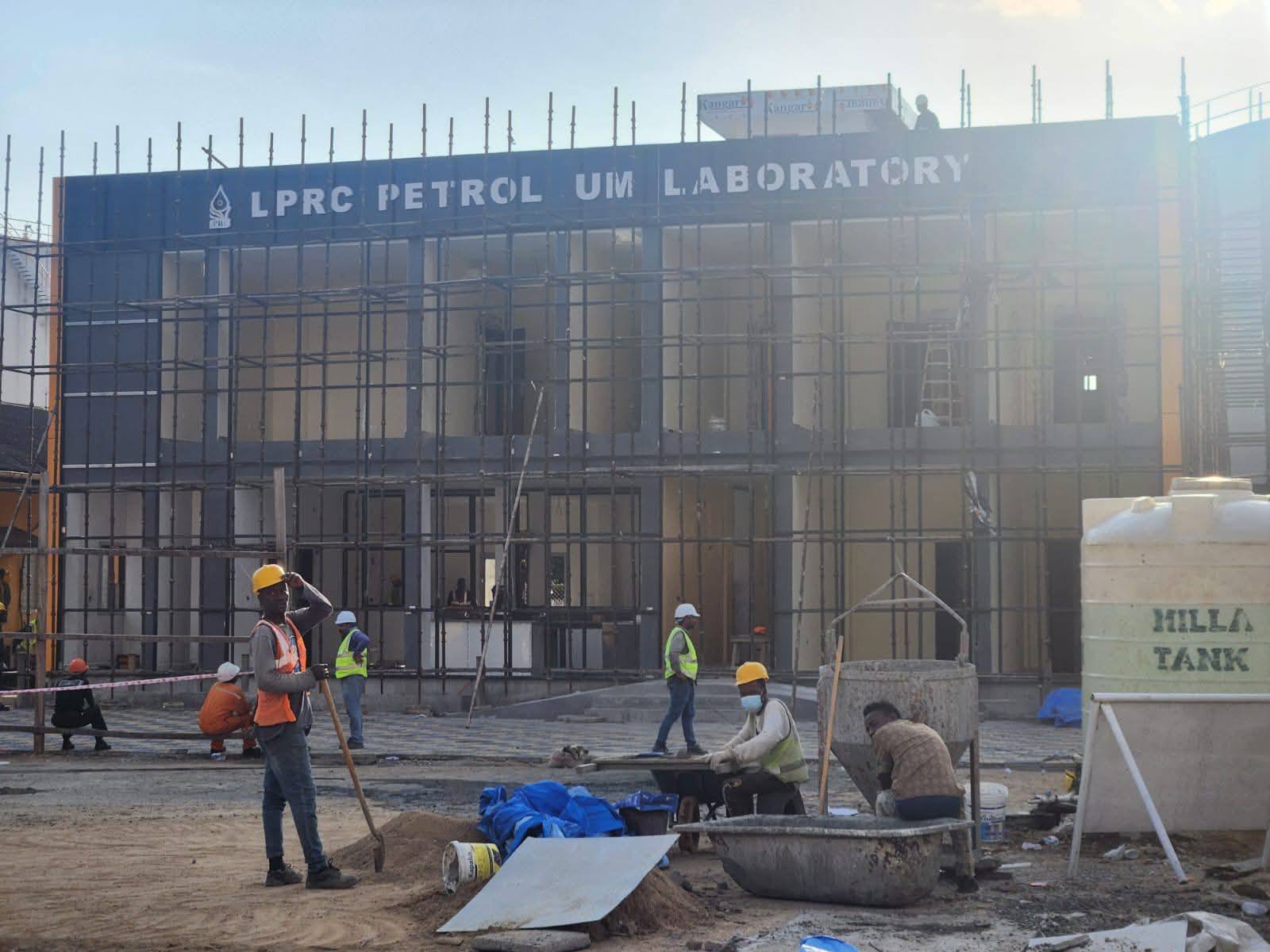
Monrovia, Liberia – July 28, 2025 — President Joseph Boakai’s vision to reestablish the Liberia Petroleum Refining Company (LPRC) as the nation’s primary importer and distributor of petroleum products is gaining momentum, as two key infrastructure projects near completion at the company’s Bushrod Island terminal.
The construction of a 17,000-cubic-meter gasoline storage tank and a state-of-the-art petroleum testing laboratory is now in its final stages. These facilities are expected to play a critical role in improving national fuel security, stabilizing supply, enhancing quality control, and reinforcing Liberia’s energy independence.
The move comes as part of the Boakai administration’s broader strategy to reform and modernize the energy sector, returning LPRC to a central role in petroleum logistics—a function that had gradually shifted to private operators over the past decade. The decision was publicly reinforced by President Boakai during the recent launch of the 2025 Liberia AI Challenge, where he emphasized the importance of national control over fuel importation to ensure affordability, availability, and strategic autonomy.
Strategic Infrastructure for Energy Security
The new gasoline storage tank, with its massive 17,000-cubic-meter capacity, is designed to address recurring concerns over fuel shortages and supply disruptions in the country. According to LPRC Managing Director Amos Tweh, the tank will allow Liberia to build strategic fuel reserves, reducing dependency on private storage facilities and cushioning the nation against market volatility and emergency situations.
Equally significant is the introduction of a modern petroleum testing laboratory. This facility, equipped with advanced technology, will enable the LPRC to conduct rigorous quality assurance on all imported petroleum products. The lab is expected to prevent substandard or adulterated fuel from entering the local market, thereby improving consumer safety and maintaining engine standards for vehicles and industrial machinery across the country.
“The goal is not just to import fuel,” said Tweh. “It is to guarantee that the fuel we import meets international quality standards, is stored safely, and is made available to Liberians at a fair price.”
Policy and Institutional Realignment
These infrastructure developments come amid a wider policy push by the Boakai administration to reclaim national control over essential services. Repositioning the LPRC at the helm of petroleum importation reflects a shift away from overreliance on private operators, many of whom have been criticized for prioritizing profit margins over public interest.
The near-completion of the storage tank and testing lab also signals that the government is moving beyond policy declarations into concrete implementation. By aligning infrastructure development with institutional reform, the administration is aiming to build long-term resilience into Liberia’s energy system.
Toward an Independent Energy Future
As Liberia continues to face regional competition for petroleum resources and global market fluctuations, the role of state-owned infrastructure in securing national energy needs becomes increasingly important. The progress at LPRC’s Bushrod Island terminal underscores the administration’s intent to reduce external vulnerabilities and establish a self-reliant supply chain.
If completed on schedule, these projects will mark a milestone in President Boakai’s developmental agenda, transforming LPRC from a storage facilitator into a national instrument for energy governance and economic stability.


